The Elite Reliever to Watch For at the 2024 Trade Deadline

Trading for big names is what gets people excited at MLB’s trade deadline, but the event is really just a game for General Managers to acquire relief pitching. Of the eight teams to make it past the wild card round in 2023, seven of them made at least one notable move for a back-end arm midseason. The one exception was the Philadelphia Phillies, whose elite starting depth allowed them to move their big deadline add, 2023 all-star Michael Lorenzen, back to the bullpen for the postseason. Yeah, they did not all work out (Brad Hand was a Brave?), but the point is that just about every contender is looking for an impact reliever right around now. At the top of this arms race should be a strikeout pitcher with control who will change a team’s depth chart. Sorry Mason Miller, this one is about Fernando Cruz.

The teams with the best reputations for creating elite relief pitchers out of nowhere have been the Rays, Dodgers, and Yankees. That is not an unearned title, as current closers Pete Fairbanks, Evan Phillips, and Clay Holmes would tell you. The Cincinnati Reds are not as well known for this skill, but they have absolutely found something with Fernando Cruz.

A 2007 6th round draft pick by the Royals from Puerto Rico, Cruz only pitched in 37 games for Kansas City’s organization, ending in 2012. Another stint in the Cubs’ org did not last long in 2015. For most of his professional career, he has pitched in independent leagues in Mexico, Puerto Rico, and the Dominican Republic. In 13 seasons of play in foreign leagues, he has posted a 3.01 ERA in 362 innings, with roughly 91 percent of his outings coming in relief. However, it was not until 2021, his age-31 season, where Cruz broke out. He struck out 37 batters in 26.1 innings with a 2.73 ERA for Guadalajara in the Mexican League, then maintained a perfect ERA with 30 strikeouts in 19.1 innings in the Puerto Rican Winter League. This earned him a minor league contract with the Reds. In 115.1 innings since finally making his major league debut at the age of 32 in 2022 (the oldest debut by a Red in 66 years), Cruz has remarkably struck out 178 batters. He has been able to fly under the radar by playing for an unremarkable Reds team, never recording a save, and having a measly 4.14 ERA. So what makes Cruz so good?

In 2024, Cruz has walked a decent amount of batters, a tenth percentile rate of 12.6 percent. But that is not crippling enough to ruin his peripheral numbers, which love his extreme 41.3 K% and 15.3 K/9, along with a solid 0.8 HR/9. Any ERA estimator that you can find will say that Cruz’s 2024 ERA of 3.89 has been inflated by some bad luck. xERA has him at 3.35, both FIP and xFIP at 2.43, and SIERA at 2.35.

Cruz is a three-pitch pitcher, with about 56% of his pitches being either a mid-90s fastball, or a high-80s cutter. Those are not his strong points, as they have finished off just eight of his 59 Ks, and allowed 18 of his 22 hits, including all three home runs. The other 44 percent is where Cruz makes his money, firing off a splitter that averages 81.7 mph with an extremely low RPM of 896. This contributes to its electric movement, on which batters are 4-for-69 with four singles against. No pitcher in baseball throws his splitter more than Cruz, who has gotten a 58.7% whiff rate on it this season. The super-low spin that he has on his splitter is not unique, but it is still good. Of the 45 pitchers this season who have faced at least 100 batters and thrown at least 10 percent splitters, Cruz has the seventh-lowest average spin rate. What is more interesting about the spin on Cruz’s splitter is its active spin. The shorthand on active spin, or spin efficiency, is that it measures the percentage of the spin contributing to the pitches movement. Of the 71 pitchers who have thrown at least 250 pitches this season and feature a split-finger, Cruz has the eighth-lowest active spin on the pitch. He is sandwiched between other successful splitter-throwers in Bryce Miller and Hector Neris, which should slow down any immediate concerns about the pitch’s efficiency. The more notable statistic is his middle-of-the-pack 91.8% efficiency on his fastball, something that an acquiring team could look to improve on.

These numbers have led to one of baseball’s most effective pitches. With a run value of 10, only 15 pitches in the game have been more valuable than the Cruz splitter, all of which have been thrown more (run value is a cumulative stat). Among split-fingers, only Cal Quantrill, who has thrown double the splitters as Cruz, is higher. In fact, the only split finger that has been thrown at least one hundred times in 2024 and has a better run value/100 batters is the infamous Paul Skenes “splinker”, which is categorized as a split-finger and is comparable value-wise to Cruz’s pitch despite a jarring average velocity difference of over 12 mph. The pitch’s effectiveness was best highlighted by injured teammate Tejay Antone on the Reds broadcast when Cruz struck out star shortstop Trea Turner.

Among his fellow relief pitchers, Cruz has stacked up very nicely. fWAR ranks him as the 12th most-valuable reliever in baseball this year. Of the top eleven, four of them (Mason Miller, Emmanuel Clase, Kenley Jansen, and Andres Munoz) are high-profile closers, with the other seven playing on either Philadelphia, Boston, Minnesota, Cleveland, and Milwaukee, who are all in the playoff race. The Reds are currently four games out of a wild card spot as of June 26, have four teams ahead of them who are not in a playoff spot, and have dropped seven of their last ten. Cruz is 34-years-old, and while he is under team control until 2029, his age and the fragility of relief pitchers means that he may not be effective for much longer. If the right offer comes, the Reds will likely pull the trigger on a Cruz trade.

Photo from the Cincinnati Enquirer

The situations that Cincinnati has put Cruz into should also interest a contending team. While he has only pitched into the eighth inning in 14 of his 37 outings (37.8%) this season and never into the ninth or further, he has been consistently tested with inherited runners. Cruz has come into games with a total of 26 inherited runners, which is tied for the fourth most in baseball. Of those 26, only four have scored, a testament to his elite strikeout stuff. The three pitchers with more inherited runners than him have all allowed more of them to score, and the next most total inherited runners with four or less inherited runs scored in baseball is the Yankees’ Caleb Ferguson, who has allowed four runners of 22 to cross home plate.

Every decision made in baseball has to do with money, and the money is going to be what gains the most interest in Cruz. He has a salary of just $750k this season, a number that could be fit on any team’s payroll, even the A’s. He is not eligible for arbitration until 2026, so he will be cheap again next year, and as already mentioned, he will not be a free agent until 2029. While his age suggests that he is a prime candidate to eventually be non-tendered down the line, he is still a quality trade candidate for right now. His low name status will mean that he should not cost a huge fortune, although his price could be bumped up a little bit by a large amount of potential suitors. We should still look for Cruz as a great bargain bin addition to a playoff team if he is dealt in the next month.

The Taylor Hall Trade and What it Means for the Bruins and Blackhawks

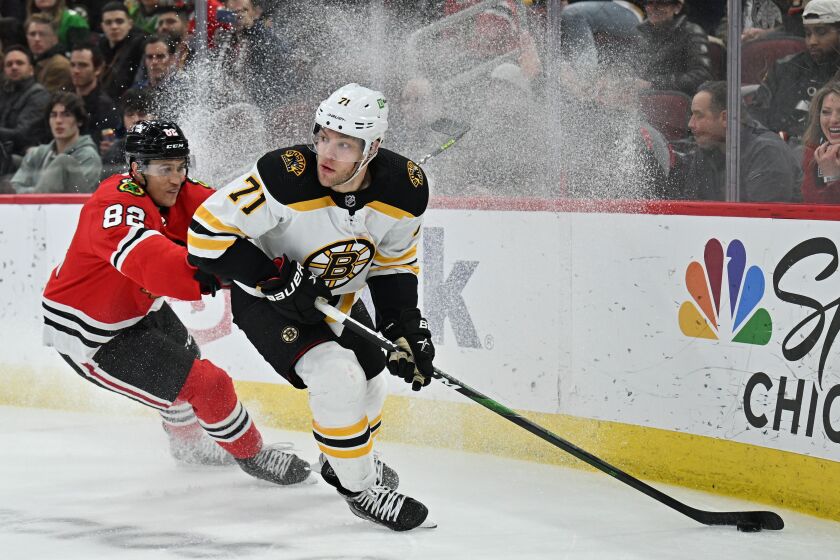
Trade rumors have surrounded Taylor Hall since the 2010 first-overall pick grew into his prime on a bad Oilers team in the mid-2010s. One free agency and now three trades later, and Hall is on another basement-dweller after the Boston Bruins, fresh off a record-setting regular season, dealt him along with the rights to veteran Nick Foligno to the Chicago Blackhawks for young defenders Ian Mitchell and Alec Regula.

Hall’s tenure in Boston is now over after 158 regular season games and 25 in the postseason. The Bruins were a playoff team in all three runs with Hall, and while his production was lacking in the first two seasons, you could not say the same about Boston’s seven-game loss against Florida this year, as Hall scored five times, adding three assists. In regular season play, he scored 44 goals with 67 assists, for an 82-game average of 23 goals and 35 assists. While compared to the disaster that Hall was in Buffalo (two goals, 19 points in 37 games), those numbers are outstanding, he played at a 72-point pace prior to becoming a Bruin. Given that he was mostly a second-line player in Boston, his expendability grew as the Bruins fell into salary cap troubles. What likely killed Hall’s chances of staying, aside from his $6 million cap hit, was the acquisition of Tyler Bertuzzi at the trade deadline from Detroit. While Bertuzzi is a pending free agent, he had a strong postseason of his own, and was seemingly born to play the tough style of ‘Bruins hockey’.

Foligno was also a former top-line player elsewhere, but he truly struggled in Boston. His slide with the Bruins was unlike Hall’s dip in production, as Foligno scored just 12 goals in 124 games, plus just one more in 13 playoff appearances. He was all but guaranteed to leave as a free agent this offseason. In return, Boston gets two restricted free agents with NHL experience under the age of 25. At best, Mitchell and Regula can replace whoever becomes a salary cap casualty on the backend, likely either Mike Reilly or Derek Forbort, both veterans with one more year left under contract at a $3 million cap hit. However, both are owed more than $3 million in real money.

Since neither defender has a high-end ceiling, the Blackhawks are delighted to get Hall at a low price. The ultimate goal for Chicago this offseason is to surround incoming first overall pick Connor Bedard with as much talent as possible, and Hall is about as easy of a first-line winger to get at the moment. The Blackhawks are still well under the salary cap floor, by just under $10 million, even after adding Hall’s cap hit. That means that there is room for a lot of improvement in the coming months, although the odds are against them being a good team in 2023-24. Hall is under contract for two more seasons, and could snatch the team a good draft pick at the trade deadline in one of the next two seasons. He was at a career-low in Buffalo, and the Sabres still managed to acquire a second-round pick and forward Anders Bjork for Hall back in 2020-21. There’s no guarantee that they can convince Foligno to sign with the team, but if they do, he is a bottom-six winger with captain experience. At the age of 35, he’ll likely get a one-year contract, which would mean a mid-round selection for him at the trade deadline early next year.

The Best and Worst Values of NHL Trade Deadline Season 2023

Another trade deadline has passed, and while the day itself was on the boring side, the trading season was easily the most exciting we have had in years. An abundance of stars were dealt, from Bo Horvat on January 30th to John Klingberg at the buzzer. Of course, there were steals, and some mind-numbing decisions. Here are the trades that stood out from their seemingly uneven balance.

Best Value: All of the Third-Party Teams

With the salary cap affecting everyone, third-party teams were necessary to facilitate the large number of massive trades that we saw in the past month. This process is simple: since only 50 percent of a player’s contract can be retained, the seller will trade the player to team who will retain fifty percent of what they received, or 25 percent of the player’s overall salary, so the team that eventually ends up with the player can fit him in their books. In return, the broker will receive a draft pick and/or a player. Since the big-name player is almost always an expiring free agent, there is no real downside for the broker, except for the owner spending a little bit more.

This happened four times this month. The Coyotes picked up a third-round pick from the Rangers for helping New York acquire Patrick Kane, the best package a third-party team acquired. The Canadiens got involved when the Penguins brought Nick Bonino back to Pittsburgh, scooping up a fifth-round pick and a contract slot in Finnish defender Tony Sund. The team that defined this strategy was the Minnesota Wild, who received a fourth and fifth-round pick over two separate deals, putting the contracts of Ryan O’Reilly and Dmitry Orlov on their CapFriendly page. Since the Wild are contenders, these moves were immediately impactful. While they didn’t flip either of the picks that they acquired, the Wild traded two fourth-rounders after these moves, bringing back Klingberg and forward Oskar Sundqvist. That is what salary cap flexibility gifts you.

Worst Value: The Kings Ruining Team Morale for a Trade

The Kings have a good window to contend with a ton of young talent in their system to complement the aging Anze Kopitar and Drew Doughty. Looking to bolster their blue line, Los Angeles was reportedly interested in Arizona defender Jakob Chychrun, but settled on Columbus’ Vladislav Gavrikov. The problem here is that the two players are extremely different. Chychrun excels at both ends of the ice and can play on the top pair while Gavrikov is a good-enough two-way defender to be on pair number two. Sadly, the difference in compensation wasn’t staggering. The Kings traded away a first and third-round pick, while the Senators would eventually acquire Chychrun for a first and two seconds. With the amount of assets that the Kings have, being stingy made no sense.

Even worse is what the rest of the trade entails. The Kings also acquired goaltender Joonas Korpisalo, sending out franchise icon Jonathan Quick without a warning. Yes, the sport is a business, and yes, Quick is having the worst season of his career, but this trade showed an absurd amount of disrespect from the management that players around the league will notice. That doesn’t mention that the swap itself doesn’t really benefit the Kings. Korpisalo is having a better season than Quick, but he has never been on the level of a good NHL goalie, while Quick was instrumental to the Kings’ success just last year. Not only did this reportedly upset the team, but Quick was soon flipped to the rival Golden Knights, where he can immediately hurt his old team.

Best Value: Predators Get Asplund

Nashville had a very solid deadline, just as former coach Barry Trotz was announced to be taking over as General Manager. While this was all still the work of soon-to-be-retiring GM David Poile, the Predators caught eyes around the league when they received Cal Foote and five draft picks from Tampa Bay for Tanner Jeannot. They also brought back picks and offensive defender Tyson Barrie for Mattias Ekholm, and traded away forwards Nino Niederreiter and Mikael Granlund. By far the most underrated of their moves was to pick up Rasmus Asplund from the Sabres for just a 2025 7th round draft pick.

Last season, Asplund broke out with 27 points in 80 games for Buffalo. More importantly, he had elite defensive metrics that had some people hyping him up as a dark horse Selke candidate. He still was nominated, picking up a third-place vote and a pair of fourths. Asplund has been limited to just 27 games this year, with eight points and a decrease in those metrics. He is still just 25 and makes only $825k before becoming a restricted free agent in the offseason. For a future seventh-round pick, this is a great bet for the Preds.

Worst Value: Coyotes Fail to Capitalize on Gostisbehere

Perhaps it was his injury that kept him out until right before the deadline, but Shayne Gostisbehere only netted the Coyotes a third-round pick in 2026 when Arizona traded him to Carolina. Gostisbehere has his defensive issues, but they are far from the significant deficiencies that hurt the stock of Klingberg and Barrie. In 52 games for Arizona, he already had ten goals with 31 points. This comes a season after a 14 goal, 51 point season. Gostisbehere is one of the premier goal-scoring defenders in the league. Since his rookie season of 2015-16, he is 11th among defenders in goals, with a lot less average ice time compared to the guys ahead of him.

Best Value: Blues Bet on Vrana

The Jakub Vrana era in Detroit wasn’t that bad, the problem was that he never played. After coming over in the Anthony Mantha trade, Vrana has been hampered by injuries and off-ice problems, limiting him to just 42 games. However, he has scored 22 goals as a member of the Red Wings. Vrana was a prolific goal scorer as a Capital, with 76 goals in 284 games. He just turned 27 and has one more year left on his contract. Detroit retained half of it, so a $2.625 million cap hit is what goes to St. Louis, and that is not bad at all. The Blues sold off many players this deadline, but can still be competitive next season. The price to acquire Vrana was light: a seventh-round pick and 27-year-old AHLer Dylan McLaughlin.

Worst Value: Pennsylvania General Managers

Both the Flyers and Penguins had very strange deadlines that have fans calling for their GMs’ head. Pittsburgh’s Ron Hextall made an already old team even older, trading away draft picks for aging forwards Mikael Granlund and Nick Bonino and defender Dmitry Kulikov. Exiting were a plethora of bottom-six forwards, as center Teddy Blueger was traded to Vegas, Brock McGinn went to Anaheim for Kulikov, and Kasperi Kapanen was sacrificed on waivers. Whatever Hextall’s plan is, it is not clear at all.

For the Flyers, Chuck Fletcher was shockingly quiet. He made three trades, none of which should raise an eyebrow. Prospect Isaac Ratcliffe was dealt to Nashville for future considerations, and a goon swap of Brendan Lemieux and Zack MacEwen netted the Flyers a fifth rounder. Forward Patrick Brown was also dealt to Ottawa for a sixth. Philadelphia did not trade either of their pending unrestricted free agents, defenseman Justin Braun or forward James van Riemsdyk. Many teams were reportedly interested in van Riemsdyk, and a trade with Detroit reportedly fell through. Holding on to him does not make any sense for the Flyers.

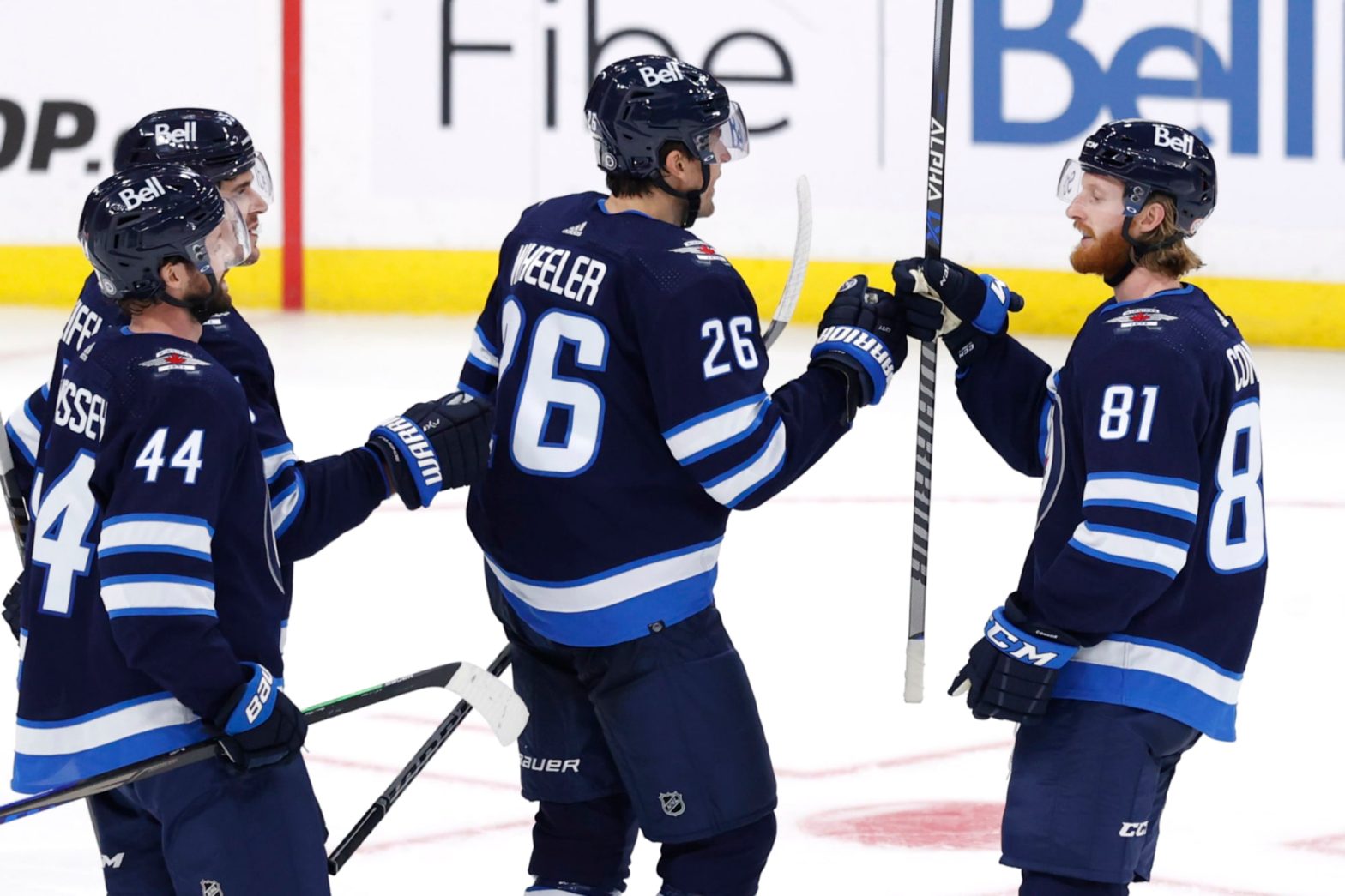
Winnipeg Jets 2022-23 Season Preview

We have made it to the final season preview! The Jets just endured a very boring offseason, one that didn’t get spicy until training camp started, when they stripped Blake Wheeler of his captaincy, something that he has held since Andrew Ladd left in 2016. Message sent. Winnipeg was disappointing last season. Are they reformed enough to make a run at the playoffs?

Offseason additions: F Sam Gagner, G David Rittich, F Saku Maenalanen, F Kevin Stenlund.

Offseason subtractions: F Paul Stastny, F Evgeny Svechnikov, G Eric Comrie, F Zach Sanford, D Nathan Beaulieu, F Kristian Vesalainen.

Forwards

A big problem with the Jets is that while they have stars, none of them play defense. Mark Scheifele and Blake Wheeler are a dynamic duo offensively, but they were the two worst forwards on the team in both goals against per sixty and expected goals against per sixty. Both of them missed a decent amount of games last year, which is uncharacteristic. Scheifele played in 67 games, but still scored 29 goals with 70 points. Wheeler, who has never been a big goal scorer, only had 17, but did have 43 assists to bring up his point total to 60 in 65 games. Last season was a big one for Nikolaj Ehlers, who scored 28 goals with 55 points in 62 games. Ehlers had his highest average ice time, and has developed into a star.

While most of the top-six missed a good amount of games last year, Kyle Connor did not. Playing in all but three contests, Connor scored a career-high 47 goals with 93 points, cementing himself as a superstar. Taking just two minor penalties all year, Connor secured the Lady Byng Trophy. Connor’s main center throughout the year was Pierre-Luc Dubois, who will continue to have trade rumors surround him as he can’t seem to figure out where he wants to play. Dubois scored 28 goals last year with 60 points, matching his breakout season of 2018-19. Drafted tenth overall in 2020, Cole Perfetti got a taste of the spotlight last season, scoring seven points in 18 NHL games. He added 15 more points in 17 AHL games.

Where the Jets are going to hurt this year is the third line, where they could not find anyone to replace Andrew Copp after he was dealt at the deadline. Adam Lowry is the strongest part of the line, but he suffered from a 4.16 on-ice shooting percentage at five-on-five. Lowry did score 13 goals, but he had a 37.8 GF%. His 1.95 GA/60 was the best on the team. Lowry played a lot with Jansen Harkins last year, but Harkins did not get a ton of ice time. Playing in 77 games but averaging less than 10 minutes of ice time a game, Harkins scored seven goals with six assists. After losing him to Seattle in the expansion draft, the Jets traded a fourth-rounder at the deadline to re-acquire Mason Appleton. In the 19 games to start his second stint as a Jet, Appleton had four points.

Sam Gagner has made his way to his seventh NHL team after reviving his career for the second time. Gagner was a leader on the lowly Red Wings last year and his production wasn’t bad either. He scored 13 goals with 31 points while playing in all but one game. Saku Maenalanen, who played in 34 games for the 2018-19 Hurricanes, is back in the NHL with the Jets. He played in 47 games for Karpat in Finland last season, scoring 13 goals with 28 assists for 41 points. While he has just one point in 28 career games over three seasons, David Gustafsson has performed at the AHL level. Playing in 45 games last year, he scored 15 goals with 15 assists. Dominic Toninato broke into the lineup last year, scoring seven goals in 77 games. Toninato didn’t play a ton while in the bottom-six, but he did record 92 hits. Coming over in the trade for Copp was Morgan Barron. A former star at Cornell, Barron had four points in 14 games after the deal.

Defensemen

The Jets used six main defensemen last year, and the expectation is that they will use the same six guys this season. Following a tough 2020-21 season, Josh Morrissey rebounded with a career-high in goals, with twelve, and points, with 37. While he isn’t overly big, Morrissey plays like he is, with 104 blocks, 150 hits, and 66 penalty minutes in 2021-22. However, he isn’t as defensively sound as his partner, Dylan DeMelo. While he had just 13 points in 76 games, DeMelo had 108 blocks and a 1.96 GA/60, the best on the defense.

In his third season as a Jet, Neal Pionk’s scoring pace was the worst, but he still had 34 points in 77 games. Pionk has been a valuable addition to the Winnipeg power play since coming over from the Rangers for Jacob Trouba. Pionk’s 185 hits were third on the team, trailing only Lowry and Brenden Dillon. Playing in his first year with the team, Dillon had 20 points while helping do the much-needed work of shoring up the team’s defense. Dillon’s 53.15 GF% was the best on the defensive core.

The other big offseason acquisition last year, aside from Dillon, was Nate Schmidt. With 32 points, his most since he was a big part of Vegas’ inaugural season, Schmidt delivered. He was nominated for the Lady Byng for the fourth year in a row, taking just 10 penalty minutes all season. Schmidt may not be a big hitter, but Logan Stanley is. Standing six feet and seven inches tall, Stanley had 131 hits in 58 games last year. He will have a role as long as he beats out Ville Heinola. The 21-year-old had five points in 12 games last season. Heinola would only be in the NHL if he had a starting job. That opens up the door for Dylan Samberg to be the seventh-defender. Samberg had five points in 15 NHL games last year. He added twelve more in 32 AHL games.

Goaltending

Connor Hellebuyck is such a weird goalie to evaluate, because the Jets are wearing him out. Hellebuyck has faced the most shots in the league for each of the past four seasons. He didn’t do so in 2017-18, but that year he had the most starts. Hellebuyck had a 2.97 GAA and a .910 save percentage last season, which is nothing too impressive. But he had 13.6 goals saved above expected, good enough for eighth in the league. While he didn’t get any Vezina votes, Hellebuyck is still good. The Jets don’t really need a backup for him, so they went for the cheaper option in veteran David Rittich. Playing in 17 games for Nashville last season, Rittich was really bad. He had a 3.57 GAA with a save percentage of .886.

Projected Lines

Nikolaj Ehlers – Mark Scheifele – Blake Wheeler

Kyle Connor – Pierre-Luc Dubois – Cole Perfetti

Jansen Harkins – Adam Lowry – Mason Appleton

Saku Maenalanen – Morgan Barron – Sam Gagner

Extras: Dominic Toninato, David Gustafsson

Josh Morrissey – Dylan DeMelo

Brenden Dillon – Neal Pionk

Logan Stanley – Nate Schmidt

Scratched: Dylan Samberg

Connor Hellebuyck

David Rittich

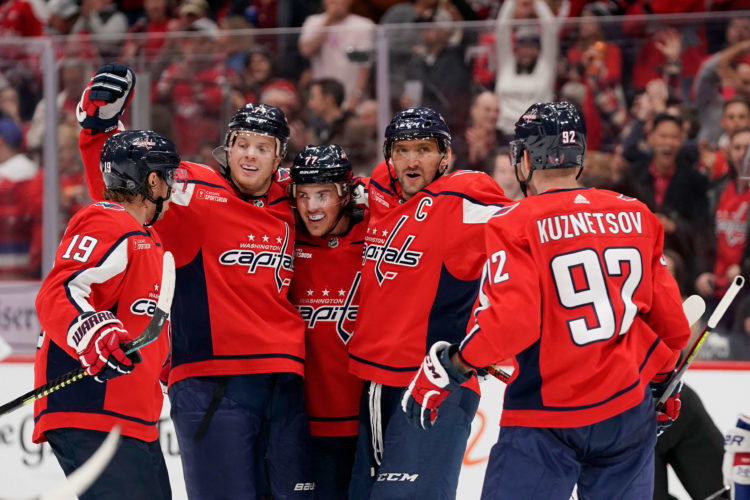
Washington Capitals 2022-23 Season Preview

The narrative that the Capitals are on the brink of a rebuild continued last season, but it just won’t happen. The truth is that Washington probably will contend as long as Alex Ovechkin is still scoring. And the day that Ovechkin stops scoring will probably feature him as the league’s all-time greatest scorer. A solid offseason has lengthened the team’s competition window, but a group of major injuries are already threatening.

Offseason additions: G Darcy Kuemper, F Connor Brown, F Dylan Strome, D Erik Gustafsson, G Charlie Lindgren, F Henrik Borgstrom.

Offseason subtractions: D Justin Schultz, G Ilya Samsonov, G Vitek Vanecek, F Johan Larsson.

Forwards

Ovechkin is now at 780 career goals after scoring 50 in 2021-22. At age 36, he reached the 50-goal mark for the ninth time in his career. While he didn’t win his tenth Rocket Richard Trophy, Ovechkin is obviously a favorite to do so this year. He still throws everything possible at the net with his amazing shot, with 334 shots last season. The top line is already weaker, as both Nicklas Backstrom and Tom Wilson will miss multiple months. Backstrom only played in 47 games last year, and only had 31 points, so his age could be a concern going forward. Wilson had 52 points with his signature controversial play last year. At this stage in his career, Ovechkin has played less with Backstrom as his center and more with Evgeny Kuznetsov. There were a good amount of trade rumors surrounding Kuznetsov after a bad 2020-21 season, but he rebounded with 24 goals and 78 points in 79 games. Two-time 20-goal scorer Connor Brown came over this offseason in a trade with the Senators. Brown averaged over 20 minutes of ice time a game, but only had 10 goals in 64 games last season. He still had 39 points and is a lot more disciplined than Wilson.

Washington traded a fortune for Anthony Mantha at the 2021 deadline, but he has been banged up and disappointing since the deal. Mantha was limited to just 37 games last season, with nine goals and 23 points. He has no goals in 11 playoff games over two seasons with the team. He scored four less goals in 11 more games than Jakub Vrana, who was a part of the package to acquire him. Not only are Ovechkin and Backstrom getting up there in age, but so is TJ Oshie. Playing in only 44 games last season, Oshie had just 25 points. His 42.76 GF% was the worst among Capitals forwards with at least 500 minutes of ice time. On the positive side, he did suffer from some bad PDO luck, and had the best xGF% of the top-six forwards. Backstrom’s injury elevated the role of Lars Eller last year, and will continue to in 2022-23. Eller had 31 points in 72 games, which is in the range of his career norms.

One of the many players to be confusingly non-tendered by the Blackhawks over the past few seasons was Dylan Strome, who the Capitals scooped up. While he hasn’t lived to the hype of being drafted after Connor McDavid and Jack Eichel, Strome had a very good season on a lowly Chicago team. Playing in 69 games, he scored a career-high 22 goals with a total of 48 points. For just $3.5 million in free agency, that’s a great deal for Washington. The team’s first-round pick in 2019, Connor McMichael got regular run last season. While he showed flashes of talent, the overall production wasn’t exactly there, with only nine goals and nine assists in 68 games. McMichael didn’t have a big role on the team, which could increase with Carl Hagelin out indefinitely. Hagelin sustained a scary eye injury last season, and is still dealing with another, undefined injury. Conor Sheary had his best season since he broke into the league with the 2016-17 Penguins. He scored 19 goals with 43 total points.

Old friend Marcus Johansson returned to the Capitals after short-lived stints with five other teams. Playing in 18 games after the deadline, he had six points. Johansson is not as effective as he was when he was first a Capital, but can still impact the bottom-six in a positive way. While a lot of it was luck, Garnet Hathaway still had an incredibly impressive GF% of 64.4 percent last year, easily leading the team. Hathaway also scored more than ever, with 14 goals and 26 points, along with 250 hits. His center, Nic Dowd, also set a career-high in points, with 24. Dowd had 139 hits with a 58 GF%. Undrafted forward Joe Snively broke into the league last year, and produced seven points in 12 games. He also succeeded in the AHL, with 38 points in 35 games. A third-round pick in 2019, Aliaksei Protas put up nine points in 33 games last season. He had 24 more in the AHL.

Defensemen

The same story is still true for John Carlson: he will put up a ton of points, but the defense isn’t great. Carlson quietly scored a career-high 17 goals with 71 points in 78 games last year, finishing tenth in Norris voting. Carlson also had the second-worst xGA/60 on the Washington defensive core. The only guy worse than him was his regular partner, Martin Fehervary. In his rookie season, the 22-year-old put up 17 points with 117 blocked shots and 251 hits.

Dmitry Orlov’s game keeps improving, even as he has been moved off the top pair. His 12 goals and 35 points were both career-highs, and his goals for percentage was an even sixty. Orlov and his partner, Nick Jensen dominated at even strength. Jensen actually had Orlov in GF%, at nearly 64 percent. He added 21 points and 135 hits.

The defense’s leader in xGF% was Trevor van Riemsdyk by a slim margin. Playing in a regular NHL role for the first time since 2018-19, van Riemsdyk had 17 points with 129 blocked shots. While he doesn’t bring much offense, that could come from Erik Gustafsson, who once had 60 points in a season. Gustafsson had 18 in 59 games for Chicago last year. He was playing in a very sheltered role because of his lack of defensive ability. The Washington power play was surprisingly weak last season, and Gustafsson can improve the second pair. Veteran Matt Irwin was signed to provide depth last year, and he did exactly that, playing in only 17 games. The journeyman has played for six teams, averaging less than 16 minutes of ice time a game for exactly 400 games.

Goaltending

The Capitals had two fine goalies last year, but both are gone in favor for a more clear-cut split. While starting for the Avalanche has its benefits, like a Stanley Cup ring, Darcy Kuemper was legitimately strong in last year’s regular season. He had a .921 save percentage and was fifth in the league in goals saved above expected. He did struggle in the postseason, with a .902 save percentage. Five great games last year led to Charlie Lindgren securing $3.3 million over the next three seasons. Lindgren had a 1.22 GAA and a .958 save percentage in a short stint as the Blues’ third goalie. To be fair to Lindgren, he was also great in the AHL. Playing in 34 games, he had a 2.21 GAA and a .925 save percentage.

Projected Lines

Alex Ovechkin – Evgeny Kuznetsov – Connor Brown

Anthony Mantha – Lars Eller – TJ Oshie

Connor McMichael – Dylan Strome – Conor Sheary

Marcus Johansson – Nic Dowd – Garnet Hathaway

Scratched: Aliaksei Protas, Joe Snively

Martin Fehervary – John Carlson

Dmitry Orlov – Nick Jensen

Erik Gustafsson – Trevor van Riemsdyk

Scratched: Matt Irwin

Darcy Kuemper

Charlie Lindgren