NHL Trade Review: Habs acquire Staal


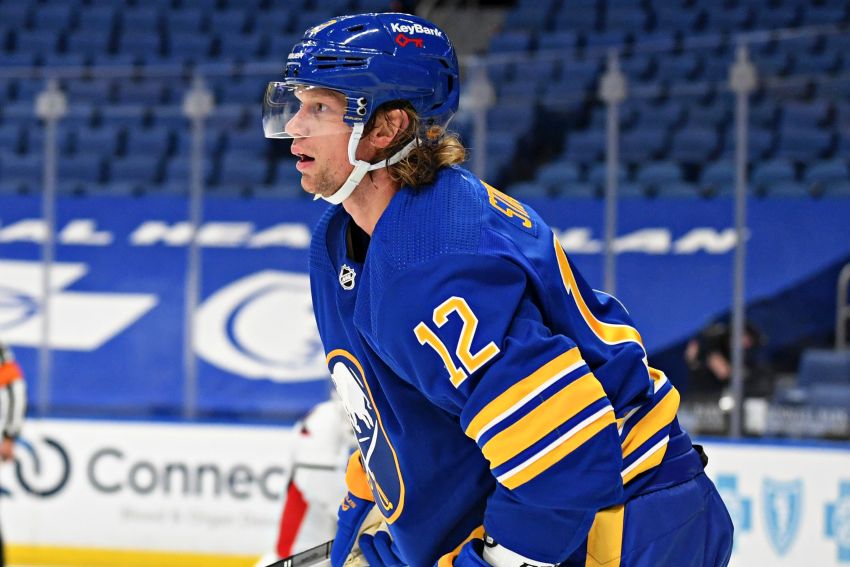
       The Montreal Canadiens have acquired forward Eric Staal from the Buffalo Sabres in exchange for a 2021 third round draft pick and a 2021 5th round pick. The Sabres also retained $1.625 million, or 50% of Staal\’s salary.

This is act one of the everything must go sale for another Sabres rebuild. Staal was the second biggest name expected to be traded, behind winger Taylor Hall. Like every other member of the Sabres, who currently have a 15 game losing streak and a .250 points percentage, Staal has had a pretty terrible season. While he is sixth on the team in points, he is on his way to a career low point total, as Staal\’s 0.31 points per game is a career worst. The veteran is good at face-offs, although his 48% win rate on them right now is low for his standards. He can play on the power play, and boost Montreal\’s bottom-six as they try to finish in the top four in the North Division. He has just a 5.1 shooting percentage and a 91.5 PDO, so things can easily get better. Staal\’s 51.2 CF% is well above his old team\’s average. We will probably see a lack of trades between American and Canadian teams because of the mandated quarantine time between borders, but that was limited to just seven days from 14 earlier today for NHL players, which helps Staal and the Canadiens out. Both teams win here, as the Sabres get a decent mid-round pick and a mid-to-late-round pick for Staal, who was going to leave as a free agent after this season, and the Canadiens get a good bottom-six player for under $1.7 million (after retention), and they still have two third round picks and two fifth round picks in this year\’s draft.

Staal, 36, scored three goals with seven assists for 10 points in 32 games for Buffalo this year. In his NHL career for the Sabres, Minnesota Wild, New York Rangers and Carolina Hurricanes, Staal has scored 439 goals with 592 assists for 1031 points in 1272 games. 

NHL Trade Review: Ducks acquire Volkov


       The Anaheim Ducks have acquired forward Alexander Volkov from the Tampa Bay Lighting in exchange for F Antoine Morand and a 2023 conditional seventh round draft pick. The pick can transfer to a 2024 7th rounder depending on conditions from a draft day 2020 trade with Columbus.

This is the first trade of the trade deadline season, and it is certainly not a blockbuster. Volkov is a decent prospect who just fell out of favor after Ross Colton impressed the Lightning with four points in his past seven games. Drafted in the second round (48th overall) in 2017, Volkov had 30 points in 46 AHL games last year, and scored exactly 23 goals for the Syracuse Crunch in both 2017-18 and 2018-19. He made his NHL debut last year, and he also played in one playoff game. That one playoff game happened to be Game 6 of the Stanley Cup Finals, and Volkov drew a tripping penalty that led to the Cup-winning goal. Anaheim gets a young player who can fit into their bottom-six if given a chance. It is probably worth it for them, as the Ducks are 9-19-6, with minimal production from their bottom-six.

Volkov, 23, has scored three goals with two assists for five points in 19 games for Tampa Bay this year. In his two year NHL career, he has three goals with three assists in 28 games. 

The Lightning clear up an NHL roster spot here, and they get some value back. Morand was drafted just 12 spots after Volkov in 2017, but his career has not progressed like Volkov\’s. After posting 70 points in 62 QMJHL games in 2018-19, Morand went to the San Diego Gulls of the AHL, where he has really fallen off. Still, Morand is young, albeit undersized. The seventh round pick is just some additional value for the Bolts.

Morand, 22, has scored one goal with five assists for six points in 21 games for the Gulls in 2020-21. In his AHL career, Morand has scored six goals with 16 assists for 22 points in 75 games. 

Washington Nationals 2021 Season Preview


       We are finally at the end of my season previews for 2021. This year, the Nationals do not have their roster all official by the time I finished my preview for them, since I started these a week earlier than I normally do. For the team themselves, they really disappointed, as the reigning World Series champions finished in last place, while playing in the same division as the Phillies and their bullpen. You would think that this could just be a 60-game blip, but there are enough reasons to believe that Washington may not recover.

Offseason additions: OF Kyle Schwarber, 1B Josh Bell, LHP Brad Hand, C Alex Avila, LHP Jon Lester, IF Jordy Mercer, OF Gerardo Parra, LHP Luis Avilan, LHP TJ McFarland.

Offseason subtractions: RHP Anibal Sanchez, C Kurt Suzuki, 1B Eric Thames, LHP Sean Doolittle, IF Asdrubal Cabrera, OF Adam Eaton, IF Howie Kendrick, IF Brock Holt.

Trade Deadline 2020 summary

Acquired: None.

Traded: None.

2020 record: 26-34

2020 placement: 5th (tied)

2020 WAR leader (batter): Trea Turner

2020 WAR leader (pitcher): Max Scherzer

Starting Pitchers

The rotation entered 2020 as Washington\’s strength, but it oddly became a weakness as the season progressed. Three-time Cy Young winner and future Hall-of-Famer Max Scherzer finished outside the top-5 in Cy Young voting for the first time since 2012. Scherzer didn\’t even receive a vote, as he had a 3.74 ERA with 92 strikeouts in 67.1 innings. He had a 4.33 xERA, with an uncharacteristically high 9.4 H/9. His 7.8% BB% was a big raise from 2019. Scherzer\’s velocity on his pitches stayed the same, but he is 36 years old, so age could play a role in his deterioration. The one slumping player who I am worried about is Patrick Corbin. Corbin\’s sinker and fastball velocity decreased to just over 90 mph last year, while his slider\’s whiff rate dropped by over 10 percent. The high-strikeout pitcher had just 60 Ks with a 4.66 ERA in 65.2 innings. No National League pitcher allowed more hits than Corbin, who allowed 85, for an 11.6 H/9. He had a 5.17 xERA while batters had a .289 xBA against Corbin. The first season of Stephen Strasburg\’s seven year, $245 million contract was a waste, as he made just two starts and missed the rest of the season with a hand injury. He had just two strikeouts while allowing six runs over five innings in those two starts. Strasburg has had a calf issue this Spring Training, but he should not miss any regular season time. His last healthy action was in 2019, when he won World Series MVP, and had a 3.32 ERA with 251 strikeouts in a league leading 209 regular season innings. Since the rotation wasn\’t already old enough, Jon Lester was brought in. Lester lead the NL in wins in 2018 (take what you want from that), but has not been good in 2019 or 2020. He had just 42 strikeouts in 61 innings with a 5.16 ERA for the Cubs. He had a 12.3 barrel percentage and a .517 xSLG against. Lester\’s high-80s fastball was extremely awful, with a .767 xSLG against and an 8.2 whiff rate. The big rotation fight will come with the fifth spot, as there are multiple candidates. Erick Fedde had a 4.29 ERA in 11 games (eight starts), but he struck out just 28 in 50.1 innings, for an awful 12.6 K%. Fedde throws a sinker that had just a 1836 rpm with a 7.6 percent whiff rate, and his highest whiff rate on a pitch was 28.1%. Joe Ross was the favorite for the fifth starter spot last year before he opted-out of the season. He split time between the rotation and bullpen in 2019, and did not pitch well, with a 5.48 ERA and 57 strikeouts in 64 innings. He had an 87.5 mph average exit velocity against, although he also walked 11.2 percent of batters. Since Ross didn\’t pitch last year, he could start out in the bullpen. Austin Voth is also an option after he was pretty good in limited time in 2019. Voth could not carry that over to 2020, as he had a 6.34 ERA with 44 strikeouts in 49.2 innings. His 5.52 xERA was an improvement, but still not very good. He also had a pretty bad 1.510 WHIP. 

Relief Pitchers

After Brad Hand\’s option was declined by the Indians, the Nationals were wise to pick him up in free agency. The three-time all-star led the AL in saved with 16 last year, with a 2.05 ERA and 29 strikeouts in 22 innings. He walked just 4.7% of batters, with a .174 xBA against and a 2.56 xERA. Batters had just a .486 OPS against Hand, who has had an ERA+ of at least 130 in each of the past five seasons. He should step in to be the new closer after Daniel Hudson struggled in the role last year. Hudson did have 28 strikeouts in 20.2 innings, but he also had a 6.10 ERA and a 12 BB%. There were some positives to Hudson\’s season, as he had just a 6.5 H/9 and and a .185 xBA. Hudson\’s slider had a 48.1 K%, which was a 16% improvement from his great 2019. Tanner Rainey throws a slider that is one of baseball\’s most underrated pitches. He threw the pitch over 39 percent of the time, and batters went 1-for-20 with 16 strikeouts and a 75.5 whiff rate. Rainey throws a high-90s fastball, and he had a 2.66 ERA in 20.1 innings. He struck out 32 batters with a .180 xBA. Veteran Will Harris could miss the beginning of the season because of a blood clot in his arm. While he had a 3.06 ERA with 21 strikeouts in 17.2 innings, Harris\’ season was not that good. He allowed 21 hits and walked nine, for a 1.698 WHIP, after he had a 0.933 WHIP in 2019. He had a 5.13 xERA, with a 91.2 mph average exit velocity. After many years of battling in the minor leagues, Kyle Finnegan made his MLB debut less than two months before his 29th birthday. Finnegan\’s first season went well, as he had a 2.92 ERA with 27 strikeouts in 24.2 innings, allowing just 21 hits. He also had just a 28.6 hard hit percentage against. Finnegan did walk 12.9% of batters, and his split finger had a 995 rpm spin rate, which honestly may be more impressive than a 2500 rpm spin rate. He may not be the best relief pitcher, but Wander Suero is good at striking out batters. He has a 9.8 K/9 in his career, and Suero had 28 strikeouts in 23.2 innings with a 3.80 ERA. His 27.9 hard hit percentage in 2020 was a career best. His cutter velocity dropped by nearly two miles per hour on average, down to 91 mph. Of Fedde, Ross and Voth, the two who don\’t make the rotation will probably be in the bullpen. Sam Clay has a 2.57 ERA in seven Spring Training innings, and the lefty got a major league deal after he had a 3.25 ERA with 72 strikeouts in 69.1 innings. Ryne Harper had 25 strikeouts in 23.2 innings for Washington last year, but he also had a 7.61 ERA. Harper\’s fastball was terrible, with a .486 average against (18-for-37). 

Catchers

Veteran catcher Yan Gomes won back the starting catcher job from Kurt Suzuki, who left in free agency. Gomes had a .787 OPS and a 107 OPS+, while his .286 xBA and 18.3 K% were big improvements on previous seasons. Gomes still only hit four home runs in 30 games, but that is actually a 20 homer pace in a 150 game season, so don\’t read too much into that. He was not a good pitch framer. Alex Avila has had an odd mix of good and bad offensive seasons, but he has caught three of the Nationals\’ four main starters (Scherzer in Detroit, Corbin in Arizona, Lester in Chicago, credit to MLB.com for that stat). In 23 short games for the Twins last year, Avila was on the bad side of his hitting spectrum, with a .184 average and a .641 OPS. 

Infielders

The big trade of Washington\’s offseason was when they acquired Josh Bell from Pittsburgh. Bell had a great start to 2019, and finished with 37 home runs and an all-star appearance. He tailed off towards the end of the season, and that carried over into 2020, as he hit eight home runs with a .226 average and a .669 OPS. The switch hitter had a career high 26.5 K%, with a career low 9.9 BB%. Bell still did hit the ball hard, with an average exit velocity of 91.7 mph. Returning for his 16th season in D.C. is Ryan Zimmerman, who has been the greatest position player in franchise history, and by WAR he actually is first since the team moved from Montreal, just barely edging out Scherzer. The 4th overall pick in 2005 opted-out of the 2020 season, and after the way his 2019 season went, Zimmerman will be a bench bat and backup to Bell at first. He hit six home runs with a .736 OPS in 2019. In the Statcast era, Zimmerman has a 92 mph average exit velocity. Four time all-star Starlin Castro broke his wrist early on in 2020, and never returned. He was playing fine in his first 16 games, with a .754 OPS. One area where Castro needs to improve is getting on base, as he had a .300 OBP in 2019 despite a decent .270 average. He has never won a Gold Glove, but the former shortstop is a good defensive second baseman. He had two outs above average in 2020, and nine in 2019. Trea Turner received MVP votes for the first time in his career, as he had a league leading 78 hits with a .335 average, a .986 OPS and 12 home runs while also swiping 12 bags. Turner had an elite sprint speed of 30.1 ft/s. Turner\’s average sprint speed has never dropped below 30. Turner also had a career best K% of 14.2 percent. Carter Kieboom was a top prospect, and the Nationals depended on him after Anthony Rendon left in free agency. So far, he has not followed through, as Kieboom hit .202 with a .556 OPS in 33 games. He did have a solid 14.4 walk rate, and he had a .902 OPS at AAA in 2019. Josh Harrison, who should be a lot older than 33, is entering his second season with the Nationals. He played corner outfield, second and third base last year. Harrison had a 105 OPS+ in 33 games, which was actually the second base in his career. While he only struck out 13.2 percent of the time, Harrison does not hit the ball hard, with an 83.8 mph average exit velocity. 20 year old Luis Garcia took over at second base when Castro was injured, but he had a .668 OPS, meaning that he could use some more minor league time. Garcia had just an 83.5 mph exit velocity, a 3.6 walk rate and -7 outs above average. 

Outfielders

While his -2 outs above average may have stopped him from leading the team in WAR, Juan Soto showed just how ridiculous he is. Soto hit 13 home runs in 47 games, and led the National League with a .351 average. Soto\’s .490 OBP, .695 slugging and 1.185 OPS all led the Major Leagues. He had a 17.9 barrel percentage, with a .697 xSLG. He struck out just 14.6 percent of the time, with an insane 20.8 walk rate. Soto\’s on-base was the best since Barry Bonds set the all-time record in 2004 (.609). The next best OBP since 2009 was also in 2020, as Freddie Freeman had a .462 OBP. Plus, Soto turned 22 in October. That is one year younger than Victor Robles, who had a solid 2019 rookie season before regressing last year. Robles hit three home runs with four stolen bases and a .608 OPS. His sprint speed dropped by over one ft/s, and he had an awful 82.2 mph average exit velocity, with a 22.9 hard hit percentage. Robles had just a .280 xSLG. Robles had three outs above average, and with Soto and new acquisition Kyle Schwarber in the corners, he will need to be elite defensively. Schwarber hit 38 home runs with an .871 OPS in 2019, but he did not carry that over to 2020, as he hit 11 home runs with a .188 average and a .701 OPS. Schwarber\’s 29.5 K% was his worst since 2017, although he did have an increased 13.4 percent walk rate. He also had a 92.8 mph average exit velocity. Schwarber had -4 outs above average in left field, and is so bad defensively that the Nats would rather move Soto over to right field than experiment with Schwarber in right. Gerardo Parra\’s \”Baby Shark\” walk-up song was a fan favorite when the team won the World Series in 2019, but he spent 2020 in Japan. Back in Washington on a minor league deal, Parra had a .688 OPS for Yomiuri last year. He stole six bases with a .747 OPS while playing all three outfield positions and first base for the team in 2019. Andrew Stevenson followed up being great in a very small sample size in 2019 (.953 OPS in 30 games) by being, well, great in a very small sample size. The left-handed hitting outfielder hit two home runs with two stolen bases and a 1.179 OPS in 15 games. 

Projected Rotation
Max Scherzer (R)
Patrick Corbin (L)
Stephen Strasburg (R)
Jon Lester (L)
Erick Fedde (R)
Projected Bullpen
Brad Hand (L)
Daniel Hudson (R)
Tanner Rainey (R)
Will Harris (R)
Kyle Finnegan (R)
Wander Suero (R)
Joe Ross (R)
Austin Voth (R)
Projected Lineup
SS Trea Turner (R)
2B Starlin Castro (R)
RF Juan Soto (L)
LF Kyle Schwarber (L)
1B Josh Bell (S)
C Yan Gomes (R)
CF Victor Robles (R)
3B Carter Kieboom (R)
Pitcher
Projected Bench
C Alex Avila (L)
UT Josh Harrison (R)
1B Ryan Zimmerman (R)
OF Gerardo Parra (L)
OF Andrew Stevenson (L)

Projection

The Nationals have a lot of big questions entering 2021, so it would be easier to go over what isn\’t a question, and Soto and Turner are basically it. The rest of the lineup is not great, the bullpen is not elite, just average, and the rotation, the guiding force in 2019, is aging. If Scherzer, Corbin and Strasburg cannot all regain their old form, then the team will be in trouble. They are not completely out of the playoff picture, but the Braves and the resurgence of the Mets will hurt their chances. As of now, they are not a playoff team. 

Toronto Blue Jays 2021 Season Preview


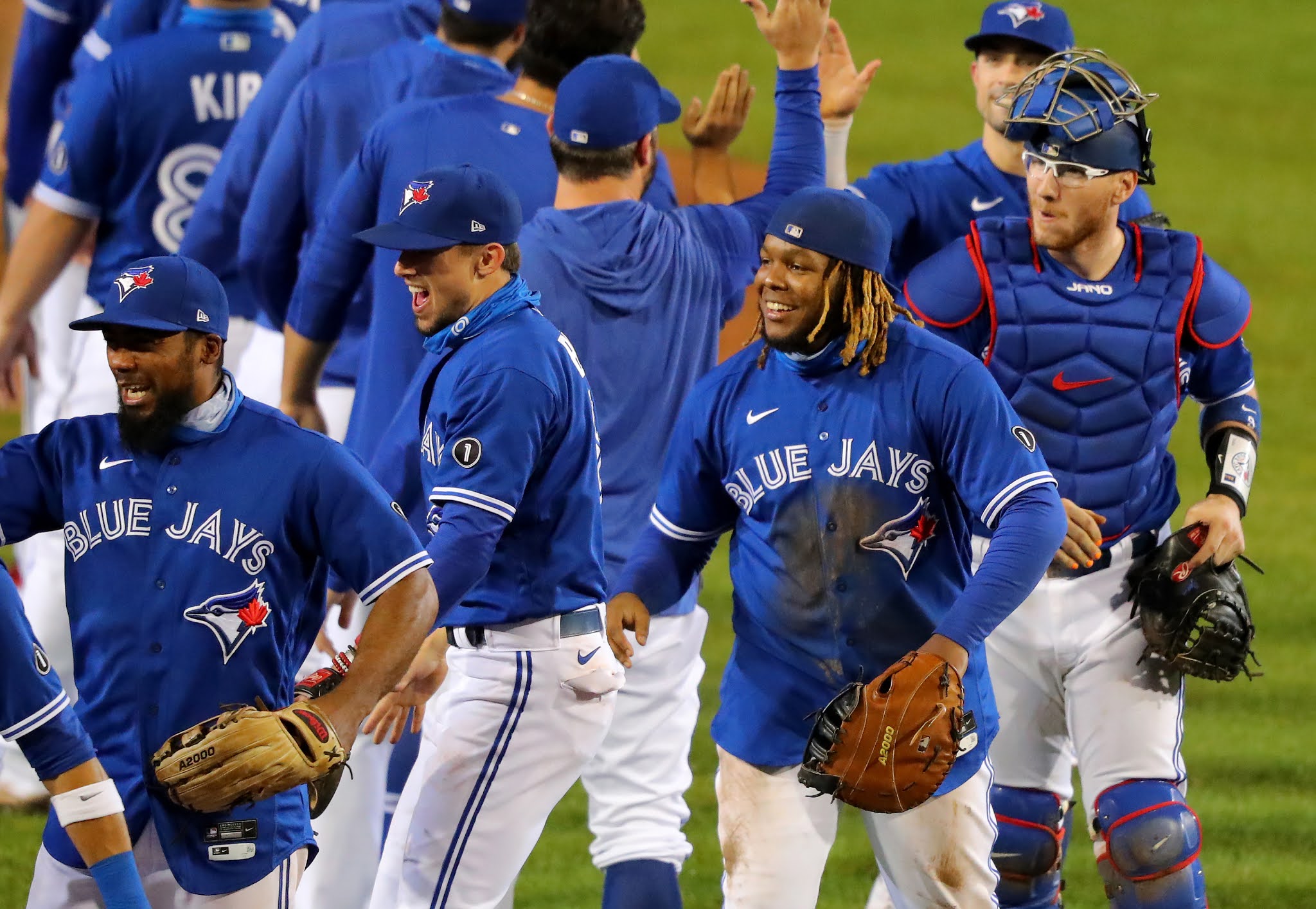
       This year there are about 3-4 teams that I am not sure just how to predict. The Blue Jays are certainly one of them. They nearly beat out the Yankees for second place in the AL East, and they still made the playoffs. The team was also determined to spend money in the offseason, and while they missed out early in the offseason, they were able to improve with an amazing second half. That included one of the biggest fish on the market, center fielder George Springer.

Offseason additions: OF George Springer, IF Marcus Semien, RHP Kirby Yates, LHP Steven Matz, RHP Tyler Chatwood, RHP David Phelps, LHP Francisco Liriano, LHP Tommy Milone, LHP Travis Bergen.

Offseason subtractions: RHP Anthony Bass, RHP Taijuan Walker, RHP Chase Anderson, RHP Matt Shoemaker, 3B Travis Shaw, RHP Sean Reid-Foley, OF Derek Fisher, IF Jonathan Villar.

Trade Deadline 2020 summary

Acquired: LHP Robbie Ray, IF Jonathan Villar, RHP Ross Stripling.

Traded: LHP Travis Bergen.

2020 record: 32-28

2020 placement: 3rd

2020 WAR leader (batter): Cavan Biggio

2020 WAR leader (pitcher): Hyun-Jin Ryu

Starting Pitchers

The biggest area for concern with the Blue Jays entering 2021 is easily their rotation. They do have a legitimate ace, but afterwards things really fall off. Hyun-Jin Ryu proved that his 2019 NL Cy Young runner-up season was not a fluke, as he finished 3rd in AL Cy Young voting. Ryu had a 2.69 ERA with 72 strikeouts in 67 innings. He had just a 6.2 walk rate, with a 29.2 hard hit percentage. Ryu\’s main pitch is a slow curveball, which had a .185 average and a .261 slugging against, and it had just a 1478 rpm spin rate. The Blue Jays really need Ryu to stay healthy, because things will get ugly if he is injured. Robbie Ray always had walk issues, but those became more than issues last year. Ray was acquired at the trade deadline after he had a 7.84 ERA with 31 walks in 31 innings. Despite only making seven starts, he still allowed more walks than anyone in the National League. Add his 14 walks in 20.2 innings with Toronto, Ray walked an MLB leading 45 batters. He had a 6.62 ERA with 68 strikeouts in 51.2 innings. Batters also had a 91.6 mph average exit velocity against the lefty. Tanner Roark had been a dependable starter for a number of years, but his debut season in Toronto was easily his first. He struck out 41 batters in 47.2 innings, with a 6.80 ERA and a 6.53 xERA. Batters had a .539 xSLG against Roark, who also allowed a 13 barrel percentage. Batters also hit at least .300 against Roark\’s main three pitches each. The Blue Jays gave up three players for Steven Matz, who lost his spot in the Mets\’ rotation last year. Matz had a 9.69 ERA while striking out 36 in 30.2 innings. He also had a 7.09 xERA, a .302 xBA against and a .570 xSLG. Matz could not even limit hard contact, with a 49 hard hit percentage, and a 13.5 barrel percentage. At the very least, Matz has had a good Spring Training, striking out 12 while allowing one run in 10 innings. Closing out the Blue Jays\’ great rotation from 2016-17 is Ross Stripling, who was acquired from Los Angeles at the trade deadline. Stripling was a pretty good swingman for a few years, but had a rough 2020. Combined between two teams, he had a 5.84 ERA with a 6.49 xERA and a 91.2 mph average exit velocity. He could either start or come out of the bullpen, and that probably depends on Nate Pearson\’s health. Pearson walked 13 in 18 innings with a 6.00 ERA, but the team\’s top prospect can hit 102 mph, and he had a 2.30 ERA with 119 strikeouts in 101.2 minor league innings in 2019. Injuries have been a problem for Pearson, and he could start in AAA, or the alternate training site. 

Relief Pitchers

The Blue Jays are betting that Kirby Yates\’ elbow injury has healed. Yates allowed six runs with eight strikeouts in 4.1 innings before missing the rest of the year. Yates was arguably the best reliever in baseball in 2019, with a 1.19 ERA, 101 strikeouts and a league leading 41 saves in 60.2 innings. He had a .170 xBA and a .254 xSLG against, and his main two pitches, a split-finger and fastball, almost exactly spilt his strikeouts while each had a whiff rate of exactly 34.4%. Rafael Dolis pitched for the Cubs from 2011-2013, but reinvented himself from 2016 to 2019 in Japan, earning him a deal with Toronto. It worked in year one, as Dolis split closing duties with Anthony Bass, and had a 1.50 ERA with 31 strikeouts in 24 innings, while only allowing 16 hits. Dolis had a .170 xBA with an 85.4 mph average exit velocity, but he also had a 14 percent walk rate. Leading the Toronto bullpen early last year was Jordan Romano, before he missed time with a middle finger injury (yes, I am serious). Romano had a 1.23 ERA in 14.2 innings, while striking out 21 and allowing just eight hits. His high-90s fastball really showed off, as batters went 1-for-20 with a 52.4 percent whiff rate against the pitch. Ryan Borucki was a productive starter in his rookie season of 2018, but he missed almost all of 2019, before moving to the bullpen last year. Borucki struck out 21 in 16.2 innings with a 2.70 ERA. Batters went 2-for-26 with 14 strikeouts against Borucki\’s slider. His sinker averaged 94.8 mph, and in 2018 that averaged 91.5 mph. Tyler Chatwood can also be a starter, but after succeeding out of the \’pen in 2019, he will start there. Chatwood had 5.30 ERA with 25 strikeouts in 18.2 innings over five starts for the Cubs last year. His pitches have amazing spin rates, as his curveball had a 2977 rpm spin rate, and his cutter was at 2739 rpm on average. David Phelps had a 2.77 ERA with 20 strikeouts in 13 innings for the Brewers last year, but was traded to the Phillies and immediately experienced their bullpen curse. Phelps did strikeout 11 batters in 7.2 innings, but allowed 11 runs. He had an 85 mph exit velocity against despite a terrible barrel percentage of 14.6 percent. AJ Cole may be in camp on a minor league deal, but his performance for Toronto last year should earn him a spot. Cole had a 3.09 ERA with 20 strikeouts in 23.1 innings, but he had a 2.48 xERA with a three barrel percentage and a .292 xSLG. While his fastball dropped by one mph from 2019, its slugging against dropped by over 200 points. Another player who could start or come out of the bullpen is Tom Hatch, who had a 2.73 ERA with 23 strikeouts in 26.1 innings after an impressive camp. Hatch allowed an 86.4 mph average exit velocity, and his fastball had an average spin rate of 2598 rpm. Veteran Francisco Liriano did not pitch in 2020, but he had a pretty good season out of Pittsburgh\’s bullpen in 2019. Liriano had a 3.47 ERA with 63 strikeouts in 70 innings. Liriano had 60 hits allowed, but he walked 11.9 percent of batters. He had a 29 hard hit percentage and an 85.8 mph average exit velocity. Tim Mayza was a big part of their 2019 bullpen, but missed 2020 with Tommy John surgery. Mayza pitched in 68 games, and struck out 55 in 51.2 innings. He has allowed just one baserunner in 3.2 Spring Training innings. 

Catchers

The Blue Jays have an interesting catcher race, as it is possible for one player to start, or not make the team. 22 year old Alejandro Kirk skipped AA and AAA, and played in nine games last year. Kirk had a .400 OBP with a .983 OPS. He walked 56 times while only striking out 39 times in Single-A and High-A in 2019. If the team keeps Kirk down, then Danny Jansen will start. Jansen hit six home runs with just a .671 OPS last year. He did have a 14.3 percent walk rate, but Jansen\’s 85.1 mph average exit velocity was 10 mph less than Kirk\’s. He is the only catcher who is a lock to make the team, so at least he has that going for him. Reese McGuire had an .872 OPS in 30 games in 2019, but he went just 3-for-41 last year. He has just a 4.9 walk rate in his career as well. McGuire is out of options, so he could be DFA\’d so the team could bring up one of the non-roster invitees like Cole or Liriano. 

Infielders

Entering 2019, Vladimir Guerrero Jr. was easily baseball\’s top prospect after hitting .381 with a 1.073 OPS in the minors the year before. His first two seasons have not been so eye-popping, aside from the 2019 Home Run Derby. He played in all 60 games last year, hitting nine home runs with a .791 OPS, a 50.8 hard hit rate and a 92.5 mph average exit velocity, while striking out just 15.6 percent of the time. That is above-average, but it doesn\’t compare to the second best prospect at the time, Fernando Tatis Jr. After -19 outs above average at third base in 2019, Guerrero moved to first base, where he had -2 OAA. Don\’t freak out, since Guerrero just turned 22. Bo Bichette followed up his great debut in 2019 by having a good 29 games in 2020. Despite walking just 3.9 percent of the time, he had an .840 OPS with five home runs and four stolen bases. Bichette had a .292 xBA while improving defensively. A right knee sprain cost him half of the season. 2019 MVP finalist Marcus Semien will move from shortstop to second base after signing with the Blue Jays. His OPS dropped to .679 in 2020 from .892 the year before. Semien had just a .203 xBA with a 28.6 hard hit percentage. His defense at short really fell off, with -7 outs above average, so moving away to an easier position should help. Semien\’s arrival will move Cavan Biggio to third base. Biggio decreased his strikeout rate to 23% in 2020, with a 15.5 walk rate. He hit eight home runs with six stolen bases and an .807 OPS. Biggio\’s versatility will help the Blue Jays a lot, as they do not have many bench spots. He can play second and third base, as well as all three outfield positions. Semien can also play short and third, while Joe Panik fills in as a utility backup infielder. Panik had a .640 OPS in 41 games for the Blue Jays last year. From 2015-2019, his highest strikeout rate was 9.7%, but that rose all the way to 19.1 percent in 2020. At the very least, it came with a career best walk rate of 14.2 percent. He was strictly a second baseman with the Giants and Mets, but the Blue Jays tested his versatility, playing him at third and shortstop. Another option is Santiago Espinal, a shortstop who had a .641 OPS in 26 games last year. Rowdy Tellez will be the backup first baseman, a DH option and a good pinch-hitter option. Tellez hit eight home runs with an .886 OPS, while nearly cutting his strikeout rate in half, down to 15.7%. He had a 90.7 mph average exit velocity, and a 95.8 mph against fastballs. 

Outfielders

The Blue Jays\’ signing of George Springer will complicate the outfield picture, as now the team has four good outfielders. After hitting 39 homers with a .974 OPS and winning a Silver Slugger in center field, Springer was one of the few Astros to not slow down last year, hitting 14 home runs with an .899 OPS. He walked 10.8 percent of batters with a .290 xBA and a .560 xSLG. Springer only stole one base, but he had an above average sprint speed of 28.2 ft/s. There are concerns with Springer not being able to be a center fielder for the long-run, but he did have two outs above average last year. The right fielder Silver Slugger went to Teoscar Hernandez in 2020 after he had a career season. Acquired in 2017 from Houston for now-teammate Francisco Liriano, Hernandez hit 16 home runs with six stolen bases, a .289 average and a .919 OPS. Hernandez also had a .294 xBA with a .608 expected slugging. He crushes baseballs, with a barrel percentage of 18%, a 93.3 mph average exit velocity, and a 53.1 hard hit rate. Two things that he did not do well was play defense, with -5 outs above average, and not strikeout, with a 30.4 K%. The arrival of Bichette in late 2019 pushed Lourdes Gurriel Jr. to left field, but he just kept hitting. In 57 games last year, Gurriel hit 11 home runs with a .308 average and an .882 OPS. He had a 49.4 hard hit percentage, and slugged .616 against breaking balls. Randal Grichuk is an above-average hitter, and he will have to split time between DH, the bench, and any open outfield space. He hit 13 home runs with a .793 OPS last year, which would have been higher if not for a 5.6 BB%. Grichuk had a pretty good 11.2 barrel percentage and a .463 xSLG. Jonathan Davis has good speed, and has seven stolen bases with a .582 OPS in 70 career games. He can be a 5th outfielder if the team needs one. 

Projected Rotation
Hyun-Jin Ryu (L)
Robbie Ray (L)
Tanner Roark (R)
Steven Matz (L)
Ross Stripling (R)
Projected Bullpen
Kirby Yates (R)
Rafael Dolis (R)
Jordan Romano (R)
Ryan Borucki (L)
Tyler Chatwood (R)
David Phelps (R)
Tom Hatch (R)
AJ Cole (R)
Francisco Liriano (L)
Projected Lineup
CF George Springer (R)
SS Bo Bichette (R)
RF Teoscar Hernandez (R)
1B Vladimir Guerrero Jr. (R)
2B Marcus Semien (R)
LF Lourdes Gurriel Jr. (R)
DH Randal Grichuk (R)
3B Cavan Biggio (L)
C Alejandro Kirk (R)
Projected Bench
C Danny Jansen (R)
1B Rowdy Tellez (L)
IF Joe Panik (L)

Projection 

Last year I didn\’t pick the Padres or White Sox to make the playoffs if they weren\’t expanded, because I felt that they were one year away. Now with the Blue Jays in a similar situation, I\’m making the same mistake again. The Blue Jays can definitely make the playoffs, and I won\’t be surprised. But that rotation is just awful, and you can\’t win with one good starter, even if that starter is not just good, but great. 

Texas Rangers 2021 Season Preview


       The Rangers are definitely a sleeper team. To make the playoffs? No, not even close. I am talking about them being a sleeper team to finish last in baseball. People\’s minds float to the Pirates, Orioles and Tigers when thinking about the league\’s worst teams, but the Rangers are in that conversation. Their team has seen a lot of changes over the past few years, and now new GM Chris Young has to rebuild the team from scratch. 

Offseason additions: DH Khris Davis, OF David Dahl, RHP Mike Foltynewicz, RHP Dane Dunning, 1B Nate Lowe, C Jonah Heim, IF Brock Holt, OF Delino DeShields Jr., IF Charlie Culberson, RHP Ian Kennedy, RHP Hunter Wood, RHP Nick Vincent, RHP Justin Anderson, C John Hicks, C Drew Butera.

Offseason subtractions: RHP Lance Lynn, OF Shin-Soo Choo, IF Elvis Andrus, C Jeff Mathis, RHP Corey Kluber, RHP Rafael Montero, RHP Jesse Chavez, RHP Nick Goody, IF Derek Dietrich, OF Danny Santana. 

Trade Deadline 2020 summary

Acquired: OF Marcus Smith, IF Dustin Harris.

Traded: LHP Mike Minor, C Robinson Chirinos, IF Todd Frazier.

2020 record: 22-38

2020 placement: 5th

2020 WAR leader (batter): Isiah Kiner-Falefa

2020 WAR leader (pitcher): Lance Lynn

Starting Pitchers

Lance Lynn carried the rotation last year, and now that he is gone, there is no one left. Kyle Gibson has already been announced as the Opening Day starter, and Gibson has just one season with an ERA+ over 100 in the last five years. That year came in 2018, when Gibson still had a 4.30 xERA. In 2020, he struck out 58 in 67.1 innings with a 5.35 ERA. Gibson had a 5.70 xERA, and walked ten percent of batters, and had a 1.530 WHIP. Batters had a .283 xBA and a .450 xSLG against him. Mike Foltynewicz also was great in 2018, with a 2.85 ERA, but his career has come crashing down since then. He had a 4.54 ERA in 21 starts in 2019, and after getting crushed in his first start of 2020, Foltynewicz was DFA\’d, never to see the field again that year. A massive concern with Foltynewicz\’s first start was that his fastball was sitting 91 mph, four mph below his average in 2019. The most promising prospect in Texas\’ rotation is Dane Dunning, part of MLB Pipeline\’s top 100 prospects who was acquired for Lynn. 2020 was Dunning\’s rookie season as a member of the White Sox, and he had a 3.97 ERA with 35 strikeouts in 34 innings. He also had a 3.68 xERA, and a 32.6 hard hit percentage. Dunning\’s best pitch is a slider, which had a .116 xBA against with a 43.5 percent whiff rate last year. 28 year old Kohei Arihara comes from the Japanese League, where he had six successful seasons. For Nippon Ham in 2020, Arihara struck out 106 batters in 132.2 innings with a 3.46 ERA. He also had a 2.0 BB/9 and a 0.7 HR/9. Six-foot-seven right-hander Kyle Cody has a really good chance to make the rotation after he was productive in eight games last year. Cody had a 1.59 ERA while striking out 18 batters in 22.2 innings, allowing just 15 hits. Cody allowed just two barrels all season, and he had a .198 xBA and a .309 xSLG against. His primary two pitches are his fastball and slider, which both had an average against under .130. Kolby Allard has a 3.37 ERA in 40 AAA starts, but could not put things together in the Rangers\’ rotation last year. Allard had a 7.75 ERA while walking 13.2 percent of batters. He did have a 4.80 xERA, which is a big improvement considering what his actual ERA was. Taylor Hearn could also make the rotation, but he spent all of 2020 in the bullpen, and also could easily go back there. Hearn had a 3.63 ERA while striking out 23 in 17.1 innings. Hearn also had a 3.30 xERA while limiting batters to a .182 xBA and a .294 xSLG. His main issue was walks, which he did at a 14.5 percent rate. 

Relief Pitchers

The Rangers closer role is a bit of mystery after Rafael Montero was traded to Seattle. The favorite is Jose Leclerc, who was the closer in 2019 before missing just about all of 2020. While he had a 4.33 ERA in 2019, Leclerc was much better than that, striking out 100 in 68.2 innings, and having a 2.99 xERA. His .164 xBA against was among the league\’s leaders, as was his .266 xSLG and 28.3 hard hit percentage. Both Leclerc\’s slider and changeup had a whiff rate over 40 percent in \’19, and his fastball averaged 96.8 mph. The breakout star of last year\’s bullpen was Jonathan Hernandez, who could miss some time with a UCL sprain, although at the moment Tommy John surgery is not in the plans. Hernandez had a 2.90 ERA while striking out 31 in 31 innings last year. He also had a 2.66 xERA and a .291 xSLG. His slider had a 47.7 percent whiff rate, while his changeup was at 51.7 percent. Hernandez\’s sinker may have only had a 16.7 percent whiff rate, but it averaged 97.7 miles per hour. Joely Rodriguez had a nice return to the MLB from Japan, before a hamstring injury made him miss time. Rodriguez had 17 strikeouts in 12.2 innings, with a 2.13 ERA. Batters went 0-for-16 against Rodriguez\’s changeup, with seven strikeouts. He also had a .215 xBA against. Left-hander Brett Martin pitched in 51 games as a 24 year old in 2019, but was much better in 2020, with a 1.84 ERA and a .170 xBA against. Martin only struck out eight batters in 14.2 innings, but also allowed just eight hits. Unfortunately, Martin also walked nine batters. Jordan Lyles had a 2.45 ERA in 11 starts down the stretch of 2019 with the Brewers, earning him a contract with the Rangers. His first year in Texas did not go well, as Lyles had a 7.02 ERA with just 36 strikeouts in 57.2 innings. Lyles\’ 45 earned runs allowed was more than any other American League pitcher. His fastball got hammered, with a .330 average against and a .651 slugging plus a 90.5 mph average exit velocity and just an 8.5 percent whiff rate. Former Royals closer Ian Kennedy is in camp on a minor league deal. Kennedy was terrible in 2020, allowing 17 runs in 14 innings with 15 strikeouts. He was a good closer in 2019, as Kennedy saved 30 games with a 3.28 xERA, a .217 xBA against and 73 strikeouts in 63.1 innings. Wes Benjamin debuted in 2020, and he had a 4.84 ERA with 21 strikeouts in 22.1 innings. Benjamin also had a 3.85 xERA, and his fastball had a .255 slugging against. Jimmy Herget is in camp on a minor league deal, but he was one of Texas\’ better relievers in 2020. Herget had a 3.20 ERA with 17 strikeouts in 19.2 innings. He walked 16.1 percent of batters, but he limited batters to a 27.8 hard hit percentage. 

Catchers

Top prospect Sam Huff has never played in AA or AAA, but he played really well in 10 MLB games last year. Huff had a .355 average and three home runs in the majors. Huff also had an average exit velocity of 95.7 mph. While he may not start the year on the team, Huff deserves a shot after what he did last year. If he does make the team, then Jose Trevino will probably be his backup. Trevino, whose alma mater is in the news or something, had a .715 OPS in 24 games last year. Another backup option, either for Huff or Trevino, is Jonah Heim, who debuted last year for the A\’s. In 35 AAA games in 2019, Heim hit four home runs with a .358 average and a .968 OPS. 

Infielders

The Rangers have a pretty big positional battle going on right now between Ronald Guzman and Nate Lowe, with the loser going to the bench. Guzman is an above-average defensive first baseman, and his .750 OPS in 26 games led the team (minimum 20 games). Still, Guzman struck out 27.9 percent of the time, and his 86.3 average exit velocity is not good. While he is not the favorite for the job, Guzman has made a good argument in Spring Training, hitting .346 with three home runs. Lowe was brought in to start at first, but he has gone just 4-for-25 so far this spring. He has 11 home runs with a .770 OPS in 71 career games, and he hit 16 home runs with a .929 OPS in 93 games at AAA in 2019. Rougned Odor has a lot of power, but his last season with an OPS+ over 100 was 2016. Odor hit 10 home runs in 2020, but he struck out at a 31.8 percent rate while only walking 4.7 percent of the time. He hit .167 with a .209 OBP last year, and while Odor usually hits the ball hard, his average exit velocity was just 86 mph last year. Odor may lose his second base spot to Nick Solak, while one of them plays third base. A 2016 2nd round pick of the Yankees, Solak had an .884 OPS in 33 games in 2019, which earned him a role in 2020. Playing in 58 games, Solak hit just two home runs with a .671 OPS. He only struck out at an eighteen percent rate, and Solak showed off his speed, swiping seven bags with a sprint speed of 28.6 ft/s. He was a terrible defender, with -8 outs above average, and -6 at second base. Isiah Kiner-Falefa has caught games in the past, but moved to third base last year, where he had six outs above average and won a Gold Glove. Kiner-Falefa will now take over for Elvis Andrus at shortstop. Offensively, he is not as good, with a .699 OPS. He did steal eight bases, and only had a 14 percent strikeout rate. The backup infielder spot is a fight between Brock Holt and Charlie Culberson, two utility players who are non-roster invitees. Holt played more in 2020, and is the favorite. He hit .262 in 20 games for the Nationals, but also went 3-for-30 in Milwaukee. Holt hit .297 with a .771 OPS for the Red Sox in 2019. Culberson only had seven at-bats last year, and had a .731 OPS in 108 games for Atlanta in 2019. 

Outfielders

Joey Gallo\’s skill set is so odd and unique, as he is so good at some things, and terrible at other things. Gallo was great in 2019, with a .598 slugging and a .986 OPS in 70 games. But, he hit just .181 with a .679 OPS in 2019. Gallo had a 94.8 mph average exit velocity in 2019, but that dropped by over three mph in 2020. He struck out 35 percent of the time, which sadly was a career best. Gallo also walked 12.8 percent of the time. He had two outs above average in right field, and he won his first Gold Glove. He has a 21.5 barrel percentage in his career. Former all-star David Dahl was non-tendered by the Rockies after he had a .470 OPS in 24 games. Dahl only played in 100 games in 2019, but he hit 15 home runs with a .302 average and an .877 OPS, earning him the all-star nomination. Dahl can play all three outfield positions, but he will start in left field for the Rangers. One of the team\’s top prospects is Leody Taveras, whose cousin Willy stole 68 bases for the Rockies in 2008. Leody is also a speed demon, swiping eight bags with a 29.1 ft/s sprint speed. Taveras had a .703 OPS in 33 games, and while he had a 10.4 walk rate, he also struck out 32.1 percent of the time. Willie Calhoun hit 21 home runs with an .848 OPS in 83 games in 2019, but he had a -1.0 WAR with a .491 OPS in 29 games in 2020. He had -2 outs above average in left field, and Dahl\’s arrival probably signifies Calhoun\’s end as a starter. For the second consecutive season, Calhoun had a 15.7 percent strikeout rate. He could alternate at DH with Khris Davis, who had two rough final seasons in Oakland. Davis was once elite at hitting the ball hard, but he just had an 87.7 mph average exit velocity and a 31.7 hard hit rate last year. He hit just two home runs in 30 games, with a .632 OPS. Eli White, who had a .460 OPS in 19 games last year, is in the race for the 4th outfielder spot after a good Spring Training. So is speedster Delino DeShields Jr., who is back with the Rangers on a minor league deal. 

Projected Rotation
Kyle Gibson (R)
Dane Dunning (R)
Mike Foltynewicz (R)
Kyle Cody (R)
Kohei Arihara (R)
Projected Bullpen
Jose Leclerc (R)
Jonathan Hernandez (R)
Joely Rodriguez (L)
Brett Martin (L)
Taylor Hearn (L)
Ian Kennedy (R)
Jordan Lyles (R)
Jimmy Herget (R)
Projected Lineup
CF Leody Taveras (S)
3B Nick Solak (R)
RF Joey Gallo (L)
DH Khris Davis (R)
C Sam Huff (R)
LF David Dahl (L)
2B Rougned Odor (L)
1B Jorge Guzman (L)
SS Isiah Kiner-Falefa (R)
Projected Bench
C Jose Trevino (R)
UT Brock Holt (L)
1B Nate Lowe (L)
OF Willie Calhoun (L)

Projection

Yes, this team is awful. The Rangers just do not have a strength. The rotation, bullpen and lineup are all terrible, and it is just a matter of time until they get the recognition they deserve for being the league\’s worst team. At least the Pirates have Ke\’Bryan Hayes. The Rangers don\’t have that guy yet, as Huff has played in just 10 games, and no AA games. Even in a weak division, the Rangers will be baseball\’s worst team in 2021.