Calgary Flames 2022-23 Season Preview

The Flames have to be the unanimous winner of the “Team of the Offseason” award. Faced with the impending doom of Johnny Gaudreau leaving in free agency and Matthew Tkachuk wanting out, Calgary was able to replace both of them. Nazem Kadri and Jonathan Huberdeau may not be as good as Gaudreau and Tkachuk, especially at their age, but they still make the Flames a contender. They also upgraded their defense, making their starting six one of the best in the game.

Offseason additions: F Jonathan Huberdeau, F Nazem Kadri, D MacKenzie Weegar, F Kevin Rooney.

Offseason subtractions: F Johnny Gaudreau, F Matthew Tkachuk, F Sean Monahan, D Erik Gudbranson, F Brett Ritchie, F Calle Jarnkrok, F Glenn Gawdin, F Ryan Carpenter.

Forwards

With both of his linemates gone, Elias Lindholm will need to be the star of the Flames. He has 261 points in 289 games since coming to Calgary, with his best season being 2021-22. Lindholm scored 42 goals with 82 points in 82 games, reaching the point per game mark for the first time. The Panthers surprisingly traded their all-time point leader in Huberdeau, who led the league with 85 assists last season. He added 30 goals, for 115 points in 80 games. Huberdeau has averaged over a point per game in four consecutive seasons. The big difference between him and his predecessors, besides age, is defense, as well as physicality compared to Tkachuk. Tyler Toffoli had a big shortened season for Montreal in 2020-21 and was one of their best players last year before the Flames traded for him. With Calgary, Toffoli scored 11 goals with 12 assists in 37 games, adding five points in 12 playoff games.

The Flames are not a bad team, but it will be hard to see Kadri match his 2021-22 numbers. The second-line center for the dynamic Avalanche, Kadri scored 28 goals with 87 points in 71 games. On the way to a Stanley Cup win, he scored seven goals with eight assists in 16 games. The team’s breakout star of last season was Andrew Mangiapane, who scored 35 goals with 20 assists. He was also the third-best forward on the team in xGA/60. Another young player who took a big step forward last season was Dillon Dube, scoring 18 goals in his age-23 season. That was all lost when he put up just one assist and no goals during the postseason.

The signing of Kadri will bump Mikael Backlund, the steady number two center in Calgary for years, down to line three. It will also separate him from one of his primary linemates in Mangiapane, and potentially Blake Coleman as well. While receiving Selke votes for the fifth time in his career, Backlund finished with 39 points in 82 games and was fourth among team forwards with a 59.7 xGF%. Only the entire top line had him beat in that category. After achieving third line fame in Tampa Bay, Coleman got nearly $5 million per season with the Flames. Despite playing on the second line, Coleman’s average time on ice was the lowest it had been since 2017-18. He scored 16 goals and 33 points, which were each two more than in 2020-21, but he played in 26 more games. After lighting up the QMJHL, Jakob Pelletier went to the AHL and had similar results. In 66 games, he scored 27 goals with 35 assists for 62 points. The 2019 first-round pick is now headed to the NHL to fill the hole left by rental Calle Jarnkrok.

The infamous contract of Milan Lucic is entering its final year. As this monumental season starts, Lucic has a role that fits him well as a physical fourth-liner. The foot speed is bad, like it always was, and Lucic doesn’t score anymore, with just 34 over the past four seasons. Of the ten forwards with at least 500 minutes of ice time for the Flames last year, only Lucic and Trevor Lewis had an xGF% under fifty. Lewis, a two-time champion who has spent his entire 14-year career in the Western Conference, had 16 points in 80 games last year. His 176 hits was his most since 2014-15. After a deep playoff run with the Rangers, Calgary signed center Kevin Rooney to a two-year deal. While the Rangers had success, their bottom-six was not a reason why. Rooney had a 39.75 xGF% with 12 points in 61 games. Luckily, Igor Shesterkin exists, and Rooney had an on-ice save percentage of .947 at five-on-five. On the plus side, he was one of New York’s most effective penalty killers. Slovakian center Adam Ruzicka scored five goals with five assists in 28 games last year. Thanks to a 103.8 PDO, Ruzicka had a 78.2 goals for percentage.

Defensemen

There are multiple defensive injuries on this Flames team, but none should cause anyone to miss significant time. Despite a major acquisition, the Flames will likely keep their top pair of Rasmus Andersson and Noah Hanifin together. Both players had an xGF% approaching fifty-seven percent and combined for 84 assists and 98 points. Hanifin’s 48 points were a career-high by 15, from his first season as a Flame. Andersson was one of the few defenders with 50 points last season.

Chris Tanev has been one of the few top-four, pure shutdown defenders for almost a decade. At age 32, he set a new career-high in points with 28. His 22 assists alone would’ve set his record. He also had the best xGA/60 on the team, at 2.09. That of course rubbed off on his main partner, Oliver Kylington, who was second at 2.19. Kylington is much more offensively-minded, scoring nine goals with 31 points while playing in a full season for the first time.

It is definitely weird to see MacKenzie Weegar in a third-pairing role, but he could be if Darryl Sutter sticks with his previous top-four. Weegar was arguably the best defender on the juggernaut that was the Florida Panthers last year before coming over with Huberdeau in the Tkachuk trade. While receiving Norris votes for the second consecutive season, Weegar scored 44 points with 156 blocked shots and 179 hits. He was also fifth in the league in xGF% (minimum 1000 TOI). Weegar could be partnered with Nikita Zadorov, who is arguably the ideal third-pairing defender. While he does not contribute offensively, Zadorov is big, physical, and effective in his own zone. Despite that, he was used the fifth most among Flame defenders on the penalty kill.

Former first-rounder Juuso Valimaki was consistently on the AHL shuttle last year, and only got into nine NHL games. He added 18 points in 35 games for the Stockton Heat. It looks like 2022-23 could be the year that Valimaki stays with the big club, albeit in a seventh-defender role. Nicolas Meloche is another option. He signed a two-way deal after playing in 50 games for the Sharks last season.

Goaltending

It was a tale of two seasons for Jacob Markstrom in 2021-22. He was one of the league’s best goalies in the regular season, with a 2.22 GAA and a .922 save percentage. He was also sixth in the league in goals saved above expected. But in the playoffs, Markstrom was not good, with a negative goals saved above expected, and a .901 save percentage. His backup, Dan Vladar, was a rookie and put up fine numbers. He had a .906 save percentage and a 2.75 GAA, with a GSAA near zero.

Projected Lines

Jonathan Huberdeau – Elias Lindholm – Tyler Toffoli

Dillon Dube – Nazem Kadri – Andrew Mangiapane

Jakob Pelletier – Mikael Backlund – Blake Coleman

Milan Lucic – Kevin Rooney – Trevor Lewis

Scratched: Adam Ruzicka

Noah Hanifin – Rasmus Andersson

Oliver Kylington – Chris Tanev

Nikita Zadorov – MacKenzie Weegar

Scratched: Juuso Valimaki, Nicolas Meloche

Jacob Markstrom

Dan Vladar

Buffalo Sabres 2022-23 Season Preview

It could be the length of their playoff drought getting to them, but Sabres hockey feels… fun? The team is still bad, but they aren’t the depressing type of bad that they were when they signed Taylor Hall, only for him to score two goals. In Don Granato, they have a Head Coach who the fanbase does not completely despise for once. An exciting roster also brings a sense of hope to the city of Buffalo. They still might be years away from serious contention, but at least it isn’t the mid-2010s again.

Offseason additions: D Ilya Lyubushkin, G Eric Comrie, F Riley Sheahan, D Kale Clague.

Offseason subtractions: D Colin Miller, D Mark Pysyk, F Cody Eakin, D Will Butcher, F Mark Jankowski, F John Hayden, G Dustin Tokarski.

Forwards

Earlier this week, the Sabres announced a seven year extension for Tage Thompson worth $50 million following a huge breakout season. Thompson had 18 goals in 145 career games entering 2021-22, when he scored 38 times in 78 games. He added 30 assists and led the team with 68 points. He was 14th in the league in goals scored above expected and played center despite losing 60 percent of draws. To the surprise of no one (except former coach Ralph Krueger), Jeff Skinner played better when given top-six ice time. He may not have lived up to his $9 million salary, but Skinner scored 33 goals with 30 assists playing with Thompson. Both Skinner and Thompson were in the top-25 in the NHL in shots on goal. Alex Tuch was injured when he was acquired for Jack Eichel, but returned and set a new career-high in points per game, with 38 in 50. Twelve of the 38 points were goals, including Buffalo’s favorite empty net goal ever.

Tuch’s arrival kicked Victor Olofsson down a line, to a role that suits him better. The Swedish winger got back to his rookie level in goals per 60, scoring 20 goals in 72 games. His 49 points were fourth on the team. Olofsson’s defense was not great, but he could be playing with Rasmus Asplund, who was quietly one of the best defensive forwards in the league in 2021-22. Asplund had a 2.05 xGA/60, which was 27th among forwards but third when adjusted for teammates. The Sabres still need more out of Casey Mittelstadt, who was once a top prospect but has just one season where he played in more than half of the team’s games. Last year was not that year, as Mittelstadt dressed for just 40 games. He scored six times with 13 assists for 19 points, which isn’t a terrible pace. When he did play, he was fifth among Buffalo forwards in xGF/60.

Buffalo picked up Vinnie Hinostroza after he had 12 points in 17 games with Chicago at the end of the 2020-21 season. They were rewarded with 13 goals in 62 games, as Hinostroza filled a bottom-six role well. He played a ton with Dylan Cozens, who also scored 13 goals in his first full season. Cozens added 25 assists, with seven of them coming on the power play. The new top Sabres prospect to get excited about is Jack Quinn, who absolutely lit up the AHL last year. He scored 26 goals with 61 points in 45 games. However, he had no goals and two assists in 10 playoff matches. Quinn got a taste of the NHL, with two points in two games.

Coming to Buffalo with Tuch was Peyton Krebs, who really struggled following the trade. Krebs had 22 points in 48 games, but had a putrid 39.4 xGF% and a 33.2 GF%. Both were the second-worst on the team. Cody Eakin and John Hayden, the two guys worse in each category, respectively, are both gone. The most that you could ask for out of your fourth-line center is to be solid defensively. Zemgus Girgensons did lead the Sabres with a 2.15 GA/60. However, that was inflated by an on-ice save percentage of .927. In the sixth year of the seven-year contract he signed in 2016, Kyle Okposo had his best season as a Sabre. On top of being a team leader, he scored 21 goals, reaching the 20-goal mark for the first time in Buffalo. He also tied his first Sabre season in points, with 45. Other options for the team include Anders Bjork and Brett Murray. Bjork dressed in 58 games last year, but scored just five times with three assists. He had a GF% under 35, being one of five players to do so (minimum 600 TOI). Murray had six points in 19 NHL games, with 15 goals in 52 AHL games.

Defensemen

The Sabres enter 2022-23 hoping that Rasmus Dahlin can build off a promising 2021-22. He is entering his age-22 season, where defenders can really start to develop. Dahlin scored 13 goals with 40 assists for 53 points in 80 games last season, while leading the team with an average time-on-ice over 24 minutes per game. There are still defensive concerns between Dahlin and his partner, Henri Jokiharju. The latter had an ugly xGA/60 of 2.94. Dahlin was at 2.65, the second-worst on the team. They are an extremely young top pairing, so growing pains can be expected.

So much is hoped for out of Owen Power, the first overall pick in 2021. While he was the rare top pick to not go straight to the NHL nowadays, Power played in eight games at the end of the season and looked like he belonged. With three points and averaging over 22 minutes of ice time a night, Power is ready for his rookie season. He had 32 points in 33 games as a rookie at the University of Michigan. The Sabres went out and got him a partner in Ilya Lyubushkin, who was able to put him very solid shutdown results on the Coyotes before a trade to Toronto. He’s averaged 2.8 hits per game in his NHL career.

Mattias Samuelsson, the son of former NHLer Kjell Samuelsson, had 10 assists in 42 games and led Buffalo defenders with 2.28 xGF/60. At six-foot-four, Samuelsson unsurprisingly had 60 blocked shots and 100 hits last year. Among returning Buffalo defenders, Jacob Bryson’s 2.45 xGA/60 is the best. Only Samuelson and Dahlin had a better xGF/60 as well. However, if you lower the qualifier, then Casey Fitzgerald would be first in the latter category. Fitzgerald had an awful GF% of 35.2 percent. However, his PDO of 94.1, which is incredibly unlucky, played a big part in that.

Goaltending

Craig Anderson is still chugging along at age 41. The Sabres used six goalies last year, with Anderson’s 31 games leading them. He finished with a 3.12 GAA and a .897 save percentage. The more intriguing option in net this year is Eric Comrie, who comes to Buffalo after backing up Connor Hellebuyck in Winnipeg. In 19 games, Comrie had a .920 save percentage and a 2.58 GAA. He was 13th in goals saved above expected among goalies with as many games played as him. The supposed ‘Goalie of the Future’ in Buffalo is Ukko-Pekka Luukkonen, who started nine games. last year. He had a .917 save percentage.

Projected Lines

Jeff Skinner – Tage Thompson – Alex Tuch

Rasmus Asplund – Casey Mittelstadt – Victor Olofsson

Vinnie Hinostroza – Dylan Cozens – Jack Quinn

Peyton Krebs – Zemgus Girgensons – Kyle Okposo

Scratched: Brett Murray, Anders Bjork

Rasmus Dahlin – Henri Jokiharju

Owen Power – Ilya Lyubushkin

Mattias Samuelsson – Jacob Bryson

Scratched: Casey Fitzgerald

Craig Anderson

Eric Comrie

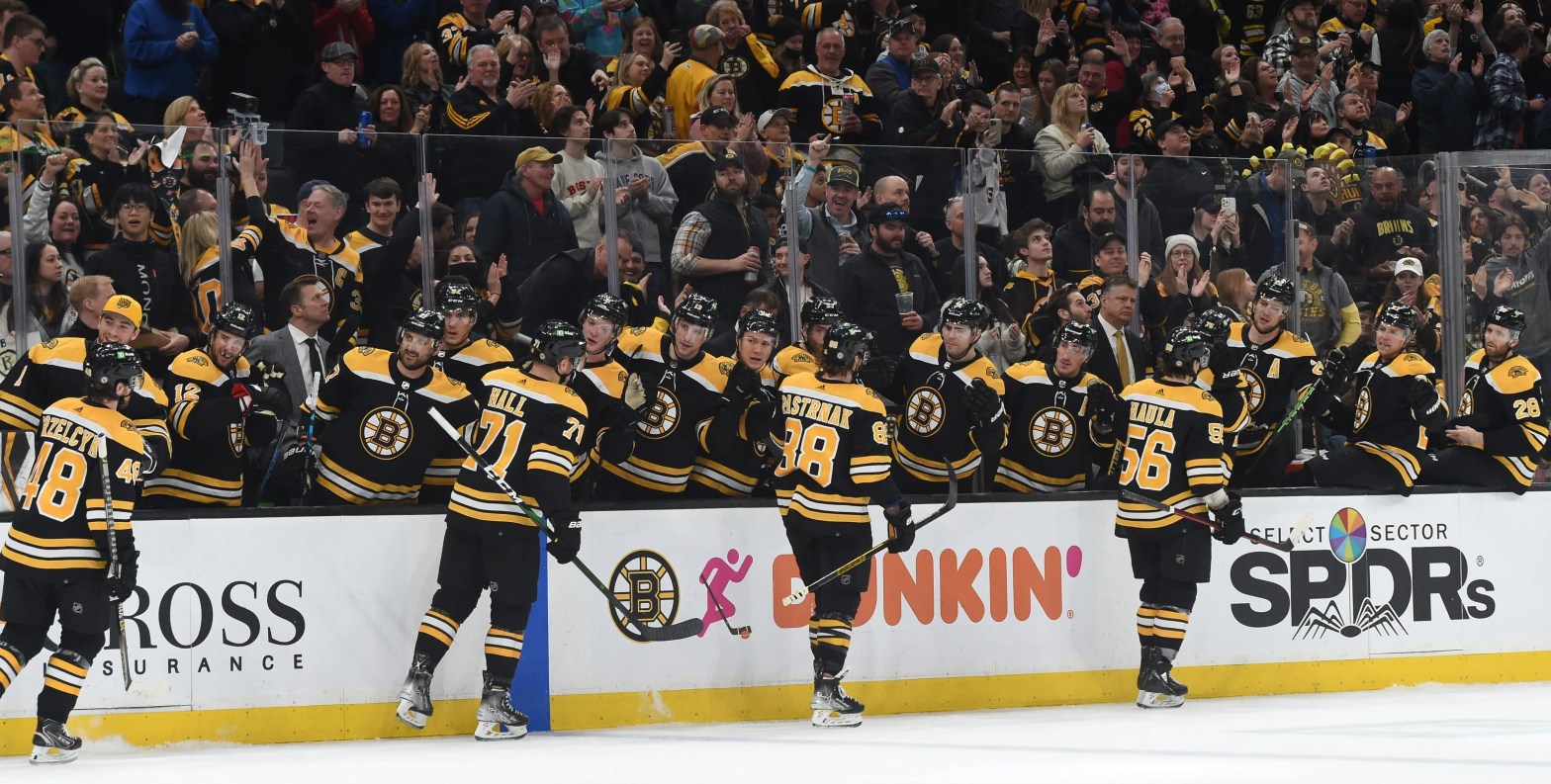
Boston Bruins 2022-23 Season Preview

The Bruins’ offseason had two distinct phases. The first saw the effects of the playoffs play out, as numerous injuries were announced that will certainly impact the start of this upcoming season. Forward Brad Marchand (hip), and defenders Charlie McAvoy (shoulder) and Matt Grzelcyk (shoulder) are all expected to miss the first month or two of the season. Because of this, the lineup for opening night could look shockingly bad for Boston. A new man will be in charge of that lineup, as the surprise firing of Bruce Cassidy led to former Stars coach Jim Montgomery taking over.

The fans were allowed to have some fun in the second half, as the Bruins announced that they were getting the gang back together. Patrice Bergeron officially returned on a one-year deal. The team was also able to bring back David Krejci to the NHL after he returned home to the Czech Republic for a year.

Offseason additions: F David Krejci, F Pavel Zacha, F Vinni Lettieri.

Offseason subtractions: F Erik Haula, F Curtis Lazar, F Anton Blidh, D Josh Brown.

Forwards

The Bruins still look like a playoff team, but if the season gets out of control, then they would be perfect sellers at the deadline, with eight forward on the final year of their contract. Bergeron and Krejci are two of them, and it would be hard to see them open to leaving. Even entering his age-37 season, Bergeron is still an elite top-line center. He won his fifth Selke Trophy in 2021-22. The Bruins led the league in xGF% last year, eclipsing 57 percent (per Evolving-Hockey). While only one one their semi-regular players was under 50% last year (Anton Blidh), Bergeron is a massive part of the team’s control of play. His 69.6 xGF% was not on the NHL’s best last year, but also in the entire puck tracking era (since 2007-08). The only other player with over 500 TOI and a xGF% over 65 was Marchand, also last season. Marchand will be a huge loss for October and November. He had 80 points in 70 games last year, and is undoubtedly a top three winger in the game. The duo of Marchand and Bergeron had a ton of success when playing alongside Jake DeBrusk, as well as with Craig Smith. Both of them could flank Bergeron to start. DeBrusk rescinded his long-withstanding trade request this offseason after he scored 25 goals in 77 games. Smith has 68 points in 128 games over two seasons in Boston while moving up-and-down through the top-nine.

Boston has not extended David Pastrnak yet, creating buzz for his contract year. Pastrnak was split up from Bergeron and Marchand for the most part and scored 40 goals for the second time. He has averaged over a point-per-game in every season since 2017-18, when he had 80 points in 82 games. The most commonly used line last season consisted of Pastrnak, Taylor Hall, and Erik Haula on the second line. Montgomery could change things up, especially with Haula now on the Devils. During Krejci’s first stint with the Bruins, the team consistently failed to acquire him solid wingers, and Hall and Pastrnak are first liners on the second line. In his first full season with Boston, Hall scored 20 goals with 41 assists. Sure, it is nowhere near his Hart Trophy-winning season of 2017-18, but he was exactly what the Bruins needed. Only Pastrnak and Marchand were on the ice for more 5v5 goals for per 60 than Hall. The hope is that Krejci can be a great second line center again, but you have to expect an adjustment period. When we last saw him in the NHL, he scored just eight goals in 51 games, but also had 36 assists. In the same amount of games in the Czech league in 2021-22, he scored 20 goals with 26 assists.

In exchange for Haula, GM Don Sweeney brought home Pavel Zacha, who can play both left wing and center. Drafted sixth overall in the same 2015 that the Bruins infamously messed up, Zacha broke out with 17 goals in the shortened 2020-21 season. He did set a career-high in points last year, but it was only by one point in 20 extra games. He was fifth on New Jersey in expected goals for percentage. Boston extended Charlie Coyle after acquiring him at the 2018-19 deadline, although that contract has aged poorly. The only forward signed for 2025-26 season, Coyle was last on the team in shots against per 60 and expected goals against per 60. His production bounced back last season, scoring 16 goals with 44 points. The Bruins need something out of Nick Foligno this season. The former Blue Jackets captain signed a contract with a $3.8 million AAV last year and scored just twice with 11 assists in 64 games. The silver lining is that his expected goals for was in line with Haula and Smith, and Foligno had an incredibly unlucky on-ice shooting percentage of 3.67%.

The depth of the Bruins needed a revamping badly two years ago. Now, they could have two young wingers and an outsourced center on the fourth-line. Tomas Nosek had 17 points in his first season in Massachusetts. He’s a good shot suppressor, although not much offense comes with him. In his first full season, former first-rounder Trent Frederic scored eight goals with 10 assists in 60 games. His value comes with his physicality, as Frederic fought five times with 119 hits in 2021-22. The last spot is open to competition. Oskar Steen scored twice with four assists in a 20-game rookie season. Chris Wagner was a key member of the fourth-line in the past, but spent most of last year in the AHL. He played in one NHL game plus three more in the playoffs. Boston College’s Marc McLaughlin went straight to the NHL, scoring three goals in 11 games.

Defensemen

The absence of McAvoy and Grzelcyk to start will be felt. Of pairs that played over 50 minutes together, they had the best xGF%, while playing over 400 minutes. They were one and two in the league in xGF% for defensemen and xGA/60. The Bruins will be missing their entire top pair for over a month. Most teams would not be able to recover from that. Can the Bruins?

However, the team did split up the pair after the trade deadline, when they acquired Hampus Lindholm from Anaheim. Lindholm had regressed in recent seasons, but it didn’t stop the Bruins from trading a first-round pick and more assets, extending Lindholm for eight seasons, and playing him with McAvoy. Lindholm had five assists in 10 games after the trade, but none in four playoff games. Without McAvoy, the Bruins have a need for a right-handed defender. The only one capable of playing on the top pair is Brandon Carlo, who is really a second-pairing guy at best. Carlo was one of seven regular Bruins with a GF% under 50, although a PDO lower than 100 did play into that.

Another injured Bruin defender is Mike Reilly, although he is not expected to miss as much time. Reilly as an offensively-minded defender who unfairly catches the ire of Bruins fans. He was tied for Grzelcyk for second on the defensive core in expected goals for per 60, and third in xGA/60. Connor Clifton is the most likely to see a promotion from last year, when he only averaged roughly 16 minutes of ice time per game. He blocked 62 shots with 156 hits in 60 games.

The bottom pair is not a good one, but it will eventually be a solid extra pair when reinforcements come. Derek Forbort was last in xGF% and xGF/60. Only Coyle had a worse xGA/60 on the team. In all five of his full NHL seasons, Forbort has reached triple digits in blocked shots. Jakub Zboril had three assists in 10 games before tearing his ACL. He looked impressive before the injury, with a 67 xGF%. Other options include Jack Ahcan, who played in six NHL games last year, and Connor Carrick, who has suited up for 241 NHL games for four different teams. He had 32 points in 59 AHL games last season.

Goaltending

The Bruins executed a perfect split in net last year, aside from Tuukka Rask’s short comeback that failed. Jeremy Swayman and Linus Ullmark had extremely similar numbers, but both had negative goals saved above expected. Swayman had a 2.41 GAA and a .914 save percentage in 41 games, while Ullmark had a 2.45 GAA and a .917 save percentage, also in 41 games. There isn’t a true starter here, although Swayman took the job in the playoffs and was much better, with a .911 save percentage in five games.

Projected Lines

Jake DeBrusk – Patrice Bergeron – Craig Smith

Taylor Hall – David Krejci – David Pastrnak

Pavel Zacha – Charlie Coyle – Nick Foligno

Trent Frederic – Tomas Nosek – Oskar Steen

Scratched: Chris Wagner, Marc McLaughlin

Hampus Lindholm – Brandon Carlo

Mike Reilly – Connor Clifton

Derek Forbort – Jakub Zboril

Scratched: Connor Carrick

Linus Ullmark

Jeremy Swayman

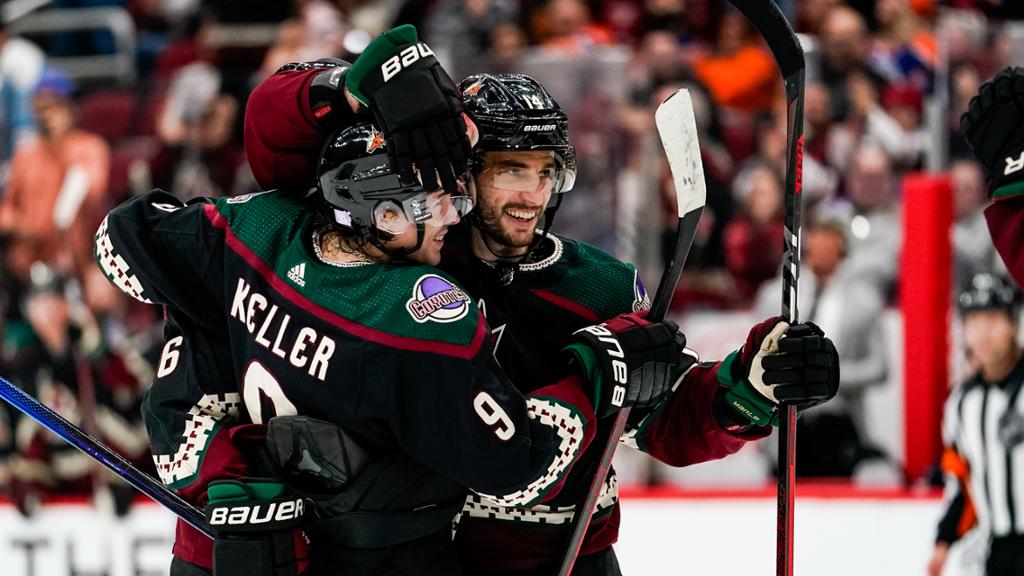
Arizona Coyotes 2022-23 Season Preview

Not even a year ago, we looked at the Coyotes as an impossibly awful team at rock bottom. Somehow, things have gotten even worse. The roster found a way to get weaker, while the team now plays at a college arena with a capacity of 5,000. The team has a seemingly infinite amount of draft picks and some notable prospects in Conor Geekie and Dylan Guenther. But until they arrive, there is not much to look forward to.

Offseason additions: D Troy Stecher, D Patrik Nemeth, F Zack Kassian, F Nick Bjugstad, D Josh Brown, G Jon Gillies.

Offseason subtractions: F Phil Kessel, F Alex Galchenyuk, D Anton Stralman, F Loui Eriksson, F Antoine Roussel, F Jay Beagle, D Kyle Capobianco, F Hudson Fasching.

Forwards

There obviously wasn’t a ton of positives with the team last year, but one was that Clayton Keller was able to get back to where he was as a rookie. Keller scored a career-high 28 goals with 63 points in 67 games. His 49.4 GF% may not sound great given 50 percent is even, but it led the team. The only other player on the team above 46.5% was Nick Schmaltz, who has moved to the wing. Schmaltz went on a ridiculous heater in February and March, scoring 10 goals with 11 assists in an 11 game span. In 63 games, he scored 23 goals with 59 points. Travis Boyd was a fourth-liner in his first four seasons, but was a consistent top-six forward in his first year in the desert. Boyd scored 17 goals with 18 assists. Boyd, Schmaltz, and Keller all had an on-ice shooting percentage over 13 percent, which was first, second, and seventh in the league (minimum 500 TOI). Coyotes defender Janis Moser was third.

The Coyotes gave Lawson Crouse a five year extension with an AAV of $4.3 million this offseason. If that seems like a lot, it’s because it is. Crouse scored 20 goals in 65 games last year, scoring over 15 goals for the first time. Former fifth overall pick Barrett Hayton got his first extended look at the NHL, scoring 10 goals with 14 assists in 60 games. His shots against per 60 and xGA/60 both led the team’s forward core. The least goals against scored per 60 minutes was when Christian Fischer was on the ice. Fischer did not have good shot suppression numbers, it was just that his goalies had a ridiculous 92.7 save percentage when he was playing.

The Coyotes used one of their second-round picks by trading it to Minnesota for Jack McBain, a former third-rounder who scored 19 goals in 24 games for Boston College. He went straight to the NHL after that, scoring twice with an assist in 10 games for the Coyotes. They also traded a fourth-rounder to Winnipeg for Bryan Little’s contract and Minnesota State University-Mankato forward Nathan Smith. Smith had 50 points in 38 games at college, then had two goals and two assists in 10 NHL games. Another late season acquisition was Nick Ritchie, who was a lot more established than McBain and Smith. Ritchie came over from Toronto for Ryan Dzingel and Ilya Lyubushkin at the deadline and scored 10 goals in 23 games. He was five goals off his career-high in 34 less games.

Arizona received substantial draft capital from Edmonton when they took on Zack Kassian’s contract this summer. Kassian spent the last seven seasons with the Oilers, scoring 55 goals in 412 games with 556 penalty minutes. Nick Bjugstad turned 30 in July, but it looks like he has been past his prime for years. Bjugstad had 49 points in 2017-18, but has just 58 in 178 games since. He had 13 points in 57 games for Minnesota last year and was not a part of their postseason run. Andrew Ladd has captain experience, but that’s about it. He had a regular NHL role last year, which he didn’t have since 2017-18. Entering the last year of his seven-year deal that the Islanders quickly regretted, Ladd gave Arizona some value in a bottom-six position in 2021-22. Thirty-nine of Liam O’Brien’s 68 career games came with the Coyotes last season. While he only recorded three points, O’Brien did his job, racking up 106 penalty minutes. A third-rounder in 2018, Jan Jenik is in the fight for a roster spot. He scored 47 points in 51 AHL games last year, and had three in 13 NHL games.

Defensemen

It feels like a matter of if and not when Jakob Chychrun gets traded. For now, he is still a member of the Coyotes. He had to have lowered his trade value with a rough season, finishing with just 21 points in 47 games. In no way was Chychrun as good as his 2020-21 season, but he still had some solid underlying numbers. Aside from Ilya Lyubushkin, who was traded midseason, Chychrun was the only Coyote with an xGA/60 under 2.5. The big concern with him was a huge drop in offensive production. Of the veteran defenders the team brought in, Troy Stecher is the most intriguing. He has always had good underlying numbers in sheltered roles with the Canucks, Red Wings, and Kings. It could lead to a much bigger responsibilities on a rough team.

Another of the few bright spots on the team was Shayne Gostisbehere, who the Coyotes took in as a cap dump from the Flyers, then rehabilitated him to his old self offensively. Gostisbehere scored 14 goals and was one of 20 defensemen to reach the 50-point mark. The concerns came from the other side, as Gostisbehere and his partner, Dysin Mayo, were a wreck in their own zone. Mayo had 12 points in his first NHL season, although his shot differential per 60 was -15.5, the worst among the team’s defenders. Gostisbehere and/or Chychrun will likely be traded by the deadline, which would open up a spot for 21-year-old Vladislav Kolyachonok. He had a very good GA/60 of 2.38 in 32 games last year, keeping him in consideration for this season.

The Coyotes took on the remainder of Patrik Nemeth’s contract from the Rangers, seemingly guaranteeing him a spot on the roster. Just two years ago, Nemeth was a solid bottom-pair defender. But his play took a nosedive upon his return to Colorado and subsequent move to New York. He’s a good bounce back candidate for Arizona. The Coyotes got a ton of offensive production from Janis Moser, although that could be chalked up to the aforementioned bloated on-ice shooting percentage. Despite being on the ice for three goals for per 60, Moser was also on the ice for 4.2 goals against per 60. He’s in a competition with journeyman Josh Brown and Cam Dineen for the final spot. Brown had 118 hits in a sheltered role for the Senators and Bruins last year, while Dineen had seven assists in a 34-game rookie season.

Goaltending

The only thing we know about Arizona’s goaltending entering the season is that Karel Vejmelka will be the starter, and we still don’t know a ton about Vejmelka. He came from the Czech league as a 25-year-old rookie and took the starter’s job in the desert. He had a .898 save percentage and a 3.68 GAA in 52 games. He also had a goals saved above expected that was the third-worst in the league. He’s still young and the Coyotes just need a body in net right now. The same could be said for their backup. Ivan Prosvetov had a save percentage of .880 in the AHL last year, but he is the favorite for the backup job. Jon Gillies is also an option after he had a .885 save percentage in 19 games for the Devils last year.

Projected Lines

Clayton Keller – Travis Boyd – Nick Schmaltz

Lawson Crouse – Barrett Hayton – Christian Fischer

Nick Ritchie – Jack McBain – Jan Jenik

Andrew Ladd – Nick Bjugstad – Zack Kassian

Scratched: Liam O’Brien, Nathan Smith

Jakob Chychrun – Troy Stecher

Shayne Gostisbehere – Dysin Mayo

Janis Moser – Patrik Nemeth

Scratched: Josh Brown

Karel Vejmelka

Ivan Prosvetov

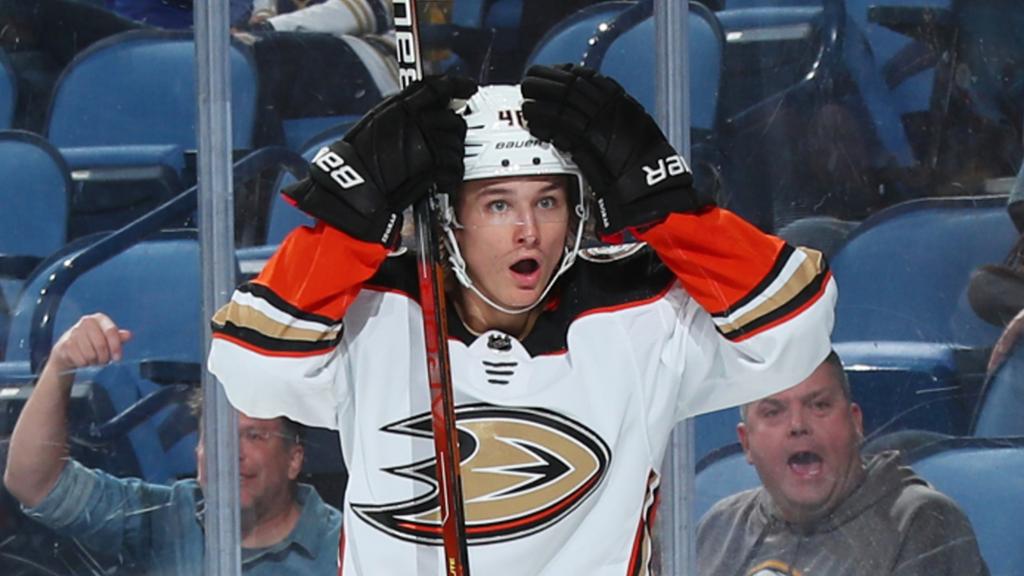
Anaheim Ducks 2022-23 Season Preview

The new era of Anaheim hockey has officially begun. Three years after Corey Perry was bought out, Ryan Getzlaf retired. Armed with bundles of cap space and assets from trading away Rickard Rakell, Josh Manson, and Hampus Lindholm at the deadline, General Manager Pat Verbeek had the opportunity for a big offseason. Money was spent, and the team still has cap space. But the questionable non-tendering of a few young players has tainted the offseason.

Offseason additions: D John Klingberg, F Ryan Strome, F Frank Vatrano, D Dmitry Kulikov, F Glenn Gawdin, D Olli Juolevi.

Offseason subtractions: F Ryan Getzlaf, F Sonny Milano, F Sam Steel, F Nicolas Deslauriers, F Zach Aston-Reese, D Andrej Sustr, F Gerald Mayhew, F Dominik Simon, D Jacob Larsson, F Buddy Robinson, F Vinni Lettieri.

Forwards

The most marketable young star in the game is now on the cover of NHL 23. While Trevor Zegras may have accumulated more fame in his rookie season than many NHL stars have in their career, he still has to make adjustments. His two most common linemates last season are both gone, in Rickard Rakell and Sonny Milano. The next step for him is to replace Getzlaf on the top line, something that he is capable of. Zegras had 61 points in 75 games, finishing second in Calder voting. Troy Terry’s 37 goals and 67 points both led the Ducks. His breakout season saw him act as a legitimate sniper, finishing 11th in the league in expected goals above average.

The highest paid forward on the team is Adam Henrique, who is sneakily coming off one of his best career seasons, scoring 19 goals with 42 points in 58 games. His 2.98 expected goals per 60 lead the Ducks. Anaheim shelled out multi-year deals for former Rangers Ryan Strome and Frank Vatrano after a long postseason run. Strome signed a 5 year deal worth $25 million total following a great stint next to Artemi Panarin. He scored a career-high 21 goals with 33 assists last season. He takes too many penalties and is not great at faceoffs. Vatrano was a cap dump from the Panthers at the deadline, but had 13 points in 22 regular season games for New York, then matched that point total in the playoffs. If you combine both numbers, Vatrano scored at roughly a 50-point pace as a Ranger.

Which Max Comtois will the Ducks get this season? His 33 points in the shortened 2020-21 season led the team, but his age-23 season was much worse. Comtois scored just six goals with 10 assists in 52 games. His 3.75 GA/60 was the 12th worst in the league (minimum 500 TOI). The 11 players below him were all on Columbus, Arizona, New Jersey, or Buffalo, who all had awful goaltending. Is that an indicator of Comtois, or John Gibson? Veteran Jakob Silfverberg missed the end of last season with blood clotting in his leg. He is expected to be ready for next season, but the forward struggled mightily last year. His xGF% was 43.6 percent, the worst on the team. Only 22 forwards with as much as time as Silfverberg were worse. 2021 third-overall pick Mason McTavish will try to break into the league for good after an impressive World Juniors run that included one of the best skater saves in hockey history. He had three points in nine games last year, with 47 in 29 OHL games. Former first-rounder Max Jones missed the rest of the season after two games when he tore a pectoral muscle. He has just 28 points in 137 career games.

Another former first round pick who is coming off a breakout season is Isac Lundestrom, who scored 16 goals with 13 assists for 29 points in 80 games. However, you should curb your enthusiasm on him. Lundestrom was last on among Anaheim forwards in xGF/60. He was also last in shots for per 60. A great shooting percentage may have boosted his numbers in 2021-22. Derek Grant gave the Ducks more offense than they expected when he scored 15 goals with 14 assists in 71 games last year. But for mainly a fourth-line center, Grant’s defense was shockingly bad. His 2.9 xGA/60 was easily the worst among Ducks forwards. Sam Carrick crushed his career high of two goals by scoring 11. He still had an on-ice shooting percentage of 6.4 percent, which is what happens when most of your ice time is spent with Nicolas Deslauriers. The Ducks brought in Glenn Gawdin from the Flames after he scored 15 goals with 50 points in 62 AHL games. He has just one assist in nine career NHL games, but he could fight for a lineup spot.

Defensemen

With Getzlaf out of the league, who will be the next Ducks captain? Cam Fowler has to be in the running. All 811 of his career games are with the franchise and he is still signed for four more seasons. He averaged over 24 minutes of ice time a night for the first time since 2017-18 and had 42 points, a career-high. No other returning Anaheim defender had a xGF% over 50 last year. The Ducks rushed Jamie Drysdale to the NHL at age 18 in 2020-21. He played in 81 games in his first full season, finishing with four goals and 28 assists. He struggled in his own end, which could be expected from an undersized teenager.

The Ducks threw a “Taylor Hall offer” at John Klingberg and he accepted it. It seems unlikely that this will not be his only season with the Ducks. Klingberg is a complete one-way defender, and it is not the way included in the position name. He had 47 points in 74 games for the Stars last year, and 374 points in 552 games in his career for Dallas. There is a real competition to be his partner. Urho Vaakanainen was a first-round pick in 2017 and came over from Boston in the Lindholm trade. He had two assists in 14 games after the trade. The undrafted Simon Benoit played in 53 games for the Ducks last year, and his 2.5 xGF/60 trailed only Fowler among the team’s seven regular defensemen. His 2.61 xGA/60 was the third-best. Josh Mahura has 20 points in 79 career games, but had a 32 GF% last season. The only worse defender in the league with at least 500 minutes played was Keith Yandle.

Kevin Shattenkirk is a great candidate to be traded mid-season as he enters the final year of his contract. Shattenkirk reached 35 points last year for the first time since 2016-17, the year the Blues traded him to Washington. The Ducks just shored up their defense by acquiring Dmitry Kulikov from Minnesota. He is a great example of how the Ducks can weaponize their cap space this season. Kulikov was the fourth-best Wild defender by xGF/60 and third in xGA/60 last season.

Goaltending

John Gibson is a polarizing figure. A large group of fans swear that he is elite and that a weak Anaheim defense has held him back. However, he has been underwhelming for three years now with a negative GSAA. Gibson had a terrible .904 save percentage and 3.19 GAA in 56 games last year. He has five years left at a $6.4 million cap hit. The good news is that he still has value. If the team has affected his play so much, then why does his backup, Anthony Stolarz, not seem affected. He had a .917 save percentage and a 2.67 GAA in 28 games last year.

Projected Lines

Adam Henrique – Trevor Zegras – Troy Terry

Max Comtois – Ryan Strome – Frank Vatrano

Mason McTavish – Isac Lundestrom – Jakob Silfverberg

Max Jones – Derek Grant – Sam Carrick

Scratched: Glenn Gawdin

Cam Fowler – Jamie Drysdale

Simon Benoit – John Klingberg

Dmitry Kulikov – Kevin Shattenkirk

Scratches: Urho Vaakanainen, Josh Mahura

John Gibson

Anthony Stolarz