Arizona Diamondbacks 2020 Season Preview 2.0

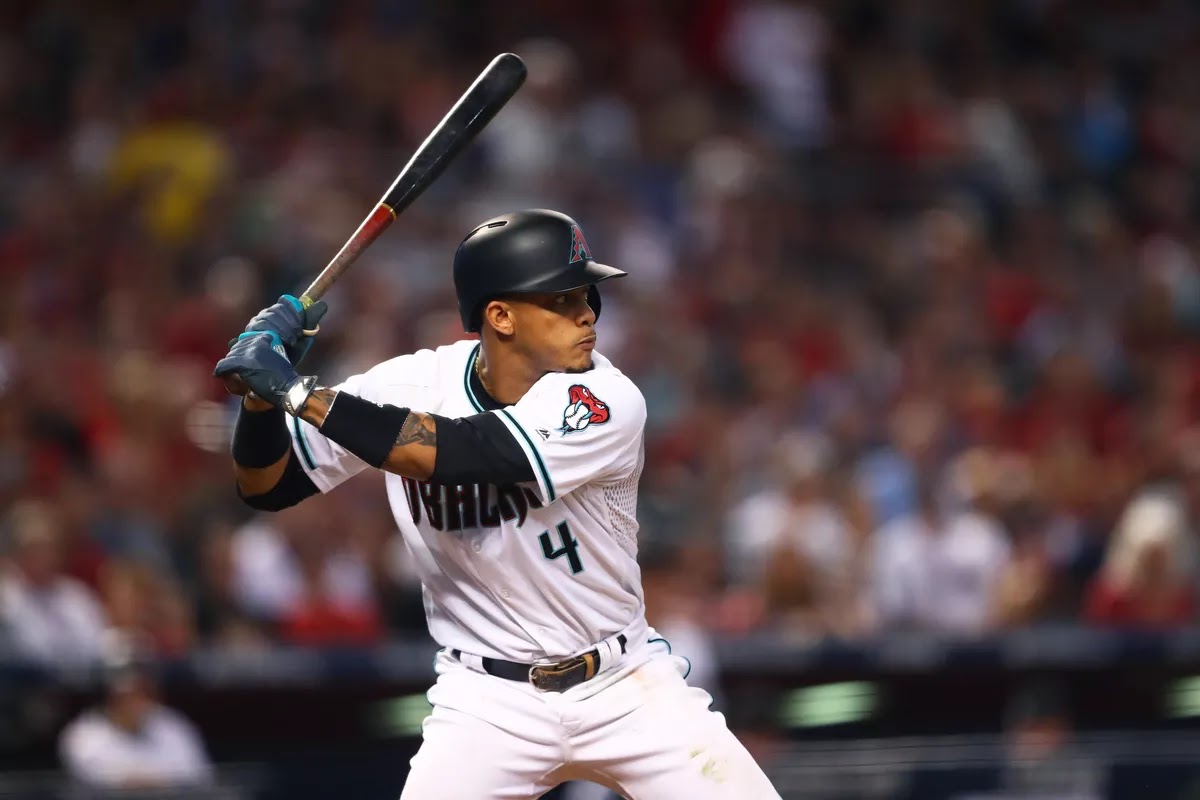
        Unless you are living under a rock, you know that sports have been gone for over three months now. That will soon end, as you probably know. In about a month, MLB will have their Opening Day. In late February, I started my season previews for each and every MLB team leading up to the original start of the year at the tail end of March. Due to a certain pandemic, I never finished them. For at least once a day until Opening Day, I will be re-doing my team previews. For the teams from Arizona to Miami, the preview will be similar but still different from the original. After the Marlins, I will finish everyone else\’s squad. Starting off once again, just one day off from exactly 4 months after the original post, will be the Arizona Diamondbacks.

           Who would have thought that the Diamondbacks would find a taker for Zack Greinke. The team was able to trade the expensive starter to Houston for four good prospects. But when that trade happened, no one expected it to lead to Madison Bumgarner. The team went out and signed the former Giants star to a five year, $85 million deal. The team finished just four games back of the second wild card spot, and now they have the deepest rotation they\’ve had in a while. They might be your 2020 surprise team, especially if they can start where they left off. They finished the season with a 21-11 record in their last 32 games, and they would have forced a game 163 if instead of getting swept by the Mets from September 9-to-the-12th, they won all four games vs a team that finished with one more win than them.

           Offseason additions: LHP Madison Bumgarner, OF Starling Marte, OF Kole Calhoun, C Stephen Vogt, RHP Hector Rondon, RHP Junior Guerra, C John Hicks, OF Jon Jay, OF Trayce Thompson, RHP Edwin Jackson, LHP Matt Grace

          Offseason subtractions: OF Adam Jones, RHP Matt Andriese, RHP Yoshi Hirano, OF Jarrod Dyson, C Alex Avila, LHP TJ McFarland

           Rotation
The addition of Bumgarner brings the Diamondbacks a replacement ace for Greinke. However, Bumgarner might not fill the role. While he was healthy for the first time since 2016, Bumgarner had a career worst 3.90 ERA and allowed his most hits since 2014. However, his K rate was up, and his walk rate was down. A three time World Series Champion and two time Silver Slugger winner as a pitcher, Bumgarner should still fit in fine. He is entering his 11th season, but he\’s only 30. Plus, all those years were spent with the Giants, so he knows the opponents on the rival Padres, Rockies and Dodgers, plus his own ex-teammates. He will not like the universal DH rule. The Diamondbacks decided to hold onto Robbie Ray while trading Greinke. A free agent at the end of the year, Ray\’s ERA has gotten worse in the two seasons since his breakout 2017. However, he was finally healthy, starting a career high 33 starts and tying his career high in innings with 174.1. He also had a 12.1 K/9, really good for a starter. If the team starts the season slow, then Ray could be the first one to be traded, especially if the team isn\’t so confident, with the trade deadline being about 35 games in. In his rookie season as a 30 year old, Merrill Kelly led the team in innings with 183.1. However, he had a weak 4.42 ERA and led the league in losses with 14. His 101 ERA+ indicates that he is a league average pitcher. In his rookie season, Zac Gallen had an impressive 2.72 ERA in seven games with the Marlins, before being traded to Arizona at the trade deadline. Gallen continued his good play, with a 2.89 ERA in eight starts. The team went out and got Mike Leake from Seattle to take Greinke\’s spot in the rotation. Leake does not strike out guys and allows a lot of hits. He had a 102 ERA+ last season and has a career 99 ERA+, showing that he, like Kelly, is very average. A 2015 2nd rounder, Alex Young impressed, with a 3.56 ERA in 17 games (15 starts) with a 125 ERA+. Luke Weaver has dealt with injuries in the past, and missed most of 2019 with right forearm tightness. In 12 starts, he had a 2.94 ERA with 69 strikeouts in 64.1 innings.

         Bullpen
Archie Bradley held the closer role for the second half of the season after Greg Holland struggled and was eventually DFA\’d. Bradley finished the season with 18 saves and 87 strikeouts in 71.2 innings, and a 3.52 ERA. Yoan Lopez is not a strikeout pitcher, with 42 Ks in 60.2 innings in 2019. But, he had a 3.41 ERA and allowed 7.7 hits per nine in his first full MLB season. It will be interesting to see how the three batter minimum rule affects lefty Andrew Chafin. Chafin appeared in 77 games in 2019, but pitched just 52.2 innings, striking out 68 batters. The team signed former Cubs closer Hector Rondon to a one year deal. Normally a big strikeout guy, Rondon punched out just 48 batters in 60.2 innings with a 3.71 ERA for Houston in 2019. Former starter Junior Guerra transferred to the bullpen last year, and struck out 77 batters with a 3.55 ERA in 83.2 innings. Kevin Ginkel is a nice dark horse bullpen candidate. Debuting at age 25, Ginkel had a 1.48 ERA with 28 strikeouts in 24.1 innings, plus an inflated 304 ERA+. MLB Pipeline ranks Ginkel as Arizona\’s 27th best prospect. In his rookie season, Taylor Clarke pitched in 23 games (15 starts), and finished with a terrible 5.31 ERA. If he makes the team it will be in the bullpen. The same can be said for Jon Duplantier. A third round pick in 2016, Duplantier struck out 34 batters in 36.2 innings with a 4.42 ERA. Sinkerballer Stefan Crichton played in the MLB for the first time since 2017, and pitched in 28 games, with a 3.56 ERA and 33 strikeouts.

         Catchers
Carson Kelly, who came over from St. Louis with Weaver for star Paul Goldschmidt, broke out with an .825 OPS and 18 home runs in 365 Plate Appearances. In a league where catchers just don\’t tend to hit for power, Kelly is a luxury for the D-Backs. Two time all-star Stephen Vogt was hurt for all of 2018, but returned with the Giants in 2019, hitting 10 home runs with an .804 OPS. He will be a very good backup catcher if healthy. The Diamondbacks used four catchers last year, but three of them (Alex Avila, John Ryan Murphy and Caleb Joseph) are gone. The third catcher, if needed, would be former Tiger John Hicks, who hit a career high 13 home runs last year and is with the team as a non-roster invitee.

          Infielders
The Diamondbacks found their replacement for Paul Goldschmidt, the former face of the franchise, in an odd way. Christian Walker, a then 28 year old rookie who debuted back in 2014 but barely played, hit 29 home runs with a .259 batting average and an .825 OPS. It was a welcome surprise for Arizona. Ketel Marte moved to center field last year, and had an MVP-caliber breakout season. Marte hit 32 home runs, stole 10 bases, hit .329 with a .981 OPS and a 149 OPS+. He finished 4th in NL MVP voting. He will move back to second base with the acquisition of Starling Marte (no relation). Nick Ahmed signed an extension in the offseason. Always a great defender, Ahmed had career highs in home runs (19), batting average (.254) and OPS (.753) among other categories. He also has won back-to-back Gold Gloves at shortstop. Another breakout infielder was Eduardo Escobar. With a move to third base for good, Escobar hit 35 home runs with 118 RBIs and an .831 OPS. He also lead the league with 10 triples. Jake Lamb hit 59 home runs from 2016-2017, but has been awful since with a 12 home runs in the combined two seasons. Lamb had a .193 batting average in 2019. He will still be the backup corner infielder. Ildemaro Vargas is the utility infielder. In his first full season he hit six home runs with a .269 batting average while playing third base, shortstop, second base and both corner outfield positions. Kevin Cron will compete for a roster spot. Cron hit six home runs with a .790 OPS in his first taste of MLB experience last year. A 27 year old first baseman, Cron has a .319 average with 60 home runs and a 1.057 OPS in his AAA career.

          Outfielders
The D-Backs\’ big trade this offseason was getting Starling Marte from the Pirates. Marte is a power and speed threat in center field. He hit 23 home runs and stole 25 bases with a .295 batting average and an .845 OPS. All they had to give up for him was 2019 33rd round pick Brennan Malone and 19-year-old Dominican shortstop Liover Peguero, plus some international signing pool bonus money. Arizona also brought in Kole Calhoun on a two year contract. His 33 home runs and .792 OPS for the Angels last year were career highs. David Peralta rebounded to a breakout season poorly, with just 12 home runs. However, he still had an .804 OPS. He played in just 99 games last season. The D-Backs did not bring back Jarrod Dyson, who stole 30 bases for the fifth time last year. However, their fourth outfielder is arguably better. Tim Locastro returns after stealing 17 bases without being caught once in his rookie season. He can play all four outfield positions. Baseball savant has Locastro and Dyson as similar hitters. Locastro had an average sprint speed of 30.8 ft/second, 2.4 ft better than Dyson. Josh Rojas, acquired in the Greinke deal, has mostly played left field, but he can also play right field, third base and second base. Making his debut just after the trade, Rojas\’ numbers weren\’t good. He hit two home runs in 41 games, and had a matching OBP and slugging percentage at .312.

          Projected Opening Day Lineup
CF Starling Marte (right handed hitter)
2B Ketel Marte (S)
3B Eduardo Escobar (S)
1B Christian Walker (R)
LF David Peralta (L)
C Carson Kelly (R)
RF Kole Calhoun (L)
SS Nick Ahmed (R)
DH Jake Lamb (L)

          Projected Rotation
Madison Bumgarner (L)
Robbie Ray (L)
Luke Weaver (R)
Zac Gallen (R)
Mike Leake (R)

          Projected Bullpen
Archie Bradley (R), closer
Yoan Lopez (R)
Andrew Chafin (L)
Hector Rondon (R)
Junior Guerra (R)
Kevin Ginkel (R)
Alex Young (L)
Merrill Kelly (R)
Stefan Crichton (R)
Jon Duplantier (R)

          Projected Bench
C Stephen Vogt (L)
OF Tim Locastro (R)
IF Ildemaro Vargas (S)
LF Josh Rojas (L)
1B Kevin Cron (R)
C/1B John Hicks (R)

Baseball-Reference OOTP simulator stats (at time of writing):
40-41, 3rd in NL West
Most home runs: Eduardo Escobar (10)
Highest batting average*: Ketel Marte (.318)
Highest OPS*: Ketel Marte (.872)
Best ERA, starters**: Madison Bumgarner (3.75)
Best ERA, relievers***: Andrew Chafin (2.08)
Most innings pitched: Madison Bumgarner (108)
Most Strikeouts: Robbie Ray (119)
Best K/9***: Archie Bradley (13.9)

Record through 60 games, last five seasons:
2019: 30-30
2018: 32-28
2017: 35-25
2016: 25-35
2015: 28-32

          Prediction:
The Diamondbacks have a good roster. It is not better than the Dodgers, Nationals, Cardinals, Braves, Brewers and Mets, and depending on health, probably not the Phillies and Reds. In a 60 game season, anyone can get hot. And while I do not think that they have a chance at the NL West title, they could easily squeeze into a wild card spot. However, I am not predicted that outcome, and think that they will once again finish second in the division, but outside the postseason.

*Qualifiers only. This leaves out Christian Walker, who has only played in 38 games in the sim, but leads the team in batting average and OPS.
**You must have 12 starts to qualify.
***You must have pitched in 20 games to qualify. All qualifications were made up by me.
What will need to happen for the MLB season to start?

From the Associated Press

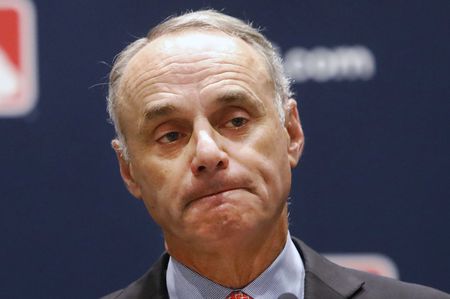
          The NBA and NHL have a plan to return to action, after the season shut down with about a month left before the playoffs. Due to the fact that they wouldn\’t want to completely waste a season, there was some urgency to return. But, even though losing the playoffs would have been a huge revenue hit, the leagues would have been fine if next season was when games picked back up. However, they were able to come up with an agreement fairly quickly, and are in a safe spot right now. Major League Baseball has everything to lose. Their season was weeks away from starting when sports died, and the negotiations from MLB and the MLBPA will go on for longer than the figurative season itself. It is getting to the point where these negotiations feel more like labor negotiations over a new CBA rather than about a public health crisis. Commissioner Rob Manfred was already looking bad prior to the shutdown, but has put himself in a worse spot to the public eye, especially in the last week.

           Since being named Commissioner in late January of 2015, Manfred has dealt with many unpopular issues. Many new rules have been put in place regarding the pace of play, including limiting mound visits. A playoff proposal from early February led to players being unhappy with Manfred, most notably Trevor Bauer of the Reds and Didi Gregorius of the Phillies. The handling of the Astros sign-stealing investigation (more specifically the lack of a major punishment in the eyes of opponents) was also a sour point in Manfred\’s tenure. But the last months have been ridiculous, and when it seems like we have a deal, everything gets blown up again. The last few weeks have been pretty simple: the owners submit a terrible proposal, the players counter-proposal is similar, but the owners still hate it, and come up with something better than their original, but has very few games. The players just raise the amount of games played, the league hates it and we are back to square one. This is best shown by former MVP and Phillies outfielder Andrew McCutchen, who has tweeted three separate times in a span of five days \”lol\”, starting on June 8th. Talks seemed to heat up after Manfred guaranteed something then very quickly went back on that comment. On Wednesday, the night of the MLB Draft, Manfred said that “I can tell you unequivocally we are going to play Major League Baseball this year …. 100%.” That didn\’t age well, as in an ESPN article from Monday, he said that \”I can’t tell you that I’m a 100% certain that’s gonna happen.” This led to a \”tell us when and where\” campaign by the players, and now more intense negotiations.

               Congratulations, you are now caught up. During the recent negotiations, ideas have been brought up that will make traditionalists have a heart attack, even worse than Player\’s Weekend (the AUDACITY that they have to wear green cleats).

               The one change that they could probably wrap their heads around is an expanded playoffs for 2020 and 2021 (to help make back revenue, especially if next year is delayed). A 16 team playoffs will be weird, although the NBA and NHL have had it. Over half the teams in the league will be in the playoffs, but if it helps bring back baseball, then I am all for it. This really helps teams that always seem to just miss the playoffs, like the rest of the AL West (not including the Astros), the Mets and Phillies, Diamondbacks and one of the Cubs-Cardinals-Brewers group. However, I wouldn\’t like to see this for more than a year or two, as stretching out the playoffs after a really long season isn\’t a great idea.

                  I have a very similar attitude towards the next issue, corporate sponsorships on team jerseys. People made a big deal about Nike\’s swoosh on the front of uniforms they made months ago, so seeing Subway and Honda join them would definitely cause a fit. I personally don\’t love the idea, but once again, if it is temporary and is just there to help teams financially recover for a loss this year, than it is fine. The only rule should be to not allow political campaigns as advertisements*. The NBA has had this for a couple of years and people are no longer caring about it.

                 The last element of the proposal is something that if it happens, will be here to stay. The universal DH has been something that the league has been wanting to implement for years. Your stance on this likely belongs on your favorite team, as American League fans are supportive of a change, unlike National League backers. I personally think that the universal DH should happen. National League teams have been kept from many consistent 30-40 home run hitters like Edwin Encarnacion and Nelson Cruz for years because they mainly are DHs. There probably have been pitchers that have intentionally chose AL teams in free agency because they didn\’t want to go to the NL and hit. Shohei Ohtani could be a generational talent, and was pretty much required to go to the AL due to his lack of defensive training and skill. Finally, pitchers known as \”great hitters\” aren\’t actually even good hitters. This is best shown in Madison \”Mason Saunders\” Bumgarner, who went eight-for-63 (.127 average) with a .458 OPS and two home runs last year. Even Michael Lorenzen, the Reds\’ reliever and outfielder, had a measly .596 OPS in 2019. The days of hitting pitchers has to go, and this is a perfect opportunity for that.

*Of course, Class President campaigns are excluded from this.

Ranking NHL hub cities from least likely to most likely to be chosen

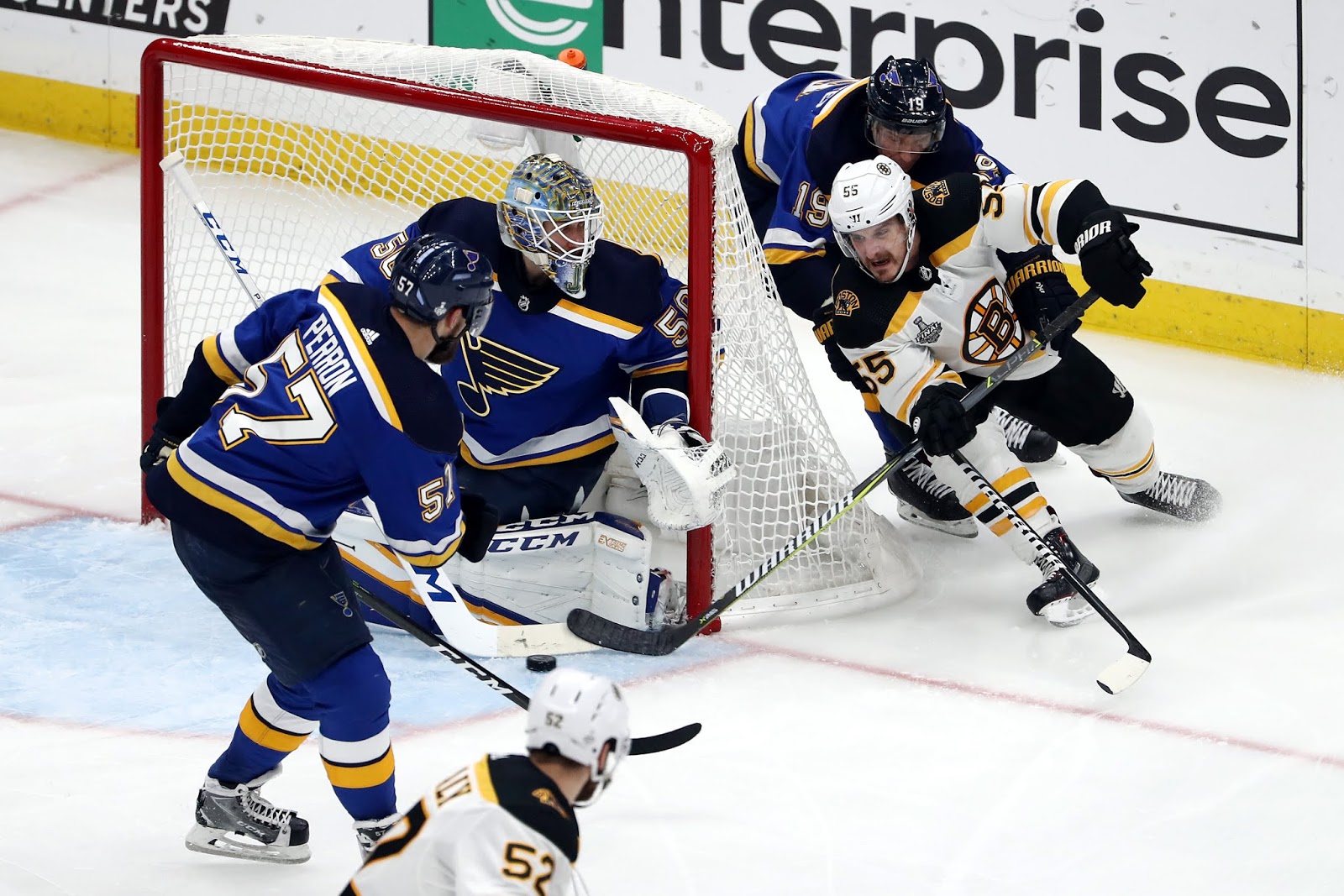
          If you haven\’t noticed, sports have been gone lately. But, NHL Commissioner Gary Bettman announced their plan to return yesterday, and the league will be the first of the \”big four\” pro sports leagues to return to action. Bettman released a 24 team playoff plan for a starting date to be determined. The most questionable thing, besides the date, is where playoff hockey will take place. Bettman mentioned 10 potential \”hub cities\”, where 12 of the playoff teams will travel to and play their games. The potential cities/states/provinces are the following, in alphabetical order:

Chicago, Illinois
Columbus, Ohio
Dallas, Texas
Edmonton, Alberta (CA)
Las Vegas, Nevada
Los Angeles, California
Minneapolis/St. Paul, Minnesota
Pittsburgh, Pennsylvania
Toronto, Ontario (CA)
Vancouver, British Columbia (CA)

           The teams that travel to which hub city will be based on conference, so you would assume that an Eastern Conference city will host the eastern conference and vice versa for the West, but that was not specifically confirmed yet. Seven of the ten cities mentioned are the home of Western Conference teams, but that could be due to the fact that the East teams are much closer to each other than the generally spread out West. The following ranking of these cities are based on surplus of arenas, how close the cities are to other teams\’ cities, population density, and of course, COVID-19 cases.

            10. Chicago
The point of finding the right hub city is for the city to be big, but not too big. Chicago falls into the too big category. The city is big, so there will be a lot of hotels for players to stay at, and many other NHL cities are fairly close, including St. Louis, Nashville, and another city much higher on the list. Cook County, which holds Chicago, has reported nearly 63,700 coronavirus cases so far, and Chicago also happens to be one of the densest cities in America.

             9. Los Angeles
I think an interesting argument for L.A. is that besides the Kings\’ Staples Center, the Ducks\’ Honda Center is a 35 minute drive away, making it possible for two arenas to be in play. We don\’t really know if only NHL game stadiums will be used, as without fans, practice facilities could be in play, although the conditions probably don\’t compare. Los Angeles suffers the same fate as Chicago. It is also a city with a very high population density, and has a lot of cases (43,000 county wide). There are teams like the Coyotes and Golden Knights that are close, but the fact that all three California-based teams missed the playoffs likely will take this out of consideration quickly.

              8. Las Vegas
After Chicago and Los Angeles, there isn\’t really a city included that is a big no for me. Vegas is close to cities like Denver and Glendale/Phoenix, but also would be a big travel for teams in western Canada and the mid-west. Also, there are less rinks compared to other cities in North America. There is a lot of hotels, making that a big plus. With under 8,000 cases in Nevada, getting infected is not a huge risk, even with the city\’s high popularity.

               7. Toronto
The hub of the hockey world would make sense for a hub city. However, a high population density and over 10,000 cases city-wide will likely be the city\’s downfall. Another potential issue that I don\’t know how much will factor into it is visas. Most of the teams in the playoffs are American, so many more players will have to get a work visa in Canada for the time they are in a different country, compared to if the Canadian teams have to come down. Even if that isn\’t an issue, Toronto\’s big city nature hurts them. However, other Ontarian cities like Hamilton and Ottawa have facilities that could be in use, and many teams are only a couple of hours away (via plane).

               6. Dallas
Having Dallas at six and Vegas at eight may be a reach, since both cities have similar cases. Vegas\’ big advantage is that there are more cases in Dallas County than the state of Nevada. However, Dallas\’ advantage is that cities like St. Louis and Nashville are much closer, while it is also close to Denver and Arizona, the two places that make Vegas a good potential city.

               5. Vancouver
Another Canadian city, Vancouver lies in British Columbia, a province with only about 2,500 confirmed cases. Just recently home to the NHL draft, I don\’t think they would be the hosts again, but the lack of cases make it a strong possibility. However, not many teams are close to Vancouver, as it happens to be a flight distance of an hour and a half to the next closest playoff hockey city.

               4. Edmonton
The best Canadian contestant, I think that Edmonton will be the runner-up for the Western host. If they really wanted to, the NHL could split the games with Calgary, although they didn\’t mention it and the cities are about a three hour car ride apart. Being in Canada, the Canucks, Flames and Jets, as well as the hometown Oilers will not have an issue with Edmonton (once the Jets find an out of town airport), but American teams will.

                3. Columbus
The first line of last place city is (and I literally copied and pasted it) \”The point of finding the right hub city is for the city to be big, but not too big.\” Columbus may be that perfect city. My runner up for the Eastern Conference, only 5,500 cases have been confirmed in Franklin County. Columbus doesn\’t have the population of Chicago or Los Angeles, and many teams are stationed fairly close to it, including Carolina, both New York teams, Philadelphia and New Jersey. But, the closest city is much better, and at number one on the list

                2. Minneapolis/St. Paul
Which city goes first and second doesn\’t really matter, as I think that both will be chosen, I just ranked them based off of best fit. The home of the Wild is close to teams like St. Louis, Chicago, and even Nashville and Winnipeg. Its big downside is that it is not close to the west coast teams, but you would have that problem no matter what. Under 2,000 cases have been confirmed in Ramsey County as well. Also, Minnesota is literally the state of hockey.

                1. Pittsburgh
The home of the Penguins, who won two Stanley Cups last decade, Pittsburgh is very similar to Columbus, but has everything that Columbus has in its favor. In Allegheny County, there are under 2,000 confirmed cases, over twice as less than Columbus\’ Franklin County. Columbus is one of the Eastern Conference\’s most western teams, and Pittsburgh, while still on the west side of that, is more eastern, and closer to Philadelphia, New York, Carolina and Boston, as well as Columbus itself. I would be very surprised if Pittsburgh is not one of the two hub cities that the NHL chooses.

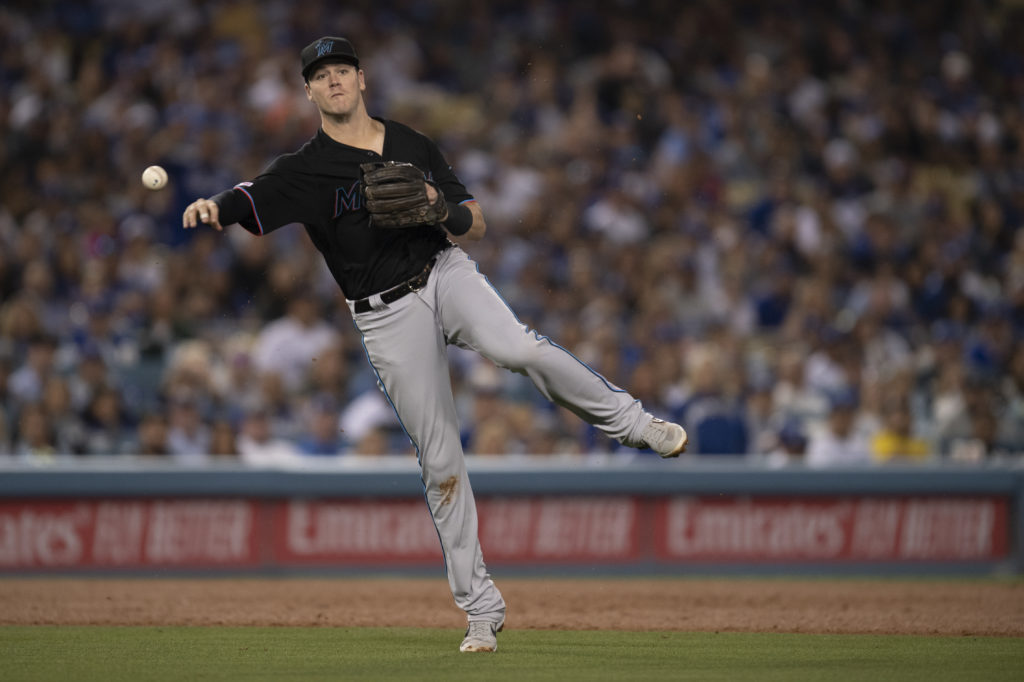
Miami Marlins 2020 Season Preview

From The Athletic

          The NL East was hyped up to be the best division in baseball entering 2019. Every team but one was a serious contender to win the division. That one exception was the Marlins. Miami was still in a rebuilding phase after their firesale prior to 2018 that saw them deal their entire outfield and infielder Dee Gordon. A year later, the Marlins are still the worst team in the division, but they might not be the worst in the National League anymore. They acquired some low cost veterans to hold down the fort while their young talent develops. It won\’t be the most entertaining season of Marlins baseball, but the trade deadline will see a lot of the new acquisitions go.

           Offseason additions: IF Jonathan Villar, 1B Jesus Aguilar, OF Corey Dickerson, C Francisco Cervelli, OF Matt Joyce, RHP Brandon Kintzler, RHP Yimi Garcia, LHP Stephen Tarpley, RHP Brad Boxberger, SHP Pat Venditte, OF Matt Kemp, UT Sean Rodriguez, IF Gosuke Katoh.

           Offseason subtractions: 2B Starlin Castro, OF Curtis Granderson, IF Neil Walker, IF Martin Prado, OF Austin Dean, C Bryan Holaday, OF Rosell Herrera, LHP Jarlin Garcia, RHP Tyler Kinley, LHP Wei-Yin Chen, RHP Austin Brice, LHP Brian Moran, RHP Hector Noesi.

            Rotation
The rotation won\’t see much changes from its 2019 form, as Nick Neidert and Sixto Sanchez are not ready yet to hold a spot. Sandy Alcantara was the Marlins only all-star in 2019, and was still technically a rookie. He lead the league with 14 losses, but had a 3.88 ERA with 151 strikeouts in 197.1 innings, with two complete game shutouts. He allowed 3.7 walks per nine innings, a lot but an improvement from his previous 14 career games. Caleb Smith had a great first half, but injuries derailed his season and finished with a 4.52 ERA with 168 strikeouts and 33 home runs allowed in 153.1 innings. Jose Urena was considered a closer, but will likely return to the rotation to start the year. In 24 games (13 starts), Urena made three saves in 84.2 innings with a 5.21 ERA. He throws hard but is not a strikeout guy. He only hit two batters after leading the league in that category in 2017 and 2018. Pablo Lopez was limited to 21 starts by a shoulder injury. He struck out 95 batters in 111.1 innings. His 5.09 ERA was awful. Jordan Yamamoto was not bad in his 15 start debut. He struck out 82 batters in 78.2 innings with a 4.46 ERA. He allowed 36 walks, so that is a problem. Elieser Hernandez had a 9.3 K/9 in 21 games (15 starts), but had a 5.03 ERA. At 24, he is still young enough to go to AAA to improve.

               Bullpen
Brandon Kintzler will likely be the one that moved Urena from closer back to starter. He only had one save last year, but had a 2.68 ERA in 57 innings with a 7.6 K/9, his highest since 2015. He has 49 saves in his career, with a career best 29 in 2017. Ryan Stanek, acquired at the deadline from the Rays, can be an opener and a starter. He had a 3.40 ERA in 41 games before the trade, but struggled as a Marlin, with a 5.48 ERA and 28 strikeouts in 21.1 innings. His struggles are due to an abnormally high 8.0 BB/9. Drew Steckenrider was in the mix for a closing role entering 2019. he allowed six home runs in his 15 games before going on the IL with elbow inflammation. He never got Tommy John surgery, but also never returned. He has a career K/9 of 11.2. The Marlins scooped up Yimi Garcia after the Dodgers non-tendered him. He had a 3.61 ERA with 66 Ks and a 0.866 WHIP in 62.1 innings. It will be hard for him to keep up with his very low 5.8 H/9 rate. Adam Conley was solid as a reliever in 2018, but was terrible last year, with a 6.53 ERA in 60.2 innings. He had a 1.731 WHIP and a 65 ERA. Thanks to his struggles, the team will want to carry another lefty in Stephen Tarpley. Acquired from the Yankees, Tarpley struck out 34 batters in 24.2 innings. Nothing else went right, as he had a 6.93 ERA with a 12.4 H/9 and 5.5 BB/9. His slider is a plus pitch. Rule 5 pick Sterling Sharp (not that one) will get a good chance to make the team. He had a 3.53 ERA in 58.2 innings in the Nats system. He had a 1.50 ERA in 24 games in the Arizona Fall League. Former Rays and D-Backs closer Brad Boxberger has a 3.59 ERA and 77 saves in his career. He was awful for the Royals last year, with a 5.40 ERA with 27 Ks in 26.2 innings. He will try to beat out Jeff Brigham, who had a 4.46 ERA in 32 games last year.

                 Catchers
Right before the season, the Marlins traded away all-star catcher JT Realmuto to the Phillies. They got back Jorge Alfaro. He hit 18 home runs, with four stolen bases, hit .262 and had a decent .736 OPS for a catcher. Francisco Cervelli comes in as an experienced catcher. He hit 12 home runs with an .809 OPS in 2018. He had a .649 OPS for the Pirates and Braves last year.

                  Infielders
The Marlins claimed Jesus Aguilar off waivers from Tampa Bay after a disappointing 2019. He hit 12 home runs with a .714 OPS coming off a year with 35 home runs, an .890 OPS and an all-star appearance. Isan Diaz, a top-100 prospect in the MLB, hit .305 with 26 home runs and a .973 OPS at AAA. He did not fare well in the big leagues, with a .173 average, five home runs and a .566 OPS in 49 games. The second base job is his to lose. He can start at AAA. If he does, Jonathan Villar will be the second baseman. Acquired from the Orioles, Villar can play all around the field, but will likely be the Opening Day center fielder. He played in all 162 games last year, with a .274 average, .792 OPS, 24 home runs and 40 stolen bases. The Marlins signed shortstop Miguel Rojas to a multi-year extension, something the team rarely does. He hit .284 last year with nine stolen bases and two defensive runs saved. Brian Anderson played a lot of third base and right field last year. Maybe the best player on the team, Anderson hit 20 home runs with a career high .811 OPS last year. He is very underrated.

                   Outfielders
The Marlins signed 2017 all-star Corey Dickerson to a two year deal. Dickerson hit just 12 home runs last year, his lowest since 2015. He played in just 78 games, but had a .304 average, the second best of his career. He played for both Pennsylvania teams last year, the Pirates and Phillies. Right field will be a shared job between Garrett Cooper, Harold Ramirez and Matt Joyce. Joyce will be more of a bench bat while Cooper is also the backup first baseman. Cooper hit .281 with a .791 OPS and 15 home runs in 2019, his first full season. A 24 year old rookie, Harold Ramirez hit 11 home runs with a .276 average and .728 OPS. A former 25 home run hitter, Joyce hit seven last year, with a .295 average and an .858 OPS. Jon Berti can play the infield as well as the outfield. A 29 year old rookie, Berti stole 17 bases in 20 attempts, with six home runs and a .348 OBP. The final spot is between former top prospect Lewis Brinson and Magneuris Sierra. In 15 MLB games, Sierra hit .350 with three stolen bases. Brinson played in 75 MLB games and more at AAA. He was awful, with a -2.2 bWAR. He hit no home runs, and had a .173 average and .457 OPS. The clock is ticking for the almost 26 year old to prove he is more than an AAA player.

                    Projected Opening Day Lineup
CF Jonathan Villar (S)
3B Brian Anderson (R)
LF Corey Dickerson (L)
1B Jesus Aguilar (R)
C Jorge Alfaro (R)
RF Harold Ramirez (R)
2B Isan Diaz (L)
SS Miguel Rojas (R)
Pitcher

                     Projected Rotation
Sandy Alcantara (R)
Caleb Smith (L)
Jose Urena (R)
Jordan Yamamoto (R)
Pablo Lopez (R)

                     Projected Bullpen
Brandon Kintzler, closer (R)
Yimi Garcia (R)
Drew Steckenrider (R)
Ryne Stanek (R)
Adam Conley (L)
Stephen Tarpley (L)
Brad Boxberger (R)
Sterling Sharp (R)

                      Projected Bench
C Francisco Cervelli (R)
1B/RF Garrett Cooper (R)
OF Matt Joyce (L)
UT Jon Berti (R)
OF Lewis Brinson (R)

                       Prediction
The Marlins are still years away from contention. They have done a decent job this offseason acquiring vets to supplement their young players. They still have a lot of work to do, and are still the worst team in the NL East.

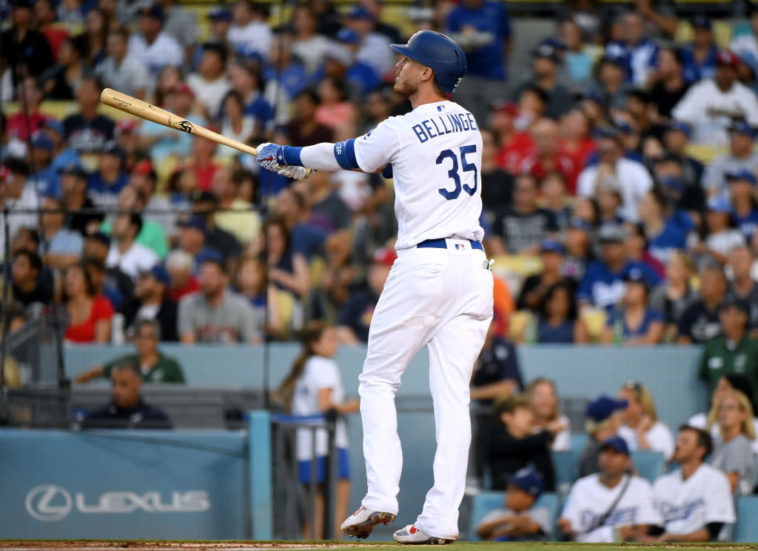
Los Angeles Dodgers 2020 Season Preview

From Getty Images

       All eyes were on the Dodgers to start 2019, as they had come off of back-to-back World Series losses. Then, Cody Bellinger became an MVP winner, and Walker Buehler got better, plus Hyun-Jin Ryu had an ERA under 2.00 for most of the year. But, the Dodgers failed to even make in to the fall classic, falling to the eventual champions, the Nationals, in the NLDS. The offseason started off with the loss of Ryu and no big acquisitions. However, they traded for former MVP winner Mookie Betts and former Cy Young winner David Price days before the start of camp. With Betts and Price in the fold, expectations might be higher than last year.

         Offseason additions: OF Mookie Betts, LHP David Price, LHP Alex Wood, RHP Blake Treinen, RHP Jimmy Nelson, RHP Brusdar Graterol, OF Terrance Gore, RHP Edubray Ramos, RHP Zach McAllister.

         Offseason subtractions: LHP Hyun-Jin Ryu, OF Alex Verdugo, RHP Kenta Maeda, RHP Yimi Garcia, LHP Rich Hill, C Russell Martin, RHP JT Chargois, 3B David Freese, IF Jedd Gyorko.

         Rotation
The Dodgers will have Clayton Kershaw starting on Opening Day for the 9th time, barring injury. He didn\’t start on Opening Day last year for that reason. He made his 8th all-star team, but his 3.03 ERA was the worst of his career since he was a 20 year old rookie in 2008. He struck out 189 batters in 178.1 innings, so it is good to see his strikeout rate go back up after it was below 9.0 for the first time in awhile in 2018. His 1.043 WHIP was his highest since 2010. He allowed a career high 1.4 homers per nine. The Dodgers have another emerging ace in 25 year old Walker Buehler. Buehler was an all-star for the first time and received Cy Young votes after striking out 215 batters in 182.1 innings with a 3.26 ERA. He had a 1.0 HR/9, very low for 2019 standards. David Price comes in as a five-time all-star, although he hasn\’t made the team since 2015. He made just 22 starts for the Red Sox last year, with a 4.28 ERA. It was his worst ERA since 2009. He struck out 128 batters in 107.1 innings for a career high 10.7 K/9. Julio Urias is still only 23, but missed almost all of 2017 and 2018 after debuting in 2016 as a 19 year old. In 37 games (eight starts), Urias had a 2.49 ERA with 85 strikeouts in 79.2 innings, with a 0.8 HR/9. Alex Wood returns to the Dodgers after allowing 23 earned runs in 35.2 games over seven starts with the Reds. He was successful in four seasons with the Dodgers, capping in 2017 with a 2.72 ERA and 16 wins. Jimmy Nelson missed all of 2018 and most of 2019 with injuries. He had a 3.49 ERA in 29 starts in 2017 with the Brewers. Top pitching prospect Dustin May will likely make it as a reliever. In 14 games (four starts), May had a 3.63 ERA in 34.2 innings with a 0.5 HR/9. Another pitching prospect, Tony Gonsolin, may need to start in AAA. He had a 2.93 ERA in 40 innings last year.

              Bullpen
The bullpen is a big question after closer Kenley Jansen had his worst season in 2019. It could be filled with lots of starters as well. Jansen had a career worst 3.71 ERA with 33 saves in 63 innings, striking out 80. Still, his 11.4 K/9 was the second worst of his career, only beating his 2018 mark. Pedro Baez has been very consistent for the Dodgers in his six season career. He has a 3.10 ERA with 69 Ks in 69.2 innings. He has a career ERA of 3.03. Joe Kelly was very inconsistent in his first season in L.A. He had a career high 10.9 K/9, but also had a 4.56 ERA in 51.1 innings. Swingman Ross Stripling was rumored to be in a deal that would send him and Joc Pederson to the Angels, but Halos owner Arte Moreno called it off after being annoyed with the length of the time taken for the Betts trade to be completed. In 32 games (15 starts), Stripling had a 3.47 ERA with 93 Ks in 90.2 innings. He has a 3.51 ERA in his four year career. Former A\’s closer Blake Treinen had a 0.78 ERA with 38 saves over 80.1 innings in 2018. Nothing went right for him last year, as he had a career high 4.91 ERA with 59 Ks in 58.1 innings. He comes in on a low risk, one year deal. The last three spots are up for grabs with May likely getting one and Gonsolin in on another. The team will likely carry only one of Adam Kolarek and Scott Alexander. Both are lefties that will be hurt by the three batter minimum rule. In 28 games last year Alexander had a 3.63 ERA in 17.1 innings. After coming over at the deadline from Tampa Bay, Kolarek had a 0.77 ERA in 11.2 innings. They both struck out nine batters. Dylan Floro pitched in 50 games last year, with a 4.24 ERA. He had a 2.25 ERA in 64 innings in 2018.

                Catchers
The Dodgers and their fans got jiggy with rookie catcher Will Smith. He hit 15 home runs in 54 games with a .907 OPS. Even with Smith in the fold, the Dodgers will not trade top catching prospect Keibert Ruiz, who could debut in 2020. Austin Barnes was great in 2017, but has been awful at the plate since. In 75 games last year, Barnes hit .203 with a .633 OPS and five home runs.

                  Infielders
Max Muncy almost copied his surprise 2018 season, hitting exactly 35 home runs again. He finished exactly 15th in MVP voting once again, this time with an all-star appearance. His .889 OPS was a big drop-off from his .973 mark in 2018. Gavin Lux will be the biggest prospect to play in 2020, with Wander Franco years away. MLB Pipeline\’s 2nd best prospect in the league, Lux hit two home runs, stole two bases and had a .705 OPS in 20 MLB games late last year. He had a .347 average and 1.028 OPS in AA and AAA last year. Corey Seager is still the Dodgers shortstop, although I personally would shop him for a superstar like Francisco Lindor. He hit 19 home runs with 44 doubles last year, the latter tied for the league high. He had an .817 OPS which is good but a little underwhelming after his last full season of 2017. Justin Turner has only made one all-star team, but he is the heart and soul of the team. He hit 27 home runs with a .290 average and an .881 OPS in 135 games last year. He was even willing to change positions if the team could sign Anthony Rendon in free agency (they couldn\’t). Utility infielder Enrique \”Kike\” Hernandez can also play center field. He hit 17 home runs in 130 games, but he had a very low .715 OPS. In his rookie season Matt Beaty hit nine home runs with five stolen bases and a .775 OPS. He can play first base and left field.

                     Outfielders
While the addition of Betts is exciting, he is not even the Dodgers\’ best outfielder. Cody Bellinger won MVP, as well as a Gold Glove and Silver Slugger, while hitting 47 home runs with 15 stolen bases, a .305 average and a 1.035 OPS, making him a bona fide superstar. Betts, the 2018 AL MVP, had a down year for his standards, with 29 home runs, 16 stolen bases (almost half of his 2018 total), a .295 average and .915 OPS. He won his fourth consecutive Gold Glove and third Silver Slugger in those four years. The Dodgers will move either Betts or Bellinger, both right fielders, to center. Joc Pederson was insane at the Home Run Derby, and hit a career high 36 home runs while in Bellinger\’s shadow. His .249 average and .876 OPS were also career highs. AJ Pollock is set to be the best and most expensive fourth outfielder in the league. Signed prior to 2019 to a four year, $55 million deal with an option, Pollock hit 15 home runs with five stolen bases and a .795 OPS last year. He has an .804 OPS in his career. Chris Taylor can also play second base and shortstop. He hit 12 home runs with eight stolen bases and a .794 OPS last year.

                        Projected Opening Day Lineup
RF Mookie Betts (R)
CF Cody Bellinger (L)
1B Max Muncy (L)
3B Justin Turner (R)
LF Joc Pederson (L)
C Will Smith (R)
SS Corey Seager (L)
2B Gavin Lux (L)
Pitcher

                        Projected Rotation
Clayton Kershaw (L)
Walker Buehler (R)
David Price (L)
Julio Urias (L)
Alex Wood (L)

                         Projected Bullpen
Kenley Jansen (R)
Pedro Baez (R)
Joe Kelly (R)
Ross Stripling (R)
Blake Treinen (R)
Adam Kolarek (L)
Dustin May (R)
Tony Gonsolin (R)

                          Projected Bench
C Austin Barnes (R)
UT Kike Hernandez (R)
UT Chris Taylor (R)
1B/LF Matt Beaty L)
OF AJ Pollock (R)

                           Prediction
The Dodgers will undoubtedly be one of baseball\’s top teams in 2020. They have a great lineup, great rotation and a good bullpen, with great depth and a great farm system. They will take the NL West title again, and lose to the Yankees in the World Series.