Cleveland Indians 2021 Season Preview


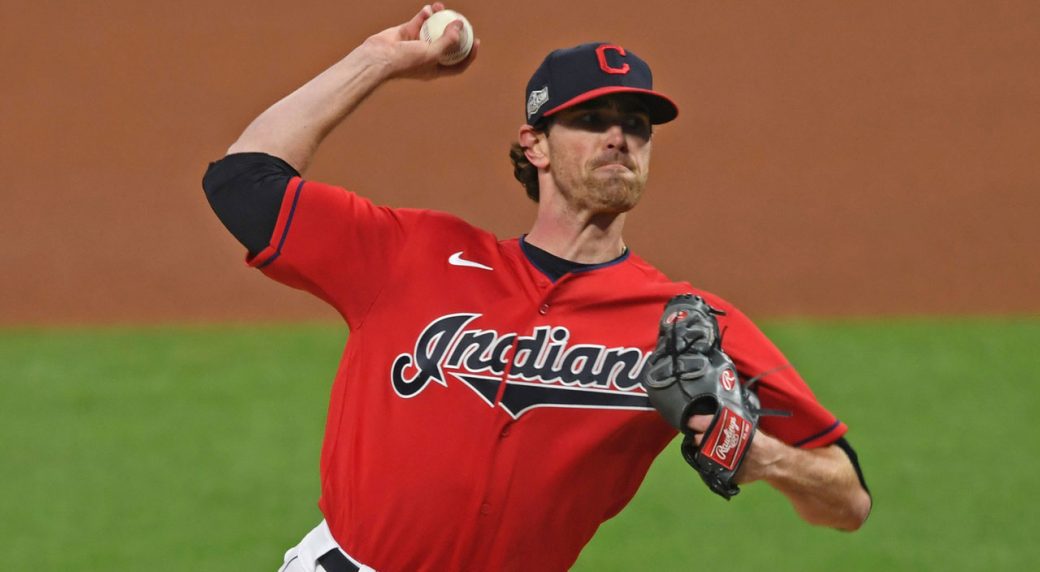
      Spare change? Paul Dolan could use it. The owner of Cleveland has an estimated net worth of $4.6 billion, but for now he is more interested in pinching pennies. The Indians have been cheap in years prior, but the past year has really cemented that. At the trade deadline, they sold off Mike Clevinger, despite being in a prime playoff position. In the offseason, they released Brad Hand instead of picking up an option that ended up being less than what he was worth, and then, traded star shortstop Francisco Lindor and fan favorite Carlos Carrasco to the Mets without getting much in return. Yikes. Enjoy Shane Bieber while you have him, Clevelanders. 

Offseason additions: OF Eddie Rosario, SS Andres Gimenez, SS Amed Rosario, OF Harold Ramirez, RHP Blake Parker, OF Billy Hamilton, OF Ben Gamel, RHP Heath Hembree.

Offseason subtractions: SS Francisco Lindor, RHP Carlos Carrasco, 1B Carlos Santana, LHP Brad Hand, OF Tyler Naquin, OF Delino DeShields Jr., RHP Adam Cimber, C Sandy Leon, OF Domingo Santana. 

Trade Deadline 2020 summary

Acquired: RHP Cal Quantrill, OF Josh Naylor, C Austin Hedges.

Traded: RHP Mike Clevinger, OF Greg Allen.

2020 record: 35-25

2020 placement: 2nd (tied)

2020 WAR leader (batter): Jose Ramirez

2020 WAR leader (pitcher): Shane Bieber

Starting Pitchers

It\’s amazing how after losing Clevinger and Carrasco, plus Trevor Bauer and Corey Kluber in recent seasons, the Indians still have an amazing rotation. It all starts with Shane Bieber, who won the AL Cy Young and finished 4th in MVP voting, and maybe he should have won. Bieber led the league in just about every major stat, with a 1.63 ERA, 122 strikeouts, a 5.4 H/9 and a 281 ERA+. You could write it off as a small sample size, and a weak AL and NL Central Division, but the White Sox and Twins, two teams that accounted for a third of Bieber\’s starts, both have elite offenses. He is just 25 years old, something most people don\’t realize. Zach Plesac had a great season, but breaking COVID protocols led to him being sent to the alternate training site for nearly a month. In the eight starts that he did make, Plesac struck out 57 in 55.1 innings with a 2.28 ERA, a 2.9 BB% and a .237 wOBA against. At age 26, Plesac will likely be the oldest starter in the rotation. Aaron Civale was the one Indians pitcher to struggle last year, as he allowed a league most 82 hits in 74 innings. He had a 4.39 xERA with a low 5.1 BB% and an average exit velocity of 87.1 mph. Civale was really good a 10 game 2019 stint, finishing with a 2.34 ERA in 57.2 innings. MLB Pipeline\’s 51st best prospect in baseball is Triston McKenzie, a 23 year old who stands six feet tall and five inches, but only 165 pounds. He debuted to encouraging results in 2020, striking out 42 in 33.1 innings with a 3.24 ERA. Batters were limited to a .205 xBA with an 86 mph average exit velocity. The one concern with him is a 12% barrel percentage, but you could draw that up to just 75 batted balls against. The fifth starter spot is an open competition, mainly between two former Padres prospects acquired in blockbuster trades. Cal Quantrill came over from San Diego midseason in the Clevinger trade, and he made two starts at the end of the season after moving to the bullpen. Between the two teams and two positions, Quantrill was constantly effective, finishing with a 2.25 ERA in 32 innings. In the Cleveland half of that, he had a 1.84 ERA with 13 strikeouts in 14.2 innings. Even though he has more experience, I could see Quantrill starting in the bullpen, while Logan Allen starts. Allen, who came over in 2019\’s Trevor Bauer trade, would be the rotation\’s lefty, and he allowed four runs in 10.2 innings for a 3.38 ERA in 2020. He struck out seven batters but unfortunately he also walked seven batters. He throws a changeup with a spin rate under 1200 rpm that has been effective in his short MLB time. 

Relief Pitchers

Brad Hand is now a National, leaving the closer role open. The obvious filler would be strikeout specialist James Karinchak, who is good at almost everything pitching-wise. Karinchak struck out 53 batters in 27 innings, one K away from averaging two per inning. He had a 2.67 ERA with a .130 xBA, a .196 xSLG, and a 2.22 xERA, which are all amazing numbers. Karinchak throws a fastball and a curveball almost equally, and they are both wipeout pitches. The reason I said he was good at almost everything is because of his walk rate, which was in the bottom five percent of the league in 2020, at 14.7%. Nick Wittgren generally has a good ERA, but his high HR/9 inflates his xERA. Wittgren had a 3.42 ERA but a 4.74 xERA in 2020. He struck out 28 batters in 23.2 innings, and both his fastball and changeup were effective pitches. Entering his 19th MLB season is Oliver Perez, who got a minor league deal despite a productive three years in Cleveland. He had a 2.00 ERA in 18 innings, and righties had a .627 OPS against him, and lefties had a .480 OPS versus him. The Indians acquired Emmanuel Clase last offseason for Corey Kluber,   but he missed the 2020 season serving a PED suspension. Clase throws a sinker that averaged 99.2 mph in 2019, plus a low-90s slider. In 2019 for the Rangers, he had a 2.31 ERA with 21 strikeouts in 23.1 innings.   Righty Phil Maton has high spin rates on all of his pitches, and he limited batters to an 82.7 mph average exit velocity. He struck out 32 batters in 21.2 innings with a 2.81 xERA. Rookie Cam Hill had a 4.91 ERA in 18.1 innings, but he did have a 0.873 WHIP. Batters hit .100 against Hill\’s slider with a 43.2% whiff rate. The final spot will likely come down to Adam Plutko, Bryan Shaw and lefty Kyle Nelson. Plutko gives them length in the pen. He had a 4.88 ERA in 27.2 innings, and only struck out 15 batters. Shaw used to be a workhorse for Cleveland, leading the league in appearances in 2014, 2016 and 2017. He spent 2018-2020 with the Rockies, where the heavy load and Coors Field took a toll on him. His average exit velocity went up by five mph in Colorado. Nelson struck out 69 batters in 47.1 innings with a 2.28 ERA in the minors in 2019. He debuted in 2020, but it wasn\’t pretty, allowing four runs in 0.2 innings. 

Catchers

Roberto Perez won his second consecutive Gold Glove, but all of his offensive progress was lost. After hitting 24 home runs with a .774 OPS, Perez hit just .165 with a .480 OPS in 32 games. His average exit velocity dropped by 4.2 mph, down to 86. He walked 10 percent of the time, but struck out 34.5% as well. The team kept Austin Hedges after acquiring him in the Clevinger deal. Hedges has Perez\’s defensive abilities, just with even less offensive production. Hedges hit .145 with a .521 OPS in 2020, and he has a career xSLG of just .342. 

Infielders

They may not have Francisco Lindor anymore, but at least Jose Ramirez is still in Cleveland. Ramirez won the Silver Slugger at third base, and finished 2nd in MVP voting to Chicago\’s Jose Abreu. Ramirez hit 17 home runs with 10 stolen bases, a .292 average and a .993 OPS. He walked 12.2% of the time, and struck out just 16.9% of the time, which was actually his highest since 2015. Bobby Bradley was once a top prospect, but he has fallen in the system as the Indians held him in the minors. He debuted in 2019, but spent 2020 at the alternate training site. In 107 AAA games in 2019, Bradley hit 33 home runs with a .912 OPS. After winning the AL Gold Glove at second base, the Tribe brought back Cesar Hernandez. Hernandez hit a league leading 20 doubles with a .283 average and a .763 OPS. He had four outs above average with a 28.5 ft/s sprint speed. In exchange for Lindor, the Indians got two starting caliber shortstops from the Mets. The likely starter is Andres Gimenez, the speed and defense specialist who was once New York\’s top prospect. In his rookie season, Gimenez hit three home runs with eight stolen bases and a .732 OPS. Playing second, third and shortstop, he had a combined five outs above average. The other former Met is Amed Rosario, who is basically Gimenez but a few years older. Rosario is generally a bad defender, but he did have two outs above average last year. He hit .252 with a .643 OPS and a very low 2.7 BB%. Rosario is very fast, but went 0-for-1 in stolen base attempts in 2020. Lefty power bat Jake Bauers can play corner outfield, and compete with Bradley at first base. Bauers hit 12 home runs with a .683 OPS in 2019, but didn\’t play in 2020. Bauers has a 12.2 BB% in his two year career, but also a 27 K%. He is also less than a year older than Bradley. 

Outfielders

Outfield has been a problem for the Indians over the past few years, so they signed Eddie Rosario to play left field. Rosario has great power, as he hit 32 home runs in 2019, and he can hit for average. However, his very low walk rate has stunted his OPS considerably, as his career high is .836. Rosario hit 13 home runs in 2020 with a .792 OPS and a 14.7% K rate. His 8.2 BB% was easily a career high, so at least there is progress there. 23 year old Josh Naylor came over from San Diego, and while he only had a .556 OPS in 22 games after the trade, he showed what he could be in the two game playoff series versus the Yankees. He went 5-for-7 with a home run and three doubles in those games. In center field is still Oscar Mercado, but Rosario or former first rounder Bradley Zimmer could say otherwise. Mercado hit 15 home runs with 15 stolen bases as a rookie in 2019, then promptly became baseball\’s worst hitter. In 36 games, Mercado hit .128 with a .348 OPS and a 29 K%. A silver lining is that his exit velocity and hard hit percentage wasn\’t really affected. Corner outfielder Jordan Luplow saw his barrel percentage and hard hit percentage nearly get cut in half in the shortened season. After posting a .923 OPS in 85 games in 2019, Luplow finished with a .663 OPS in 29 games. He does walk a lot, 13% of the time in fact. Slugger Franmil Reyes won\’t play in the field often; he totaled five innings in 2020. But, he is a full-time DH with an above average OPS+ in all three of his seasons. Reyes hit nine home runs with a .795 OPS. He crushes the ball, with an average exit velocity of 92.4 mph. Unfortunately, he also struck out at a 28.6% rate. 

Projected Rotation
Shane Bieber (R)
Zach Plesac (R)
Aaron Civale (R)
Triston McKenzie (R)
Logan Allen (L)
Projected Bullpen
James Karinchak (R)
Nick Wittgren (R)
Oliver Perez (L)
Phil Maton (R)
Cal Quantrill (R)
Emmanuel Clase (R)
Cam Hill (R)
Kyle Nelson (L)
Projected Lineup
2B Cesar Hernandez (S)
LF Eddie Rosario (L)
3B Jose Ramirez (S)
DH Franmil Reyes (R)
RF Josh Naylor (L)
1B Bobby Bradley (L)
CF Oscar Mercado (R)
SS Andres Gimenez (L)
C Roberto Perez (R)
Projected Bench
C Austin Hedges (R)
IF Amed Rosario (R)
1B/RF Jake Bauers (L)
OF Jordan Luplow (R)

Projection

The rotation is still great, and it\’s even younger. The bullpen has some good pitchers, but it lessens out at the end. But, the Indians still don\’t have a deep lineup; they didn\’t when they went to the World Series in 2016. With the Twins and White Sox have more all-around teams, the Indians don\’t have a place. They will finish in third place, and it won\’t be close. Sadly, there will be no playoffs in Cleveland. 
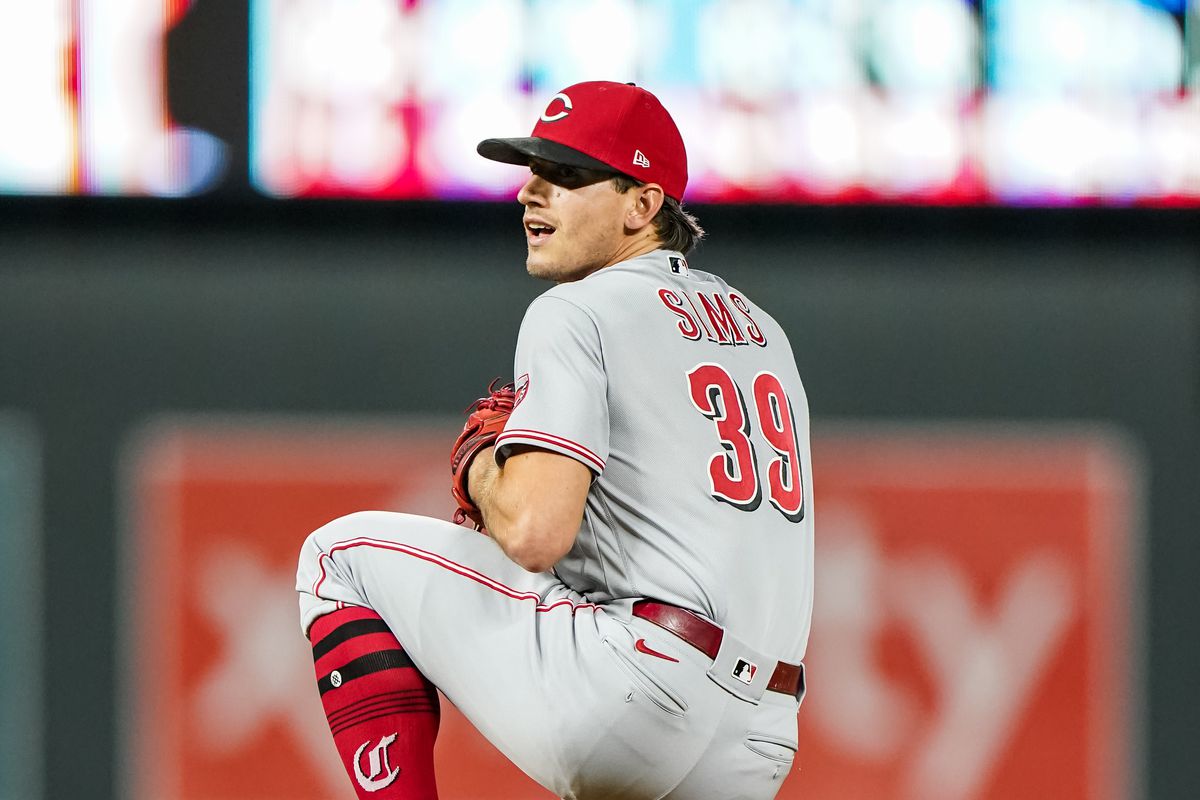
Cincinnati Reds 2021 Season Preview


       The Reds were an unbalanced mess in 2020. On one half, the rotation was amazing, and the bullpen had some decent pieces. But on the other side, the offense was abysmal, with only two hitters having an OPS over .800. Now, the team has lost their Cy Young winner and their closer, while adding little to replace them. Their offseason feels like a massive loss in every aspect for the team, putting a whole lot of jobs in jeopardy. 

Offseason additions: LHP Sean Doolittle, RHP Noe Ramirez, RHP Jeff Hoffman, RHP Cam Bedrosian, OF Tyler Naquin, LHP Josh Osich, RHP Brandon Bailey.

Offseason subtractions: RHP Trevor Bauer, RHP Raisel Iglesias, RHP Archie Bradley, IF Freddy Galvis, C Curt Casali, IF Freddy Galvis, RHP Anthony DeSclafani, RHP Robert Stephenson, RHP Nate Jones, OF Brian Goodwin. 

Trade Deadline 2020 summary

Acquired: OF Brian Goodwin, RHP Archie Bradley

Traded: OF Josh VanMeter, LHP Packy Naughton, OF Stuart Fairchild.

2020 record: 31-29

2020 finish: 2nd

2020 WAR leader (batter): Jesse Winker

2020 WAR leader (pitcher): Trevor Bauer

Starting Pitchers

Trevor Bauer will be missed in Cincinnati. The team still has a pretty good rotation, but he can\’t replace a Cy Young winner who dragged the team into the postseason. Bauer had 100 strikeouts in 11 starts, but the Reds still have three starters with a K/9 over 11.0. The best of them is Luis Castillo, who is reportedly potentially on the trade block. Castillo struck out 89 batters over 70 innings, with a 3.21 ERA and a 2.65 FIP. He throws a high-90s fastball that had a 37.2% whiff rate. Another pitcher who could be next to go is Sonny Gray, who only threw 56 innings over 11 starts. Still, Gray had a 3.70 ERA with 72 strikeouts and a 3.05 FIP. Gray\’s biggest issue was an 11.1% BB rate. His walk rate has slowly increased over the years. The third high strikeout starter is Tyler Mahle, a former high-end prospect who had a career season. Mahle had a 3.59 ERA with 60 strikeouts in 47.2 innings, although his BB% rose up by more than four percent, up to 10.4%. Mahle was in the top ten percent in xBA at .188. Resident lefty Wade Miley only appeared in six games in 2020, and in those six games he was limited to 14.1 innings. For Houston in 2019, Miley had a 3.98 ERA over 33 starts, which is fine for the end of the rotation. His change-up that season had a .193 xBA against and a 37.8% whiff rate. Michael Lorenzen made two starts at the tail end of the season, allowing three runs in 9.2 innings. He could move to the fifth starter spot. Lorenzen had a 4.28 ERA in 33.2 innings, but he had great underlying numbers, with an average exit velocity of 84.4 mph and a 3.31 xERA. Moving to the rotation also gives Lorenzen more chances to hit; his .716 career OPS is practically a Mike Trout number compared to other pitchers. His main competition is Jeff Hoffman, the former 9th overall pick who really did not have a fun time at Coors Field. In 2020, Hoffman had a 9.28 ERA with a 92.3 mph average exit velocity, a .300 xBA, a .406 wOBA and a 53.4% hard hit percentage. The Reds could give him a chance to adjust out of the bullpen.

Relief Pitchers

With Raisel Iglesias off to Los Angeles, the Reds will have to find a replacement closer. The favorites are two lefties, Sean Doolittle and Amir Garrett. I\’d give the advantage to Doolittle right now, as he has more closing experience in the past. He was elite in 2018, but struggled in 2019 and 2020. Doolittle appeared in 11 games last year, but pitched just 7.2 innings, allowing five earned runs. His above average walk rate of 5.8% in 2019 rose up to 11.1% in 2020. Another big concern with Doolittle is his plummeting fastball velocity, which was down three mph in 2020. After a breakout 2019, Garrett followed it up with an even better season. Garrett struck out 26 batters in 18.1 innings with a 2.45 ERA. Garrett had a .188 xBA with a 3.28 xERA. His 10.1 BB% wasn\’t great but it was an improvement on his 2019 numbers. Another potential closing option is Lucas Sims, who after striking out 54 batters in 68 innings as a Brave, has punched out 97 in 74 innings since moving to Cincinnati. Sims had a 2.45 ERA with a 0.935 WHIP, a 2.25 xERA, a .134 xBA and great spin rates. His curveball had an average rpm of 3334, and his fastball was at 2771, which is great for a curveball, let alone a fastball. 27 year old Tejay Antone went under-the-radar as a rookie last year, striking out 45 batters in 35.1 innings with a 2.80 ERA, while only allowing 20 hits. Antone throws a high-90s sinker with a wipe-out slider and curveball. His .169 xBA was in the 97th percentile among pitchers. Longtime Angels reliever Cam Bedrosian comes into camp on a minor league deal. Bedrosian had a 2.45 ERA through 11 appearances in 2020, with a 3.92 xERA. One issue for Bedrosian has been allowing hard contact, as he has a 90.1 mph average exit velocity since 2015. In exchange for Iglesias, the Reds got Noe Ramirez, who in past years was a strikeout pitcher but did not do much striking out in 2020. He K\’d 14 batters in 21 innings with a 3.00 ERA. Since 2018, Ramirez\’s fastball velocity has slowly decreased, down to 88.7 mph in 2020. That didn\’t stop the pitch from being dominant, as batters hit just .071 against it. A former top prospect of the Dodgers and Rays, Jose De Leon is now 28, and while he struck out 10 batters in six innings last year, he averaged two runs allowed per inning. His 95 mph sinker got lit up, but his change-up was effective, with batters going 0-for-11 with five strikeouts against it. Acquired in November for cash, Brandon Bailey allowed two runs in 7.1 innings for the Astros last year, striking out four. His slow curveball and change-up showed potential, although the sample size was too small. Also in the mix is Sal Romano, a 27 year old who was apart of the Reds\’ rotation in 2017 and 2018. He allowed 14 runs in 16.1 innings in 2019, and only appeared in two games in 2020, getting out all four batters he faced. Lefty Cionel Perez comes over after allowing two runs in 6.1 innings with eight strikeouts for the Astros in 2020. Perez throws a mid-90s fastball, but he has walked 15 batters in 26.2 career innings.

Catchers

Light-hitting left-handed batter Tucker Barnhart won his Gold Glove in just 38 games in 2020. He has never finished with an OPS+ over 95, and he hit .204 with a .679 OPS last year. Barnhart has some power, but nothing special. He split time with Curt Casali in 2020, who left after a career high .866 OPS. This year, he will split time with Tyler Stephenson, MLB Pipeline\’s 95th best prospect in baseball. Stephenson debuted in 2020, going 5-for-17 with two home runs. Drafted 11th overall in 2015, Stephenson has a .740 OPS over five minor league seasons. He could take over for Barnhart as soon as this year.

Infielders

He will probably be a Hall of Famer, and he can still walk a ton, but Joey Votto just is not a great player anymore, not since 2017. Now, he is just good. Votto\’s power diminished in 2018 and 2019, but at least it did come back in 2020, as he mashed out 11 homers in 54 games. Votto walked 37 times for a 16.6 BB%, which carried his OBP up to .354. He had an .800 OPS, with -3 outs above average at first base. Mike Moustakas can play first, second and third base, but he will start at second. He walked 11% of the time in 2020, with a 22.1 K%, which was surprisingly high for him. Moustakas finished with a 108 OPS+, his sixth consecutive season over 100. The Reds lost Freddy Galvis in free agency, and did not do anything to replace him. This leaves an open competition at shortstop, and a lot of it is dependent on the Reds\’ gameplan with Jose Garcia. One of the organization\’s top prospects, Garcia was rushed to the majors in 2020, without every playing above High-A. The results showed, as Garcia struck out 26 times in 68 Plate Appearances, walking just once and finishing with a .400 OPS. The 22 year old could start in AAA for conditioning. If the Reds don\’t want to start Garcia at the MLB level, then Kyle Farmer will likely start. Farmer can play all over the infield, but his OPS has been between 70 and 75 in all four of his seasons. 2020 was the lowest, at 71. Farmer went 12-for-32 against fastballs in 2020, but he also went 4-for-27 against breaking balls. At third base is Eugenio Suarez, who was reportedly shopped in the offseason. Suarez has great power, hitting 49 homers in 2019, and 15 in 2020. However, he had a .218 xBA and a 29% K rate as well. Back to the good side, Suarez had a 14.4 barrel percentage with a 13 BB%. In camp on a minor league deal is Dee Strange-Gordon, formerly Dee Gordon. Strange-Gordon is still fast, with a 28.3 ft/s sprint speed, and he stole three bases in 33 games in 2020. However, he is an awful hitter, with an 83.1 mph average exit velocity and a .324 xSLG since 2015. 

Outfielders

The best hitter for the Reds in 2020 was Jesse Winker, who was their DH, but will have to move back to left field, where he is not a good hitter. Winker hit 12 home runs with a .932 OPS, but he did slump considerably after he had a 1.167 OPS on August 29. He walked 15.3 percent of the time with a 92.1 mph average exit velocity. In right field is Nick Castellanos, who is a pretty good hitter as there\’s a deep drive into left field by Castellanos, that will be a home run and so that\’ll make it a 4-0 ballgame. Please tell me you understood that. Anyways, Castellanos didn\’t miss a game, and hit 14 home runs with a 16% barrel percentage, and a .542 xSLG. But, he struck out 28.5% of the time, and he had -5 outs above average in right field. With the designated hitter leaving the National League, the Reds will have to platoon Nick Senzel and Shogo Akiyama in center field. In his first MLB season at age 32, Akiyama stole seven bases with a .654 OPS. That could have been a lot worse if not for an above-average 13.7 BB%. Out of 121 batted balls, Akiyama had just one barrel, for an awful 0.8 barrel percentage. Drafted 2nd overall in 2016, Senzel was limited to 23 games, and he hit two home runs with two stolen bases and a .604 OPS. He is very fast, with an average sprint speed of 29.3 ft/s. Senzel is the better player, but Akiyama\’s lefty bat could get him more playing time. I don\’t want to give up on Aristedes Aquino, but his weak 23 game 2020 season could mean that he doesn\’t make the team. Aquino only had an 80.4 mph average exit velocity against fastballs, which is pretty weak. He struck out over 32% of the time, but he is a sneaky good defender who could replace Castellanos or Winker if they get hurt. He is also fast, with a 27.9 ft/s sprint speed. 

Projected Rotation
Luis Castillo (R)
Sonny Gray (R)
Tyler Mahle (R)
Wade Miley (L)
Michael Lorenzen (R)
Projected Bullpen
Sean Doolittle (L)
Amir Garrett (L)
Lucas Sims (R)
Tejay Antone (R)
Cam Bedrosian (R)
Noe Ramirez (R)
Jeff Hoffman (R)
Jose De Leon (R)
Cionel Perez (L)
Projected Lineup
CF Nick Senzel (R)
1B Joey Votto (L)
3B Eugenio Suarez (R)
LF Jesse Winker (L)
RF Nicholas Castellanos (R)
2B Mike Moustakas (L)
SS Kyle Farmer (R)
C Tucker Barnhart (L)
Pitcher
Projected Bench
C Tyler Stephenson (R)
OF Shogo Akiyama (L)
OF Aristedes Aquino (R)
IF Dee Strange-Gordon (L)

Projection

The Reds offseason just wasn\’t great. There were multiple key subtractions, and the team didn\’t do much to replace the departed players. This leaves the team with a bunch of holes, included shortstop, the end of the rotation and the end of the bullpen. The NL Central as a whole got worse, but the Reds weren\’t the best in 2020, and they won\’t be in 2021. They will finish in 4th place, and miss the playoffs. 

Chicago White Sox 2021 Season Preview

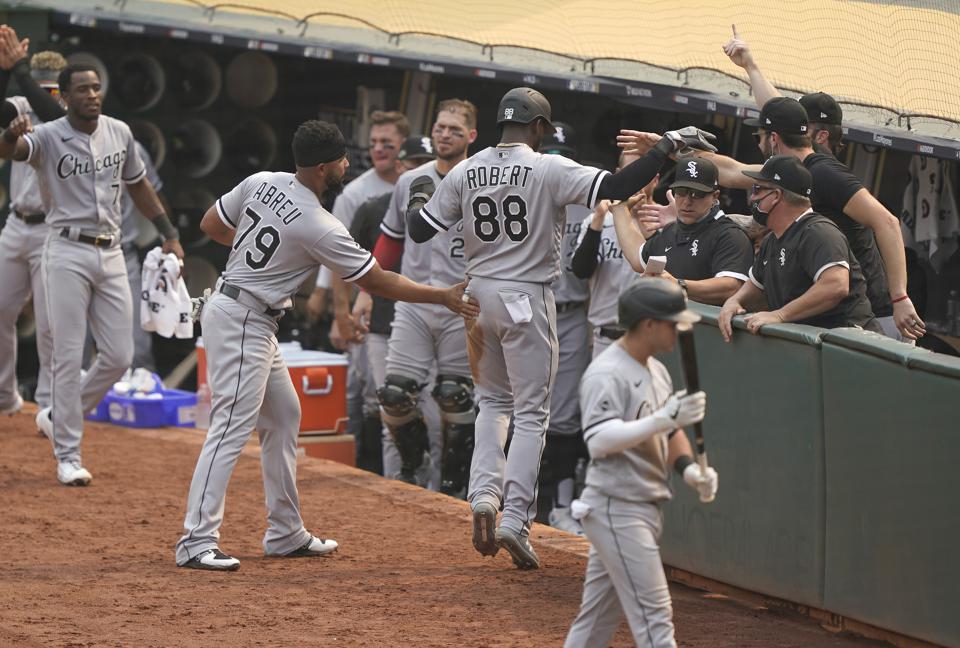
       If you can remember all the way back to Spring Training 2020, you would know that there was a ton of buzz surrounding the White Sox. Eloy Jimenez was entering his second season, the team signed Dallas Keuchel and Yasmani Grandal, and top prospects Luis Robert and Nick Madrigal were set to debut. Throughout the regular season, the hype delivered, as the team powered into the playoffs, and were just a game out of first place. Unfortunately, a three game series loss to the A\’s ended their season, but after another strong offseason, the buzz is still present. 

Offseason additions: RHP Lance Lynn, RHP Liam Hendriks, OF Adam Eaton, C Jonathan Lucroy, IF Tim Beckham.

Offseason subtractions: RHP Alex Colome, C James McCann, OF Nomar Mazara, DH Edwin Encarnacion, RHP Dane Dunning, LHP Gio Gonzalez, RHP Steve Cishek, IF Yolmer Sanchez, OF Jarrod Dyson.

Trade Deadline 2020 summary

Acquired: OF Jarrod Dyson.

Traded: None.

2020 record: 35-25

2020 placement: 2nd (tied)

2020 WAR leader (batter): Jose Abreu

2020 WAR leader (pitcher): Dallas Keuchel

Starting Pitchers

He may not have been the best White Sox pitcher in 2020, but Lucas Giolito is certainly their ace. Giolito finished with a 3.48 ERA, a 1.037 WHIP and 97 strikeouts in 72.1 innings. His fastball had an average against of .201, and that was the highest of his three main pitches. Giolito finished 7th in AL Cy Young voting, two spots behind fifth place finisher and teammate Dallas Keuchel. While Giolito is a strikeout specialist, Keuchel is a pitch-to-contact lefty who throws an 88 mph fastball. A former Cy Young winner, Keuchel returned to dominate in 2020 with a 1.99 ERA and a 1.089 WHIP in 63.1 innings. Keuchel had a league leading 0.3 HR/9, and now that the ball is supposedly de-juiced, that could somehow get better. To complete a big-three in the rotation, promising rookie Dane Dunning was dealt to Texas for Lance Lynn. Lynn led the league with 84 innings pitched, striking out 89 plus a 3.32 ERA. He allowed just 64 hits, and batters had a .209 xBA against him. 25 year old Dylan Cease throws a fastball averaging 97.5 mph, and he had a 4.01 ERA over 12 starts. His slider had a .182 average against with a 39.5% whiff rate. Cease walked way too many batters, with a league high 34. He also had a 5th percentile xERA of 6.65. The fifth spot will be a battle between former ace* Carlos Rodon and Reynaldo Lopez. The oft-injured Rodon has appeared in 11 games since the start of 2019, and he has allowed 27 earned runs in 42.1 innings. In his career, Rodon has an xBA against of .241, better than the league average of .250. Lopez could use some retooling, as he led the league in earned runs allowed in 2019 (in a bad way) and then he had a 6.49 ERA through eight starts in 2020. Lopez got hit hard, to the tune of a 91.1 mph average exit velocity.

*Unfortunately not satire thanks to the 2017-18 White Sox

Relief Pitchers

The White Sox lost closer Alex Colome in free agency after he had a 0.81 ERA in 2020. To replace him, the team signed Liam Hendriks, who is arguably baseball\’s best reliever. After a career 2019 season, Hendriks had a 1.78 ERA with 37 strikeouts, 14 saves, a 0.671 WHIP and a 5.0 H/9. Hendriks was in the 98th percentile in both K% (40.2) and BB% (3.3). Also following up a career 2019 well was Aaron Bummer, who despite only making nine appearances, allowed one run in 9.1 innings with 14 strikeouts. In the prior season, Bummer had a .198 xBA against and a 2.72 xERA. Evan Marshall didn\’t allow a single barrel out of the 56 batted balls against him in 2020. Marshall also had a 32.3 K%, a 2.38 ERA and a 2.36 xERA. Hitters went 1-for-18 with a 58.5% whiff rate against Marshall\’s curveball. 2016 20th round pick Matt Foster had a productive rookie season at age 25, limiting batters to a .222 wOBA. He had a 2.20 ERA with 31 strikeouts in 28.2 innings, plus a 5.0 H/9 and a 0.872 WHIP. The White Sox may have hit the jackpot with 2020 1st round pick Garrett Crochet, who is already MLB ready. With no minor league experience, Crochet, his 100+ mph fastball and his wipeout slider jumped straight to the big leagues, and did not allow a run in six innings, striking out eight with just four base runners allowed. Like Foster and Crochet, 2018 6th rounder Codi Heuer debuted to great results in 2020. Heuer throws a high-90s sinker about 63% of the time, leading to a 50% groundball rate. Batters also went 1-for-18 with a 66.7% whiff rate against Heuer\’s slider. He had a 1.52 ERA with 25 strikeouts in 23.2 innings. The White Sox will miss high-strikeout lefty Jace Fry for the first month-or-so of the season after he had a microdiscectomy. Fry had a 3.66 ERA in 2020, and he has a career 11.2 K/9. However, his career BB% of 13.7 is a problem. We all thought that 2020 would bring the highly-anticipated return of Michael Kopech, MLB Pipeline\’s 39th best prospect in baseball who missed 2019 with Tommy John surgery. However, that would be delayed to 2021, as Kopech opted-out of the season. In four career MLB starts, the flamethrowing 24 year old allowed eight runs in 14.1 innings with 15 strikeouts. He will start the season in the bullpen, but maybe at some point he can graduate to the rotation. Jimmy Cordero was a big part of the Chicago bullpen at the end of 2019, with a 2.75 ERA over 30 appearances. That success did not carry over to 2020, as Cordero had a 6.08 ERA with 22 strikeouts in 26.2 innings. Cordero was still able to limit batters to an 84.5 mph average exit velocity, but batters also had a .291 xBA against him. With a lot of up-and-coming high-end relievers like Crochet, Heuer and Foster, Cordero may be the odd-man out. 

Catchers

The second best catcher on the free agent market was James McCann, who had an .896 OPS for the Sox in 2020. You would think that would be a problem, but McCann was only their backup catcher. Yasmani Grandal is easily a top-three catcher in baseball, and while his batting average is rarely pretty, he is great at walking. Grandal had a 15.5 BB%, and for the 5th time in six years he was in the top ten percent of players in that category. Grandal finished with a 113 OPS+, and he has never had an OPS+ under the league average of 100. The 10th overall pick in 2016, 26 year old Zack Collins is a DH option as well as a backup catcher option. In 36 career games, Collins has struggled offensively, with a .599 OPS and a 36.7 K%. A silver lining is that Collins has a 13.3 BB%. The White Sox could opt to go with three catchers, and promote non-roster invitee Jonathan Lucroy. Lucroy played in one game for Boston in 2020, but did not get to the plate. His career has fallen off since leaving Milwaukee, as he has had a .660, .617 and .716 OPS in his past three seasons. 

Infielders

After a .798 OPS in 2018, Jose Abreu\’s career was on a downtick. Now, he is the RBI champion in back-to-back years, and the 2020 American League MVP. Abreu hit 19 home runs, and drove in 60 runs in 60 games. He also had a league leading .617 slugging with a .987 OPS, a .300 xBA and a 92.9 mph average exit velocity. 2018 4th overall pick Nick Madrigal is still a top 40 prospect in baseball, and he had a .340 average in 29 games. While he only walked four times, Madrigal struck out just seven times for a 6.4 K%, and he finished with a 108 OPS+. He is fast, a good defender and hits for average, but is definitely not going to lead the league in slugging like his teammate. After leading the lead with a .335 average in 2019, Tim Anderson showed that it wasn\’t a fluke, winning his first Silver Slugger and finished 7th in MVP voting. He hit .322 with 10 home runs, a league leading 45 runs scored and an .886 OPS. Yoan Moncada is entering his fifth season in Chicago, and he\’s still only 25. He was great in 2019, but regressed in 2020, to a .225 average with a .705 OPS. Moncada\’s average exit velocity dropped by over five mph, and he had a 31.2 K%, which has always been an issue for him. Utility infielder Danny Mendick was the starting second baseman at the beginning of the season. Mendick is the one player keeping the team from carrying three catchers. He hit three home runs in 33 games with a .664 OPS. He can play second, shortstop and third base. Leury Garcia can play all over the field, and he\’s entering his ninth season with the White Sox. For the first time in his career, Garcia had an above average OPS+, at 107. He hit three home runs with a .271 average, hitting the .270 mark for the fourth consecutive season, although he only played in 16 games. The big debut of the 2021 season looks to be Andrew Vaughn, the team\’s best prospect and MLB Pipeline\’s 14th best prospect in baseball. The third overall pick in 2019, Vaughn has just 55 games of minor league experience, but as they showed with Crochet, the White Sox are fine bringing up young players if the talent is there. Vaughn hit six home runs with an .832 OPS between rookie league, Single-A and High-A in 2019. With Abreu at first base, Vaughn could be the starting DH. 

Outfielders

In his second MLB season, Eloy Jimenez won his first Silver Slugger award, hitting 14 home runs with a .296 average and an OPS of .891. Jimenez hits rockets, with a 16.5 barrel percentage, a 55.7 hard hit percentage and a 92.4 mph average exit velocity. With -14 outs above average in 177 career games, his defense is questionable to say the least. Luis Robert is not as good of a hitter as Jimenez, but he has great speed and is an elite defender. Robert hit 11 home runs with nine stolen bases and a 101 OPS+. He finished 2nd in Rookie of the Year voting, and won a Gold Glove with a 29.1 ft/s sprint speed and seven outs above average, which is amazing for a shortened season. The White Sox needed a right fielder last year, so they signed Nomar Mazara, who underperformed. Mazara is out, and in is Adam Eaton, who was on the White Sox from 2014 to 2016. From 2014 to 2019, Eaton had an OPS+ over 100 in each season, but that was at just 76 in 41 games in 2020. Eaton hit four home runs with three stolen bases and a pretty low 18.2 K%. Speed demon Adam Engel was an offensive liability for his first three seasons, but he had a productive 36 games. Engel hit .295 with an .811 OPS, with only one stolen base. Still, Engel had an amazing 30.3 ft/s sprint speed. He also had three outs above average with a 20.4 K%. 

Projected Rotation
Lucas Giolito (R)
Dallas Keuchel (L)
Lance Lynn (R)
Dylan Cease (R)
Carlos Rodon (L)
Projected Bullpen
Liam Hendriks (R)
Aaron Bummer (L)
Evan Marshall (R)
Garrett Crochet (L)
Matt Foster (R)
Codi Heuer (R)
Michael Kopech (R)
Reynaldo Lopez (R)
Projected Lineup
CF Luis Robert (R)
SS Tim Anderson (R)
1B Jose Abreu (R)
LF Eloy Jimenez (R)
C Yasmani Grandal (S)
3B Yoan Moncada (S)
DH Andrew Vaughn (R)
RF Adam Eaton (L)
2B Nick Madrigal (R)
Projected Bench
C Zack Collins (L)
UT Leury Garcia (S)
OF Adam Engel (R)
IF Danny Mendick (R)

Projection

They aren\’t the best team in the league, but the White Sox are really solid all around. The lineup is great, and can be deep if Vaughn and Madrigal develop as expected. The rotation tails off at the end, but Giolito, Keuchel and Lynn are a formidable trio. In the bullpen, they have a bunch of young back-end pitchers, and adding the league\’s best to close things out doesn\’t hurt. The White Sox will win the AL Central, just edging out the Twins. 

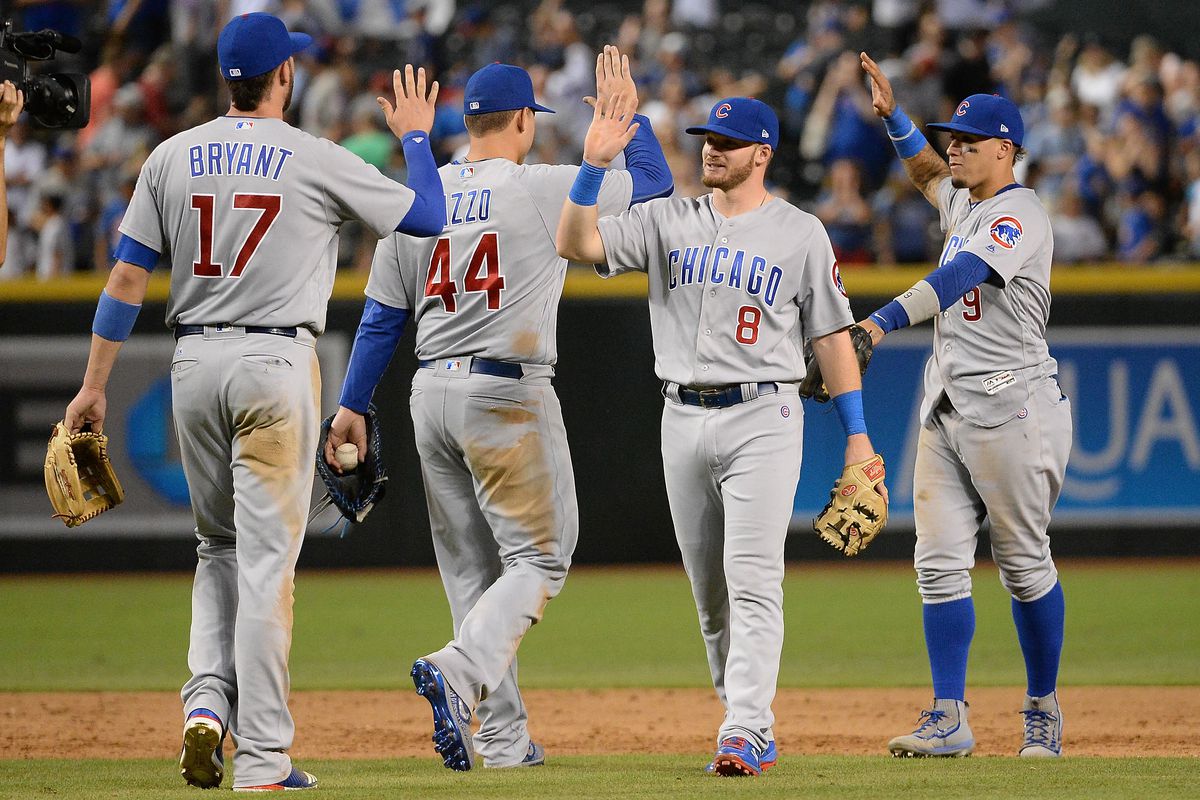
Chicago Cubs 2021 Season Preview


       Are the Cubs good? Maybe? No one knows. The team was alright last year, and won the NL Central, even without Kris Bryant and Javy Baez producing. But, the rest of the NL Central was bad as well, and the Pirates existed. So, there is skepticism there, but it got worse when the Cubs decided to go into sell mode this offseason, reportedly shopping Bryant, and trading Yu Darvish to San Diego. The team isn\’t awful, I\’ll give them that. That\’s basically all I can give them. They are easily one of the five hardest teams to project for 2021.

Offseason additions: RHP Zach Davies, RHP Brandon Workman, OF Joc Pederson, OF Jake Marisnick, RHP Jonathan Holder, C Austin Romine, RHP Trevor Williams, IF Ildemaro Vargas, RHP Robert Stock, RHP Kohl Stewart, OF Michael Hermasillo, LHP Adam Morgan, IF Matt Duffy, RHP Shelby Miller.

Offseason subtractions: RHP Yu Darvish, OF Kyle Schwarber, RHP Jeremy Jeffress, LHP Jon Lester, RHP Tyler Chatwood, C Victor Caratini, IF Jason Kipnis, OF Albert Almora, OF Steven Souza Jr., LHP Jose Quintana, OF Jose Martinez.

Trade Deadline 2020 summary

Acquired: LHP Andrew Chafin, OF Cameron Maybin, LHP Josh Osich.

Traded: IF Zack Short.

2020 record: 34-26

2020 placement: 1st

2020 WAR leader (batters): Jason Heyward

2020 WAR leader (pitchers): Yu Darvish

Starting Pitchers

The Cubs may not have Darvish anymore, but they still have an ace in Kyle Hendricks. Hendricks is one of the few pitchers in the sport who can go deep into games, not throw hard, not strikeout batters and succeed. Despite a fastball and sinker averaging around 87 mph in 2020, Hendricks had a 2.88 ERA in 81.1 innings over 12 starts with 64 strikeouts. Hendricks succeeds by not walking batters, with a league best 0.9 BB/9, and 8.00 K/BB ratio. Hendricks limited batters to an average exit velocity of 86.2 mph in 2020, marking his fifth consecutive season under 87 mph. As part of the Darvish trade, the Cubs received Zach Davies, another pitcher who fits into the Hendricks mold. Davies had a 2.73 ERA with a career high (by far) 8.2 K/9 and a 1.067 WHIP. Most stats point to Davies being lucky, as he had a .475 xSLG and a 5.01 xERA. It\’s worked for him in his career, but at some point Davies will likely fall over the cliff. You may have heard of Alec Mills because of his no-hitter last year. Besides that, Mills isn\’t a particularly great pitcher, and of course he is also a soft-tosser. I swear this breed isn\’t that common. In his first season as a full-time rotation member, Mills had a 4.48 ERA with 46 strikeouts in 62.1 innings. He throws a wipeout slider that batters hit .077 off of with a 42.4% whiff rate in 2020. Jake Arrieta is back in Chicago, where he had a 2.73 ERA and a Cy Young award in five seasons. It wasn\’t as sunny in Philadelphia, as Arrieta had a 5.08 ERA in 44.1 innings. His fastball velocity has tanked, from mid-90s to low-90s since he was last a Cub. MLB Pipeline\’s sixth best Cubs prospect is Adbert Alzolay, who was very successful in six games (four starts) in 2020. Alzolay struck out 29 in 21.1 innings, with a 2.95 ERA. Batters had a .186 xBA against him. Trevor Williams can steal a spot in the rotation from Alzolay or Mills. Williams had a 3.11 ERA in 2018, but he had a 6.18 mark in 11 starts for the Pirates in 2020, allowing a league high 15 home runs. He was still in the 70th percentile in average exit velocity, which is good. 

Relief Pitchers

Jeremy Jeffress left in free agency, so the closer\’s job will go back to Craig Kimbrel. Kimbrel allowed nine runs in 15.1 innings for a 5.28 ERA, but he is redeemable. Kimbrel struck out 28 batters for a 40.6 K%, and his average fastball velocity was 96.9 mph. However, Kimbrel had a 17.4 BB% and a 51.9 hard hit percentage. Righty Dan Winkler was productive in 18 outings, with a 2.95 ERA and a 5.4 H/9. He limited batters to an 85.5 mph exit velocity. Rowan Wick could be delayed for Opening Day with an intercostal injury. He has been a productive option over the past two seasons, with a combined 2.66 ERA and 55 strikeouts in 50.2 innings. Former Red Sox closer Brandon Workman was dominant in 2019, with a 1.88 ERA in 73 appearances, but after he had a 4.05 ERA through seven games, he was traded to the Phillies. Workman suffered from the Phillies bullpen curse, allowing 10 earned runs in 13 innings. Batters\’ xBA against Workman rose over 100 points in 2020, up to .292 from .178 in 2018. The Cubs traded for Andrew Chafin at the trade deadline, who has been productive in the past for the Diamondbacks, with a sub-4 ERA and 70+ appearances in 2017, 2018 and 2019. After getting off to a rough start in Arizona, Chafin allowed a run in three innings for the Cubs. He struck out 68 in 52.2 innings in 2019. Lefty Kyle Ryan had a 3.54 ERA in 73 appearances in 2019, but he had a 5.17 ERA in 2020. He did have a 4.15 xERA, which isn\’t too far from his 3.84 xERA in 2019, so the two seasons aren\’t even that different. Jason Adam has played for a different team in each of his three MLB seasons, but that should change this year. He had a 3.29 ERA with 21 strikeouts in 13.2 innings in 2020, giving him a good chance for the bullpen this year. His fastballl has a high spin rate of 2728 rpm. The Cubs just signed MVP vote-receiver Ryan Tepera to an MLB deal. He struck out 31 batters in 20.2 innings, with a 3.34 FIP for them last year. Jonathan Holder was signed to an MLB deal. He was inconsistent for the Yankees, but was a good late-inning reliever in 2018. He lost trust in 2019 and 2020, as he had a 4.98 ERA and a 5.8 K/9 in 18 games. Sinkerballer Kohl Stewart has a chance to be a long-relief option. The 4th overall pick in 2013, Stewart did not pitch in 2020. 26 year old Duane Underwood Jr. had a 5.66 ERA in 17 games in 2020, but his 27 strikeouts in 20.2 innings could be enough to get him a roster spot. 

Catchers

Willson Contreras escaped some trade rumors, although he wasn\’t as rumored as other Cubs stars. Contreras hit seven home runs with a .763 OPS in 2020, which was a down year considering his .888 OPS in 2019. He is a good pitch framer who hits the ball hard, at an 89.8 mph exit velocity. Austin Romine had a .281 average with a .748 OPS in 2019, but completely fell off with the lowly Tigers last year. Romine had a .582 OPS with 47 strikeouts and only four walks in 37 games. Yikes. 

Infielders

Despite a mediocre .755 OPS, Anthony Rizzo was able to win his third Gold Glove in a row, and 4th in the past five seasons. He hit 11 home runs with a low 15.6 K% and a high 11.5 BB%. Rizzo has hit at least 25 home runs in the past seven full seasons. Former top prospect Nico Hoerner was disappointing offensively, but he was a Gold Glove finalist and is just 23. Hoerner hit .222 with a .571 OPS, but he had five outs above average and a 28.8 ft/s sprint speed. He can play second base, shortstop, third base and center field. The Cubs may be in trouble if Javy Baez can\’t return to form. Baez did win his first Gold Glove, but he hit eight home runs with a .203 average and a .599 OPS. He struck out 31.9% of the time, and walked just 3% of the time. Kris Bryant is a free agent at the end of the season, and could be traded midseason. 2020 was his first season with an OPS+ under 120, as it was 73. Bryant played in just 34 games with a surprisingly low .202 xBA. David Bote can play all over the infield, and has a career .753 OPS and a 98 OPS+, which is fine for a backup. Bote hit seven home runs with an average exit velocity of 92.4 mph. Ildemaro Vargas can also play all around the infield. He is a switch hitter with a good chance at making the team. Vargas has a .673 OPS with a 13.8 K% in his career. 

Outfielders

The Cubs parted ways with Kyle Schwarber and Albert Almora in the offseason, but they were able to replace them. Schwarber\’s replacement is Joc Pederson, who hit seven home runs for the Dodgers in 2020. Pederson has a career .808 OPS, and despite his .681 OPS in 2020, he had a career high 93 mph average exit velocity. Ian Happ was hurt for most of 2019, which ironically was a full 2020 season. He had similar stats in 2019 and 2020, with 11 and 12 home runs, and an .898 and .866 OPS, respectively. He has slightly cut down on his K-rate which was a problem coming into the league, but at 27.3%, it still isn\’t fixed. 2020 was Jason Heyward\’s best season since joining the Cubs in 2016. Heyward had an .848 OPS, and his 129 OPS+ was above-average for the first time as a Cub. He also walked a whopping 16.6% of the time. Speed and defense specialist Jake Marisnick was the ideal fourth outfielder in Houston. He went 11-for-33 in 16 games for the Mets in 2020. In 2019, Marisnick had eight outs above average with a 29.2 ft/s sprint speed. The Cubs recently brought back Cameron Maybin, who they got at the trade deadline, on a minor league deal. Maybin went 13-for-52 in Chicago. Like Marisnick, he is a versatile defender with good speed. 

Projected Rotation
Kyle Hendricks (R)
Zach Davies (R)
Alec Mills (R)
Jake Arrieta (R)
Adbert Alzolay (R)
Projected Bullpen
Craig Kimbrel (R)
Brandon Workman (R)
Dan Winkler (R)
Andrew Chafin (L)
Rowan Wick (R)
Kyle Ryan (L)
Jason Adam (R)
Ryan Tepera (R)
Projected Lineup
CF Ian Happ (S)
1B Anthony Rizzo (L)
SS Javy Baez (R)
3B Kris Bryant (R)
LF Joc Pederson (L)
C Willson Contreras (R)
RF Jason Heyward (L)
2B Nico Hoerner (R)
Pitcher
Projected Bench
C Austin Romine (R)
OF Jake Marisnick (R)
IF David Bote (R)
OF Cameron Maybin (R)

Projection

The Cubs\’ rotation is really bad. They won\’t throw hard at all, and only two of them have been successful in the past two years. The bullpen will need multiple redemption arcs to be competitive, and while the lineup is strong, some of them struggled last year and could be traded soon. They definitely aren\’t the worst team in the division (thanks Pirates!), but they aren\’t the best. The Cubs won\’t make the playoffs in 2021. 

Boston Red Sox 2021 Season Preview


        After a sluggish 2019 which resulted in a playoff miss, we wondered if it was just a blip year for the Red Sox, but 2020 proved otherwise. With Ron Roenicke as the Manager instead of Alex Cora, and the rotation missing Chris Sale, David Price, Eduardo Rodriguez and Rick Porcello, the team collapsed. They performed worse than the Orioles. Another potential factor could have been missing an outfielder, but I don\’t know if they lost one last offseason. Maybe they did, maybe he was good. To look on the bright side, Cora is back, Rodriguez is back, Sale will be back at a point in time, and they improved the bullpen a bit. Maybe things aren\’t so bad in Boston.

Offseason additions: RHP Adam Ottavino, UT Marwin Gonzalez, OF Hunter Renfroe, IF Enrique Hernandez, RHP Garrett Richards, RHP Matt Andriese, RHP Hirokazu Sawamura, OF Franchy Cordero, C Chris Herrmann. 

Offseason subtractions: OF Andrew Benintendi, OF Jackie Bradley Jr., IF Jose Peraza, RHP Chris Mazza, RHP Zack Godley, LHP Jeffrey Springs, RHP Robert Stock. 

Trade Deadline 2020 summary

Acquired: Nick Pivetta, Connor Seabold, Hudson Potts, Jeison Rosario.

Traded: Brandon Workman, Mitch Moreland, Kevin Pillar, Heath Hembree, Josh Osich.

2020 record: 24-36

2020 placement: 5th

2020 WAR leader (batters): Alex Verdugo

2020 WAR leader (pitchers): Nate Eovaldi

Starting Pitchers

The Red Sox will have to wait until midseason at the minimum until they have a full rotation. Chris Sale is out with Tommy John surgery, after a career worst 2019. Even despite a 4.40 ERA, Sale\’s 3.39 FIP and 1.086 WHIP show that the ERA was probably a blip. Also returning from a missed 2020 is Eduardo Rodriguez, who has recovered from myocarditis. Rodriguez had a career season in 2019, with a 3.81 ERA and 213 strikeouts in 203.1 innings, plus an average exit velocity of 86.3 mph. However, Rodriguez also walked a league high 75 batters. Nate Eovaldi was the rock of the rotation last year as the bottom fell into chaos. After an awful 11.6 BB% in 2019, Eovaldi improved to an elite 3.5% in 2020. He had a 3.72 ERA with a 9.7 K/9 over nine starts. The next best starter for the Red Sox last year was Martin Perez, a soft tossing lefty who had a 4.50 ERA over 12 starts. Perez only struck out 46 batters in 62 innings, but he made up for it with a 29.2% hard hit percentage. The Red Sox brought in former Angels ace and spin rate king Garett Richards on a one year deal. Richards, whose curveball had an average spin rate of 3299 rpm last year, had a 4.03 ERA in 14 games (10 starts) for the Padres. Richards had a 3.54 ERA over eight seasons in Los Angeles but injuries have cost him a lot of time. The team acquired Nick Pivetta from Philadelphia for Brandon Workman and Heath Hembree, and rival executives reportedly believe that the trade could be a steal, thanks to Pivetta\’s elite slider which had a 46.2% whiff rate and a 20% usage in 2020. Pivetta always struggled in Philadelphia, but he looked really good in two starts for Boston, allowing two runs with 13 strikeouts in 10 innings. He also walked five batters, a big issue in the past for Pivetta. The Red Sox could consider a 6-man rotation if 2017 1st rounder Tanner Houck makes the team. Houck could also start the season in AAA. He was impeccable in three starts last year, allowing one run with 21 strikeouts in 17 innings. 

Relief Pitchers

After Andrew Benintendi was dealt to Kansas City, Matt Barnes feels like the guy most likely to get traded next. Barnes, a 30 year old who took over closing duties in 2020, struck out 31 batters in 23 innings. Barnes also had a 4.30 ERA, his worst since 2015, and he allowed a career worst 91.3 mph average exit velocity. Another guy who could be shopped is pending free agent Adam Ottavino, who was acquired in a rare trade with the Yankees. Ottavino was great in 2019, with a 1.90 ERA in 66.1 innings, but he had a 5.89 ERA in 18.1 innings. Ottavino\’s issue has always been walks, as he walked nine batters last year and 40 in 2019. Make fun of Ottavino\’s walking problems all you want, but he\’s laughing at what Darwinzon Hernandez has done. In 38.2 career innings, Hernandez has walked 34 batters. Luckily, he\’s also struck out 70 batters. If he can limit those walks, Hernandez will be a special reliever. After a really rough 2019, Ryan Brasier improved in 2020, but he is not nearly close to where he was in 2018. Brasier had 30 Ks with a 3.96 ERA in 25 innings, with a slider showing off a 46.5% whiff rate. However, Brasier\’s average exit velocity allowed was a high 91.1 mph. Japanese import Hirokazu Sawamura will make his MLB debut this year, and Opening Day is two days before he turns 33. Sawamura had a 3.05 ERA with 42 strikeouts in 41.1 innings in Japan in 2020. Josh Taylor was a pleasant surprise in 2019, with a 3.04 ERA and 62 strikeouts in 47.1 innings. However, left shoulder tendinitis kept him out for most of 2020, and when he played it wasn\’t pretty, as Taylor allowed eight runs in 7.1 innings. Standing six-foot-2 but only 160 pounds, righty Phillips Valdez had a 3.24 ERA in 30.1 innings after being claimed from Seattle. He also limited batters to an average exit velocity of 84.8 mph. The Red Sox brought in former Rays starter and reliever Matt Andriese. Andriese is a rare example of a pitcher\’s strikeout rate increasing after leaving Tampa Bay. In late 2018-2020, Andriese has struck out 131 batters in 121.2 innings. He had a 7.8 K/9 as a Ray. Colten Brewer was a big part of the Sox bullpen in 2019, and he opened some games in 2020. His 4.70 ERA and 1.778 WHIP in his career is not ideal. 

Catchers

Christian Vazquez was able to slightly best his career 2019 season last year. He hit seven home runs with a  .283 average and an .801 OPS, the latter two being improvements. Vazquez is also a good pitch framer who has come into his own over the past two seasons. The Red Sox had a sustainable backup last year in Kevin Plawecki, who returns, but don\’t expect him to sustain his offensive numbers. Plawecki hit .341 with an .857 OPS and a 130 OPS+. Only one of his previous five seasons resulted in an OPS+ over 100, and Plawecki isn\’t a great pitch framer. 

Infielders

The most exciting thing coming to the Red Sox lineup in 2021 is Bobby Dalbec, the team\’s third best prospect who just made MLB Pipeline\’s top 100 prospects list. The 25 year old Dalbec debuted in 2020, and mashed out eight home runs in 23 games, with a .959 OPS. The Red Sox prioritized utility in the offseason, signing both Enrique Hernandez and Marwin Gonzalez. Hernandez is expected to be the starting second baseman, while Gonzalez moves to a super utility role. For the World Series winning Dodgers, Hernandez had a .680 OPS, with a .737 OPS over his Dodgers career. His career OPS+ of 98 shows that he is an average hitter, but versatility sells. Gonzalez has slowly declined since his breakout season with the 2017 Astros (hmm….). Last year for the Twins he hit five home runs with a .606 OPS. He did have four outs above average while playing around the infield and corner outfield for the Twins. The left side of the infield is set in stone, barring a surprise trade. Xander Bogaerts received MVP votes for the third season in a row after hitting 11 home runs with eight stolen bases and an .867 OPS. He had the Pedro Cerrano splits, hitting .383 against fastballs, but under .200 against breaking balls and offspeed pitches. Rafael Devers regressed in 2020, but not to an embarrassing point. He was still an above average hitter, with a 110 OPS+. Devers also had an average exit velocity of 93 mph and has made strides defensively. Remember when Michael Chavis looked like a Rookie of the Year favorite for the first half of 2019? Well, we\’re entering the 2021 season and he is barely an MLB player. Chavis had a .636 OPS in 2020, and he strikes out way too much, at a 31.6% clip last year, and he missed half of the breaking balls he swung at. 

Outfielders

The Betts, Bradley, Benintendi outfield is all gone, although Jackie Bradley Jr. is still a free agent, and could return to the team. Two of the expected starting outfielders were acquired for their predecessors. Alex Verdugo was a big part of the Betts trade, and he hit .308 with an .844 OPS while playing both left and right field. He\’s fast, doesn\’t strike out often, and a good defensive outfielder. The Red Sox just got Franchy Cordero for Benintendi, and he will be the center fielder unless Bradley comes back. Cordero is a power hitting lefty bat who has 12 home runs in 95 career games. He also has a career average exit velocity of 92.5 mph, which is elite. Injuries and crowded OFs have always held him back, but that shouldn\’t be an issue at the moment. The new left fielder is power hitting righty Hunter Renfroe, who has hit 26, 26, 33 and eight homers over the past four seasons. Renfroe walks (10.1 BB%), but also strikes out a ton (career 28 K%). He may not sound like one based off of his swing-and-miss scouting report, but Renfroe is an elite defender. Gonzalez, Chavis and Hernandez can all act as 4th outfielders. So can JD Martinez, but regulating him to DH would be wise. Martinez saw just about every stat get worse in 2020, and he finished with a .680 OPS. However, Martinez was one of the game\’s best hitters from 2017-2018, and there is little reasons to believe that he cannot return to that form in 2021. 

Projected Rotation
Eduardo Rodriguez (L)
Nate Eovaldi (R)
Garrett Richards (R)
Martin Perez (L)
Nick Pivetta (R)
Tanner Houck (R)
Projected Bullpen
Matt Barnes (R)
Adam Ottavino (R)
Darwinzon Hernandez (L)
Ryan Brasier (R)
Josh Taylor (L)
Hirokazu Sawamura (R)
Matt Andriese (R)
Phillips Valdez (R)
Projected Lineup
RF Alex Verdugo (L)
SS Xander Bogaerts (R)
3B Rafael Devers (L)
DH JD Martinez (R)
1B Bobby Dalbec (R)
C Christian Vazquez (R)
LF Hunter Renfroe (R)
CF Franchy Cordero (L)
2B Enrique Hernandez (R)
Projected Bench
C Kevin Plawecki (R)
UT Marwin Gonzalez (S)
IF Michael Chavis (R)

Projection

The Red Sox aren\’t as troubled as their 24-36 finish from 2020 would suggest. The team is mediocre overall, and maybe they could succeed in a weak division, like the AL West. But, the Blue Jays made big strides this offseason, and the Rays are the Rays and the Yankees are the Yankees. Those are three teams that are better than the Red Sox right now, already ruling them out for the playoffs before you look at the other two divisions in the American League. They could easily be better than Baltimore, but the playoffs just aren\’t realistic.