MLB Trade Review: Marlins acquire Bleier

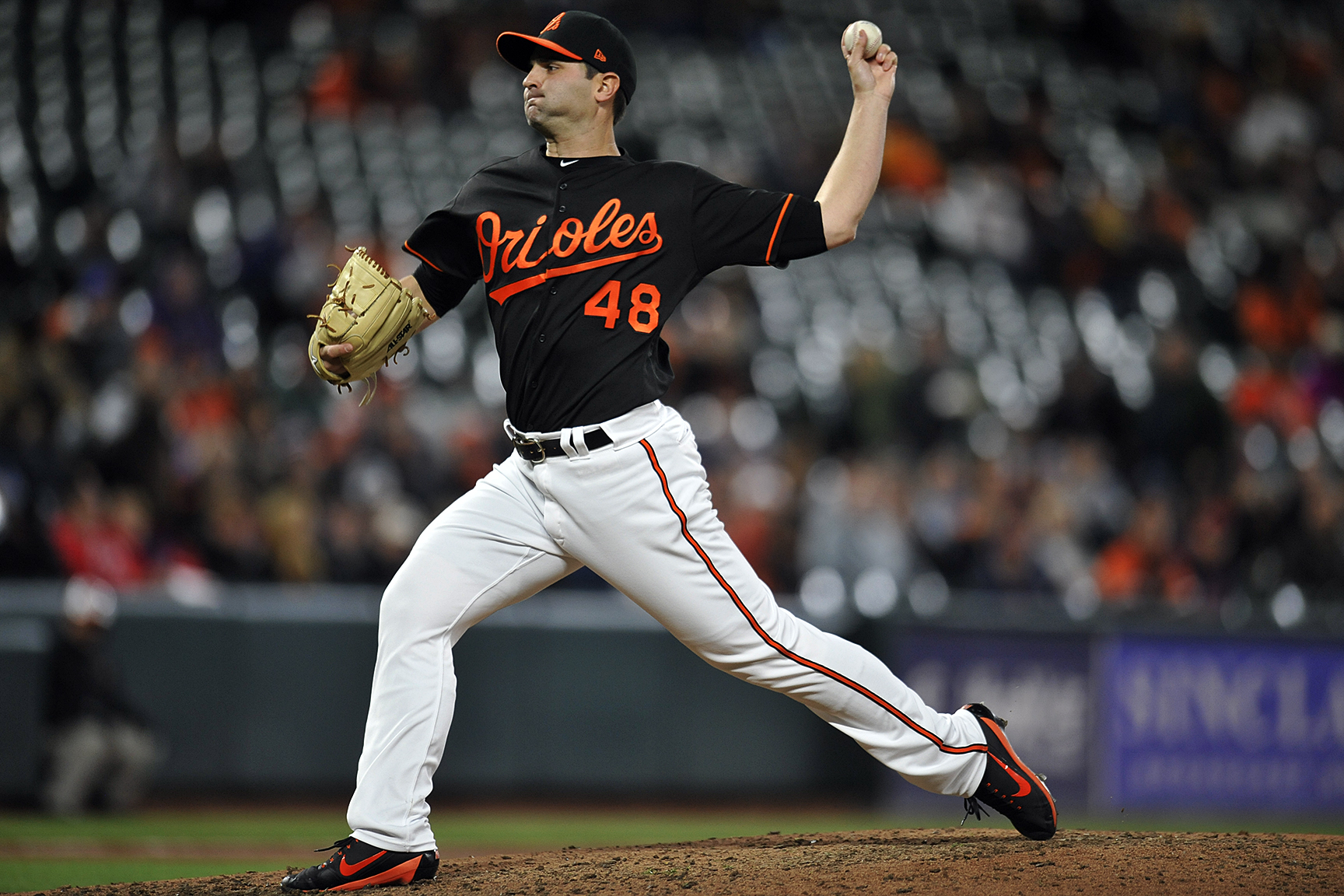
       The Miami Marlins have acquired LHP Richard Bleier from the Baltimore Orioles in exchange for a player to be named later. 
       After more than half of the Marlins tested positive for COVID-19, the team has been acquiring pitchers so they can field a roster when the team returns to play. Joining Bleier is new players Mike Morin, Josh D. Smith and Justin Shafer. Bleier has been an effective late inning reliever for the Orioles since he was acquired from the Yankees in February 2017. From 2016-2018, Bleier\’s worst ERA was 1.99, although he had a 5.37 ERA in 53 games last year, raising his career ERA to over 3.00 (it has since been lowered). While he does not strike batters out, Bleier walked just 3.4% of batters last year, and he had a ground-ball rate of 60.1%. Bleier allowed fly-balls just 12.4 percent of the time. He also has a career 0.6 HR/9. In front of closer Brandon Kintzler, the Miami bullpen is weak, and Bleier will be at the back of it even when all of the sick players return. He also will return to home, as he is a native of Miami Beach, Florida. 
        While they are a rebuilding team, the Orioles might have been able to get more than a player to be named later for Bleier, especially from a contender later this month. While Bleier is not young, and he does not have a future in Baltimore, a team like the Orioles should have held on to him, to at least keep them a little bit competitive. With Bleier gone, Baltimore will need someone to step up and pitch the 7th or 8th inning, while Cole Sulser is the closer. Former closer Mychal Givens seems to have the 8th inning job locked up, while Miguel Castro and Paul Fry can replace Bleier until Hunter Harvey returns from the IL, and everyone moves down one spot.
        Bleier, 33, struck out four batters in three innings over two games this year so far, and has not allowed a run. In his five year career for the Orioles and New York Yankees, Bleier has a 2.99 ERA with only 88 strikeouts in 177.1 innings, plus four saves and an 8-1 record. Bleier has a career WHIP of 1.201. 

MLB Trade Review: Astros acquire Velazquez


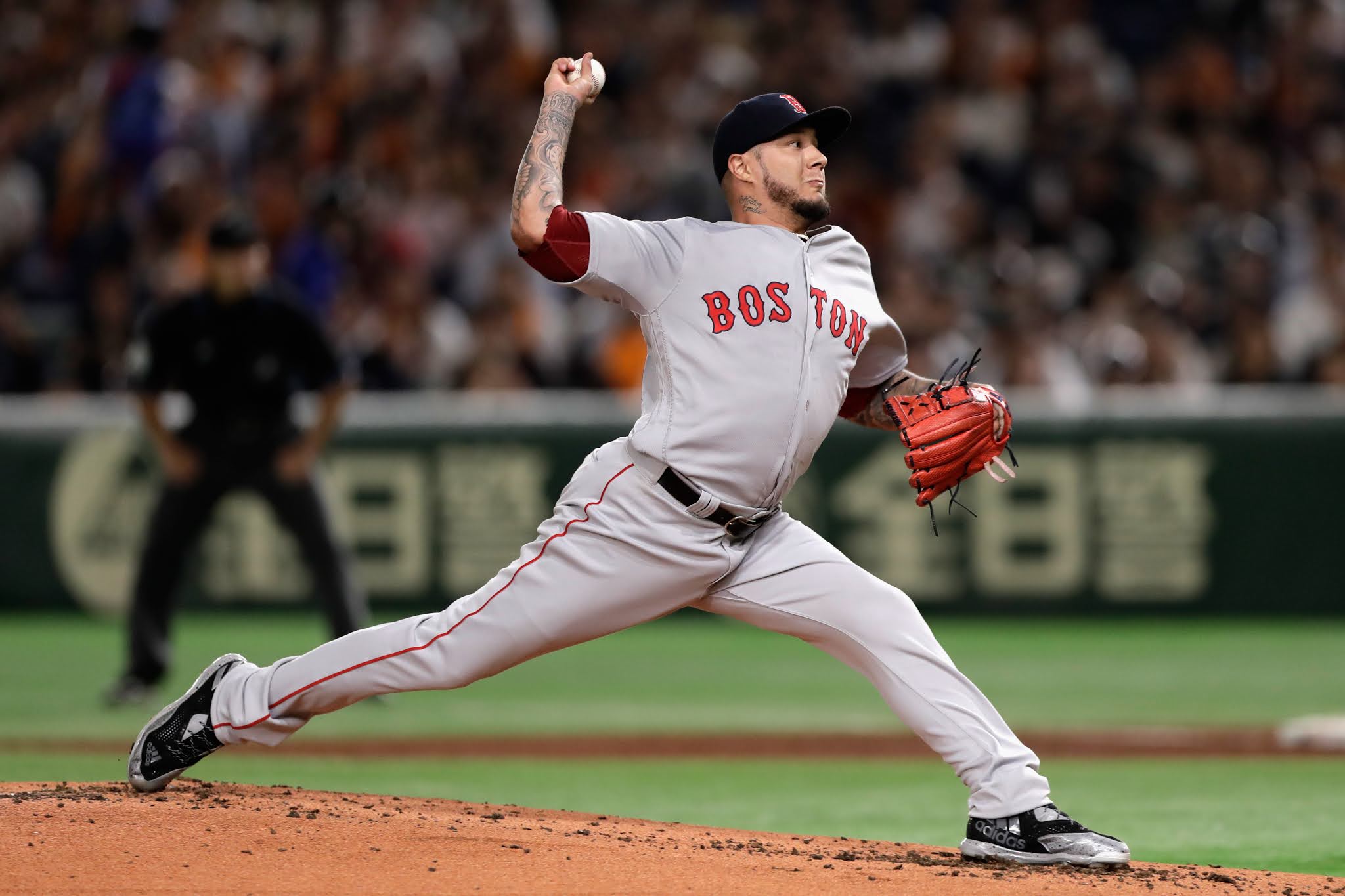
      The Houston Astros have acquired RHP Hector Velazquez from the Baltimore Orioles in exchange for a player to be named later.
       The Astros need experienced pitchers, especially in their bullpen. Opening Day was less than a week ago, and the Astros have already had seven relief pitchers make their MLB debut (Blake Taylor, Enoli Paredes, Cristian Javier, Brandon Bailey, Brandon Bielak, Andre Scrubb and Nivaldo Rodriguez). Velazquez was claimed off waivers by Baltimore from Boston in March, but he didn\’t make the team. The Mexican righty has starting experience, and he has had some success over his three year MLB career. With injuries impacted the pitching staff heavily, Velazquez is a fine pick-up. While he threw it less than 17% of the time last year, Velazquez\’s slider is a pitch that the Astros might look to abuse. The slider had a .125 average against and a 32.9 whiff rate, plus an average exit velocity of 85 mph, all the best among Velazquez\’s five pitches. The Orioles don\’t need Velazquez, as he didn\’t make the team, and when the squad is as bad as they are, getting value from anything is worth it.
       Velazquez, 31, had a 5.43 ERA with 49 strikeouts in 56.1 innings for the Boston Red Sox last year. In three seasons for the Red Sox, Velazquez has appeared in 89 games (starting 19 of them), and he had a 3.90 ERA with 121 strikeouts in 166 innings. Velazquez has a career ERA+ of 117. 

Ranking every single MLB stadium


 The thing that separates MLB parks from arenas and fields from the other major sports is their uniqueness. Every NHL and NBA arena has the exact same dimensions, with just their location being the thing that puts them apart from the rest. The same could be said for the NFL, although some seating arrangements are different. Every MLB stadium has different field dimensions compared to the next one, plus a different skyline view and other quirks. While I rank them, keep one thing in mind: these are based off of looks and special details. Age of the park has nothing to do with the rankings, so sorry Wrigley Field and Fenway Park, the thing that aids you in other rankings is gone now. Another disclaimer: I have not been to every MLB stadium. 

       30. Guaranteed Rate Field, Chicago White Sox
I have never been a big fan of Guaranteed Rate Field. It is just a default baseball stadium, with nothing that makes it special. The signs on top of the scoreboard that I will now call \”the seven swirls\” are cool, but that\’s just about it. There\’s not many ballparks that I don\’t like, but this is one of them.
       29. RingCentral Coliseum, Oakland Athletics
The MLB stadium with the most foul territory space, RingCentral Coliseum (formerly known as the Oakland Coliseum) is hardly an MLB stadium, as it doubled as the field for the Oakland Raiders before they moved to Las Vegas this year. With weird and ugly gaps all-throughout the outfield, this place has little outfield seating, and A\’s fans won\’t be too sad to see it go when (if) they open up a new ballpark in a few years. 
       28. Miller Park, Milwaukee Brewers 
From here-on-out, I like every single stadium. Miller Park has a retractable roof, which does give it bonus points. So does the slide that their mascot goes down. But besides that, nothing else really separates it from the rest of the league. 
       27. Tropicana Field, Tampa Bay Rays
I already know that Brewers fans won\’t be happy with this one. The main thing that Miller Park has going for it are the roof and the slide, and \”the Trop\” has the roof, and the stingrays in center field are cooler than the slide, especially since it also relates to the team. Who wouldn\’t love Ji-Man Choi hitting right-handed bombs into a tank full of Rays. Oh, well, I think we could have seen that coming.
       26. Globe Life Field, Texas Rangers
This ranking is more arbitrary, since it is mostly based off of my first impressions. Globe Life Field is a big step-down from its predecessor, Globe Life Park. The retractable roof is great, but the main thing that the park has going for it is the scoreboard hanging high-up over right field, making us wait for the glorious day when someone finds a way to hit a baseball off of it. Besides that, it is kind of bland.
       25. Rogers Centre, Toronto Blue Jays
The view of Rogers Centre is great when the retractable roof is open. Plus, the hotel is center field is one of the more creative things in an MLB stadium. So, Rogers Centre should be high up on the list. However, the many decks in left and right field look really bad, so it drops a lot of spots. 
       24. Kauffman Stadium, Kansas City Royals
I have never been a big fan of Kauffman Stadium, and I don\’t know why. The fountains in the outfield is a really nice touch, but the rest of the field has never stood out to me. It has already risen many spots while I was doing these rankings, and I wouldn\’t be surprised if it went up more in the future. 
       23. Yankee Stadium, New York Yankees
As a Yankee fan, this placement feels weird. But, Yankee Stadium feels like it was built to be the most average MLB stadium that there is. The short porch in right is always fun, and I really like the look of the terraces that were added in a few years ago. However, nothing makes this place special, besides the team that plays there. Monument Park moves it up multiple spots. 
       22. Dodger Stadium, Los Angeles Dodgers
Dodger Stadium has a very similar problem to Yankee Stadium, as it seems basic. However, the beautiful background of Los Angeles mountains definitely moves it up a lot of places. The concourse underneath the outfield seats is a fun touch, but the ugly batter\’s eye in center field hurts its placement. 
       21. Chase Field, Arizona Diamondbacks
Chase Field has an odd batter\’s eye in center field, but the pool in right-center is an automatic win. While it might be pointless, the sharp edges separating the bullpen and the crowd down the left and right field line is a fun quirk. Also, with the Arizona weather, a retractable roof is a very important touch. 
       20. Marlins Park, Miami Marlins
While the loss of the sculpture in left-center field makes the stadium less unique, but Marlins Park is still unique. Like Chase Field, there is a pool, but it is in an exclusive club in left field. A wall in right-center field separates center field from right field, and makes the right field section of seats, right behind the bullpen, look cool. 
       19. Target Field, Minnesota Twins
Down the left field line, the wall in foul territory with standing room space on it is a really nice add for Target Field. The view of the right field seats, and over the right field seats of the city is also a very good look. The dimensions are kooky, which makes a unique ballpark.

       18. Truist Park, Atlanta Braves 
The second newest ballpark in the league after Globe Life Field, the park was called SunTrust park when it opened up, and it is a nice ballpark. However, the company name change made an awful sounding ballpark. The chophouse in right field looks very cool, especially with the seating in front. The park looks very clean, and my only complaint with it is the awful name. 
       17. Comerica Park, Detroit Tigers
While it doesn\’t compare to Monument Park, the brick wall in left-center with the Tigers\’ retired numbers is a good idea. While having the center field wall 420 feet deep isn\’t good for hitters, down the line at Comerica is shallow, and the gaps make it easy for triples and inside-the-park-home-runs, which are always great. 
       16. T-Mobile Park, Seattle Mariners
Formerly known as Safeco Field, the left field concourse that leads up to the bullpen is a good look. Also, the second deck in left ends short enough so that it is possible to hit the ball out of the stadium, the most fun type of home run. 
       15. Busch Stadium, St. Louis Cardinals
The most improved stadium on the list, Busch Stadium gets so many points for the arch in the background behind right-center field. Besides that, the buildings to the left of the arch also make a good looking background. The left-center buildings are a clean look, and the green batter\’s eye is nice, although fans are not allowed on it, unlike Globe Life Park, the former field of the Rangers. 
       14. Wrigley Field, Chicago Cubs
I\’m sorry, Cubs fans. You should have been prepared for that, with age not a factor. I\’ve never been a big fan of the ivy on the outfield wall, but it is a quirk that makes Wrigley unique. The buildings around the stadium make the field feel like it is in a neighborhood, because it is. Also, the seating down the right field line and the scoreboard look good. 
       13. Petco Park, San Diego Padres
The warehouse down the left field line is original to Petco. It is always special when someone hits a home run that lands on top of it. Also, the San Diego buildings make a cool background for a stadium. Plus, Bartolo Colon\’s only home run was in this park, so that\’s a bonus.
       12. Progressive Field, Cleveland Indians
The high wall in left field isn\’t the best high wall in left field in the MLB, but it creates a cool aesthetic, especially down the line with the standing room only section. Also, the concourse in center behind the bullpen makes the bullpen feel like it is in the stands and not the field. Progressive Field has always been a favorite of mine, and that\’s why it is at the 12th spot.
       11. Coors Field, Colorado Rockies
Who doesn\’t love home runs (besides pitchers)? The elevation of Denver helps balls travel further, leading to more home runs, despite a big outfield. The purple row of seats at exactly one mile above sea level is also a great touch by the Rockies. The trees in center are random, but still feel cool. 
       10. Great American Ball Park, Cincinnati Reds
While there isn\’t anything super special with it, \”Great American\” is just a good looking stadium. I like the smoke stack-looking pillars in right-center, plus the bullpens are condensed down the line so that they don\’t take away any seats. 
       9. Citi Field, New York Mets
The decks in left field look natural, unlike the odd, trampled decks at the Rogers Centre and other places. Also, the bridge right-center over the bullpen is a very good look, and the Pepsi Porch might not be a unique thing, but it also overlooks the bridge in a nice way. 
       8. Citizens Bank Park, Philadelphia Phillies

While it may be contaminated right now, \”CBP\” has a bridge behind the center field batter\’s eye which bridges left and right field, making traveling through the ballpark a fun experience, as you can watch the game while walking, and you can look over the elevated bullpens in center field. Also, who wouldn\’t love the Philly Phanatic roaming around?


       7. Nationals Park, Washington Nationals

The left-center seats are much different from the other sections, as they are colored red and separate from everything else, making the park feel unique throughout. To dead center, two walls converge to make a tiny gap far away from home plate, a little quirk that isn\’t in every stadium. While Yankee Stadium is perfectly average in a boring way, Nationals Park is similar, but in a good way.


       6. Minute Maid Park, Houston Astros

The Crawford Boxes in left-center are so unique and odd that it makes Minute Maid Park special. The train on top of the boxes does the exact same thing, and in a cooler way. Right field is a little bland, but that\’s fine, especially with everything going on in left. Minute Maid could go for a top-three spot, but the infamous Tal\’s Hill is no longer apart of the field. 


       5. Angel Stadium, Los Angeles Angels

While Angel Stadium might not be as high on other people\’s lists as it is on mine, I\’ve always loved it because of the rocks in left-center field, a really cool touch. While it may not be great for money, having no seats and instead having grass from left-center to center makes the park seem less major league, but more fun. Also, there is a hit it for $1 million can in the outfield. 


       4. PNC Park, Pittsburgh Pirates

While most people have it as number one, PNC Park is not there for me, but it is still amazing. The Roberto Clemente Bridge and the Allegheny River work as a great background. The field itself feels small, with little outfield seating, and it is very possible to hit a ball into the river. The very short wall in left makes robbing a home run easier, and that is always fun.


       3. Oracle Park, San Francisco Giants

While having four different names since opening in 2000 is not ideal, Oracle Park is the best stadium in the National League. While I\’m not the biggest fan of left field, with the biggest thing to point out being a statue of a Coca-Cola bottle and a baseball glove, right field is where it makes it great. Triple alley is one of my favorite on-field quirks, and who could forget McCovey Cove, the body of water in right field that tops PNC Park\’s Allegheny River. 


       2. Fenway Park, Boston Red Sox

Our runner-up might have one of the smallest capacities, but it is possibly the coolest park. Fenway has the green monster in left field, which makes it top-five, easily. But, Fenway Park gets a higher ranking because of other things, like the odd configurationof the walls in center field. With the monster, the pesky pole is often overshadowed, but it helps odd home runs occur in right field. 


       1. Oriole Park at Camden Yards, Baltimore Orioles

While it would be best for the \”Oriole Park at\” part of the name to be dropped, Camden Yards is the best MLB stadium. The B&O warehouse trumps the buildings at Petco Park and other places, and it also is the border for a concourse on Eutaw Street that includes a standing room area in right field. Plus, \”Boog\’s\”, a barbecue place in right-center field run by former MVP Boog Powell, is a great place to eat. 

Washington Nationals 2020 Season Preview

From Getty Images
       The bullpen has become arguably the most important part of an MLB team. Teams have found a lot of success on the shoulders of a great bullpen, but the Washington Nationals proved that a bullpen isn\’t as necessary as we all thought. With a pretty thin relief core, the Nationals used their starters as relievers, and they won their first World Series. While they have improved on their weak points, it will be very hard to recreate the magic of last year after an awful start and an amazing comeback.
       Offseason additions: RHP Will Harris, 2B Starlin Castro, 1B Eric Thames, RHP Ryne Harper, LHP Sam Freeman.
       Offseason subtractions: 3B Anthony Rendon, 2B Brian Dozier, 1B Matt Adams, OF Gerardo Parra, RHP Hunter Strickland, LHP Matt Grace, RHP Jeremy Hellickson, RHP Fernando Rodney.
       Rotation
The Nationals have the best top-3 starters in the league. While he only made 27 starts last year, his least since his rookie year of 2008, Max Scherzer had another great season. He had a 2.92 ERA with 243 strikeouts in 172.1 innings, for a league leading 12.7 K/9. However, it was the first time since 2015 where Scherzer wasn\’t the league leader in strikeouts. His 1.027 WHIP also didn\’t lead the league for the first time since 2015. Scherzer finished 3rd in Cy Young voting, and he has finished top-5 for that award the last seven seasons. Scherzer\’s slider had a .168 wOBA against and a 50.6% whiff rate. Forced to choose between Stephen Strasburg and third baseman Anthony Rendon, both big ticket free agents, the Nationals brought back Strasburg, the first overall pick in 2009, giving him $245 million over seven years, while Rendon got the exact same contract from the Angels. Strasburg pitched a league leading 209 innings last year, with a 3.32 ERA and 251 strikeouts. With a 2.51 ERA and 14 strikeouts in 14.1 innings over two World Series starts, Strasburg brought home the title of World Series MVP. The Nationals signed Patrick Corbin to a six year deal before the season. Corbin finished 11th in Cy Young voting, with a 3.25 ERA and 238 strikeouts in 202 innings. Corbin allowed 7.5 hits per nine innings, but he had an 8.4 percent BB rate, his highest since 2016. Anibal Sanchez\’s first season with the Nationals saw him pitch in 166 innings, his most since 2013, but he struck out 134 batters for a 7.3 K/9, tied with his 2014 season for his lowest since 2010. Sanchez had a hard hit percentage against of 28.1%. After Joe Ross opted-out, the 5th starter competition was between Erick Fedde and Austin Voth. Fedde pitched in 78 innings last year, but he only struck out 41 batters with a 4.50 ERA. Voth pitched in 43.2 innings, but had more strikeouts than Fedde, with 44, and he had a 3.30 ERA.
       Bullpen
Sean Doolittle lost closing privileges in the playoffs after the worst season of his career, but he should retain the job for 2020. Doolittle had a career high 29 saves last year, but he had a 4.05 ERA with 66 strikeouts in 60 innings. Doolittle\’s WHIP jumped exactly 700 points. He allowed an average exit velocity of 90.9 mph, after it was 84.4 mph in 2018. Daniel Hudson recorded the final out of the World Series, and he converted six saves in 24 regular season games after coming over from Toronto. For the Nats, Hudson had a 1.44 ERA and 23 strikeouts, plus a 0.880 WHIP. The Nationals signed Will Harris, who blew Game 7 of the World Series for Houston, allowing the Nationals to win. Harris had a 1.50 ERA in his age 34 season, a career best. He struck out 62 in 60 innings, with 26 of the Ks coming versus his curveball. That curve had a .151 average against. Tanner Rainey came over from the Reds for Tanner Roark before the season, and dominated strikeout-wise, with 74 Ks in 48.1 innings. Rainey had a 3.91 ERA and only allowed 32 hits, but somehow walked 38 batters. Rainey throws a fastball that can reach 100 miles per hour. Ryne Harper debuted for the Twins last year, four days after his 30th birthday. Harper was decent for Minnesota, with a 3.81 ERA and 50 Ks in 54.1 innings. Harper only walked 10 batters, for a 4.4% BB rate. Injured list placements put Roenis Elias and Wander Suero\’s statuses in question. The left-handed Elias had a 3.64 ERA with 14 saves for the Mariners last year before being traded to the Nats. Elias made just four appearances in Washington thanks to a hamstring strain. Roenis\’ change-up, sinker and curveball, combined for about 50% of his pitches, all had an average against under .200. Suero made 78 appearances out of the \’pen last year, and struck out 81 batters in 71.1 innings. While he had a 4.54 ERA, Suero\’s FIP of 3.07 was much better. Suero throws a cutter with a 2554 rpm average spin rate. After being claimed off of waivers in May, Javy Guerra pitched in 53.2 innings for the Nationals. Guerra had a 4.66 ERA with a 7.6 K/9 if you combined his Nationals stats and his stats with the Blue Jays early in the season. Sam Freeman has a very good chance of making the team as a non-roster invitee. While he only pitched in one game last year, Freeman struck out 58 batters in 50.1 innings in 2018, with a 4.29 ERA, and he has a 3.62 career ERA. In 2018, Freeman had a 2.4 barrel percentage.
       Catchers
Kurt Suzuki and Yan Gomes split catching duties last year, and Suzuki produced at the plate more, earning the job in the postseason. Suzuki hit 17 home runs with a .264 average plus an OPS of .809 in 2019, the first season of his second stint with the Nationals. Suzuki only struck out 11.7% of the time. Gomes, a native of Brazil, was an all-star in 2018, but he only had a .704 OPS last year, with 12 home runs. Gomes is quick to throw to second base, and will be one of the best back-up catchers in the league, although he will play more than a back-up.
       Infielders
Howie Kendrick won the Nationals the World Series. After a surprisingly great regular season, with a .344 average, a .966 OPS and 17 home runs (the first two were career highs, the home runs were his most since he hit 18 in 2011), Kendrick hit a Grand Slam against the Dodgers to win the NLDS, and a two-run home run against Harris to win Game 7. Kendrick has mostly played second base in his career, but he moved to first when Ryan Zimmerman was hurt. With Zimmerman opting-out of the season, Kendrick can split first base and DH with Eric Thames, signed from Milwaukee. Thames improved defensively last year, with two outs above average. He hit 25 home runs with an .851 OPS, which are both better than his 2018 numbers. Starlin Castro, who was coached by Manager Dave Martinez in Chicago, is the new second baseman. Castro just turned 30, but he already has over 1,600 hits. Castro played in all 162 games for the Marlins last year, and hit a career high 22 home runs with a .270 average. Castro has 11 outs above average between second base, third base and shortstop last year. Trea Turner might be the fastest player in baseball. In each of his five seasons, Turner has had a sprint speed of at leats 30 ft/s, at 30.3 last year. Turner stole 35 bases, and hit 19 home runs, with a .298 average plus an OPS of .850. With a .596 slugging against fastballs, Turner has become an ideal lead-off hitter. After Rendon left, Carter Kieboom will take over at third base. Kieboom, a natural shortstop, is the Nationals\’ top prospect and the 21st best prospect in baseball, per MLB Pipeline. Kieboom had an 11 game debut last year, although it was less than stellar, with a .128 average. For AAA Fresno, Kieboom had a .303 average, a .902 OPS and 16 home runs in 109 games. Veteran infielder Asdrubal Cabrera was the second baseman last year, but will move into a utility role. In 38 games after being released by Texas and signed by Washington, Cabrera hit six home runs with a .323 average and an OPS of .969. Cabrera had seven outs above average combined at three different positions. Wilmer Difo will make the team as a back-up infielder and speed threat. Difo had a 27.8 ft/s sprint speed last year, which was a decrease of 1.8 ft/s from 2016, which is a big gap.
       Outfielders
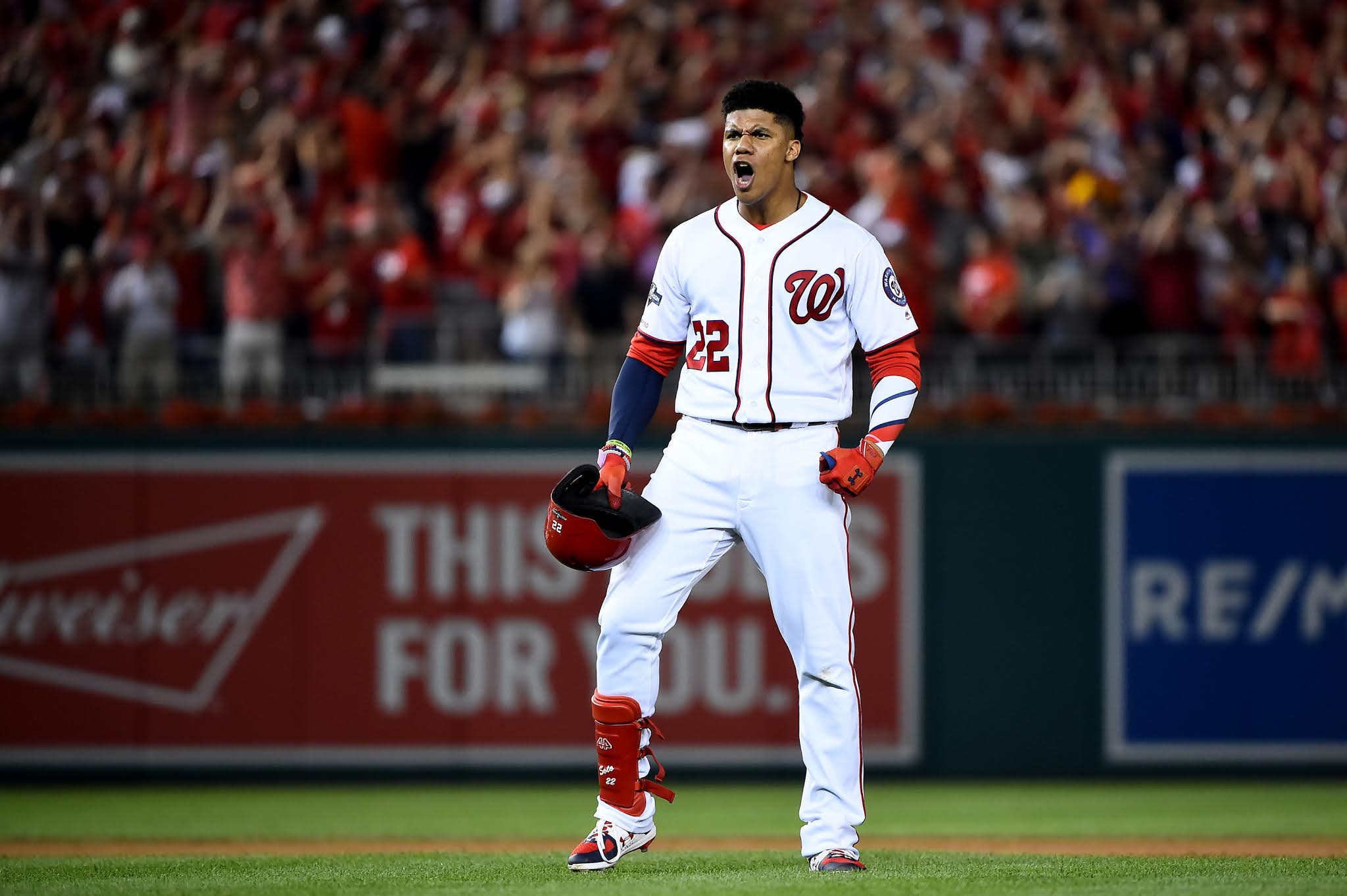
The outfield from last year remains intact. Now entering his third season at age 21, Juan Soto hit 34 home runs with 110 RBIs, 12 stolen bases and a .949 OPS. Soto finished 9th in MVP voting, and helped Nats fans forget about Bryce Harper. Soto had an average exit velocity of 92 mph. Another former top prospect in Victor Robles also had a great season. While he wasn\’t spectactular at the plate, with 17 home runs and an OPS of .745, Robles stole 28 bases, and cemented himself as potentially the best defensive player in baseball, with a league leading 23 outs above average, 22 of them in center and one in right. However, Robles had an average exit velocity of only 83.3 mph. Adam Eaton, who the Nationals traded Cy Young candidate Lucas Giolito for back before the 2017 season, hit a career high 15 home runs with 15 stolen bases. Eaton hit .279 with a .792 OPS. Eaton has had an OPS+ of over 100 for six consecutive seasons. Michael A. Taylor played in only 53 games last year, his lowest since 2014. Taylor stole just six bases, with a .669 OPS. With a 29.1 ft/s sprint speed and two outs above average, Taylor is still a good fourth outfielder. Emilio Bonifacio has not played in the majors since 2017, but he can play all over the field, so his versatality is valuable. Bonifacio has played for eight teams in his eleven year career (including the Nationals, who he played for in 2008), with a .256 average and a .645 OPS. Andrew Stevenson can be used as a pinch-runner, and he had a 28.5 ft/s sprint speed last year. In 37 MLB Plate Appearances last year, Stevenson had a .953 OPS.
       Projected Opening Day Lineup
SS Trea Turner (R)
RF Adam Eaton (L)
LF Juan Soto (L)
DH Eric Thames (L)
2B Starlin Castro (R)
1B Howie Kendrick (R)
3B Carter Kieboom (R)
C Kurt Suzuki (R)
CF Victor Robles (R)
       Projected Rotation
Max Scherzer (R)
Stephen Strasburg (R)
Patrick Corbin (L)
Anibal Sanchez (R)
Austin Voth (R)
       Projected Bullpen
Sean Doolittle, closer (L)
Daniel Hudson (R)
Will Harris (R)
Tanner Rainey (R)
Roenis Elias (L)
Wander Suero (R)
Sam Freeman (L)
Ryne Harper (R)
Javy Guerra (R)
Erick Fedde (R)
       Projected Bench
C Kurt Suzuki (R)
IF Asdrubal Cabrera (S)
IF Wilmer Difo (S)
OF Michael A. Taylor (R)
UT Emilio Bonifacio (S)
OF Andrew Stevenson (L)
Baseball-Reference OOTP Simulator Stats
64-39 record, 1st in NL East
Most home runs: Juan Soto (30)
Highest batting average: Juan Soto (.345)
Highest OPS: Juan Soto (1.122)
Best ERA, starters: Max Scherzer (2.63)
Best ERA, relievers: Wander Suero (2.51)
Most innings pitched: Max Scherzer (143.2)
Most strikeouts: Max Scherzer (216)
Best K/9: Max Scherzer (13.5)
Record through 60 games, last five seasons:
2019: 27-33
2018: 35-25
2017: 38-22
2016: 36-24
2015: 31-29
       Prediction
The Nationals are really good. While their lineup isn\’t as deep as other teams, and their bullpen is not what you would call \”amazing\”, their rotation makes up for it, and so do stars like Turner and Soto. The Nationals will finish 1st in the NL East in 2020, but get knocked out in the NLDS.

Toronto Blue Jays 2020 Season Preview

       In 2019, the Blue Jays entered the year just waiting for their top prospects to debut. Vladimir Guerrero Jr. and Cavan Biggio started that, and soon Bo Bichette joined. The Blue Jays were a bad team, as the lineup around them and the pitching staff struggled. In the offseason, the team went out and improved the rotation, and look more competitive than last year. Besides the 60-game season, 2020 will be a normal year for the Toronto Pittsburgh Blue Jays. Oh right, they also have to change their home ballpark.
       Offseason additions: LHP Hyun-Jin Ryu, RHP Tanner Roark, RHP Chase Anderson, 3B Travis Shaw, IF Joe Panik, RHP Shun Yamaguchi, RHP Anthony Bass, RHP AJ Cole, C Caleb Joseph, RHP Jake Petricka.
       Offseason subtractions: 1B Justin Smoak, RHP Derek Law, RHP Ryan Tepera, RHP Jason Adam, LHP Clayton Richard, RHP Justin Shafer.
       Rotation
Hyun-Jin Ryu will take over from Marcus Stroman as the ace of the staff after signing a four year, $80 million dollar contract for his age 33 season. Ryu is not a big strikeout pitcher, with only 163 Ks in 182.2 innings. But, he led the league with a 2.32 ERA in 29 starts for the Dodgers, and finished 2nd in Cy Young voting. Ryu, whose ERA was 1.45 after 22 starts, could have had a much better final number if not for two back-to-back starts against the Yankees and Diamondbacks where he allowed seven earned runs in each game in less than five innings. Ryu allowed an average exit velocity of 86.6 mph, plus a 4.7 barrel percentage and a BB% of just 3.3 percent. Matt Shoemaker returns from a torn ACL. The former Angel has never pitched in more than 160 innings over his seven year career, but he has a career 3.81 ERA. He was doing great before the injury last season, with a 1.57 ERA and 24 strikeouts in 28.2 innings over five starts. In his rookie season, Trent Thornton lead the team with 154.1 innings pitched. Thornton had a 4.84 ERA with 149 strikeouts and threw six different pitches. Thornton\’s slider had a 3089 rpm spin rate, and a .215 xBA against. Tanner Roark comes in a two year deal, after a career high 8.6 K/9 in a contract year. Roark pitched in 165.1 innings (averaging only 5.1 innings per start), his least since he was a part-time reliever in 2015. Roark\’s 36.7 groundball percentage was his lowest over the last five seasons. six-year veteran Chase Anderson was acquired from Milwaukee via trade. Anderson, who has a 3.94 mark in his career, finished with an ERA of 4.21 last year, striking out 124 in 139 innings. Anderson\’s change-up had a .188 average against with an average exit velocity against of 82.4 mph. The 8th best prospect in all of baseball, Nate Pearson, might not make the Opening Day roster, but he will be pitching for the Jays in 2020, especially if Anderson\’s recovery from an oblique injury takes a couple days longer than it is expected to. Pearson, who can easily hit over 100 miles per hour on the radar gun, had a 2.30 ERA in 101.2 innings while striking out 119 batters. Pearson will turn 24 in a month. Anthony Kay, the main return of the Stroman trade, can make the team out of the \’pen. Kay made three appearances last year, striking out 13 and allowing nine runs in 14 innings.
       Bullpen
Ken Giles is almost a lock to get traded, unless the Blue Jays surprise everybody. Giles might have had his best season last year, and it was definitely his best since he was with the Phillies. Giles had a 1.87 ERA with 83 strikeouts in 53 innings and he completed 23 saves. To complement his fastball that can reach up to 100 miles per hour, Giles\’ slider had a 54.4% whiff rate, with a .190 slugging against. The Blue Jays will be Anthony Bass\’ 4th team in four years, and his sixth team since 2013, although Bass has never played for multiple teams in a single season. Claimed off of waivers from Seattle in October, Bass had a 3.56 ERA with five saves and 43 strikeouts in 48 innings for the Mariners. Bass\’ main pitch is his sinker, which helped his groundball rate rise up to 54.7%. The Blue Jays signed Rafael Dolis, who pitched for the Cubs from 2011 to 2013. Dolis spent last year in Japan, and for their Central League, completed 19 saves with a 2.11 ERA and 50 strikeouts in 55.1 innings. While the Blue Jays signed a Dominican who played in Japan, they also signed a Japanese player who played in Japan. Shun Yamaguchi was a starter overseas, unlike Dolis, but he will likely come out of the pen. Yamaguchi had a 2.78 ERA with 194 strikeouts in 181 innings last year. Canadian Jordan Romano was a Rule-5 pick by Chicago, who traded him to the Rangers, who returned him back to Toronto. Romano made his debut for the Blue Jays, and struck out 21 batters in 15.2 innings, but he allowed 13 earned runs for a 7.63 ERA. Romano had 53 strikeouts in 37.2 AAA innings. Sam Gaviglio was mainly a starter for Toronto in 2018, but solely came out of the bullpen last year. Gaviglio struck out 88 in 95.2 innings, with a 4.61 ERA. Gaviglio\’s main pitch is his slider, which allowed 11 home runs, but had a .183 average against. Lefty Ryan Borucki could come out of the bullpen. Elbow issues cost Borucki most of 2019 but he had a good rookie season of 2018, with a 3.87 ERA in 17 starts. Wilmer Font, currently on the IL for \”undisclosed reasons\”, will likely join the team soon. Font played for three teams in 2018, and three teams in 2019, with only the Rays overlapping. In 23 games (14 starts) for the Blue Jays, most of the time as an opener, Font had a 3.66 ERA with 53 strikeouts in 39.1 innings. For the final spot, starters Thomas Hatch, Jacob Waguespack and Sean Reid-Foley can earn the spot, but AJ Cole, a non-roster invitee, is the favorite. Another reliever who can pitch multiple innings, Cole had a 3.81 ERA with 30 strikeouts in 26 innings for the Indians last year. Cole\’s slider had a 40.7% whiff rate last year.
       Catchers
Danny Jansen is the catcher of the future, and his rookie season could have gone worse. Jansen hit 13 home runs, which is nice, but he hit .207 with an OPS of .640, so there is a lot of room for improvements. Jansen only struck out 79 times in 107 games, which lead to an above average 20.6% K rate. His xBA of .242 shows that Jansen was unlucky at the plate. Reese McGuire, a 1st rounder by the Pirates in 2013, is still only 25, and just a few months older than Jansen. McGuire was successful in his 30 games last year, hitting .299 with five home runs and an .872 OPS. His left-handed bat can compliment Jansen well.
        Infielders
Vladimir Guerrero Jr., who entered the season as baseball\’s top prospect, had a decent rookie season, and a monster home run derby. At age 20, Guerrero hit 15 home runs with a .272 average and a .772 OPS. Guerrero, listed at 250 pounds, with a 26.2 ft/s sprint speed, was not a good defender at third base, so the Blue Jays are moving him to first. Guerrero had -14 outs above average last year. Guerrero could see a lot of time at DH as well, alternating with Rowdy Tellez. Tellez hit 21 home runs last year, but he struck out 119 times and only walked 29 times, leading to an OPS of .742. Tellez had a barrel percentage of 13.2%. Cavan Biggio finished 5th in Rookie of the Year voting, just one spot ahead of Guerrero. Biggio hit 16 home runs and stole 14 bases, while playing in less games than Guerrero. Biggio played first base and both corner outfield positions, but he was great defensively at second, with seven outs above average. While his late debut made him not get any Rookie of the Year votes, but he still lost rookie eligibility, Bo Bichette was the best Blue Jay to debut last year, based off of their 2019 stats. Bichette played in just 46 games, but he hit 11 home runs and stole four bases, while hitting .311 with a .930 OPS. Travis Shaw hit 31 home runs in 2017 and 32 in 2018, but was a bench bat for the Brewers last year, and could not hit. Shaw finished with a .157 average and an OPS of .551, while hitting only seven homers in 86 games. Former Gold Glove winner Joe Panik signed with the Jays in a back-up role. Panik had a .627 OPS for the Giants before being released and signed by the Mets. Panik improved in 39 games for New York, hitting .277 with two home runs. Over the last five years, Panik has struck out just 9.1% of the time. Brandon Drury can play multiple positions, and he hit 15 home runs last year. Currently on the IL for an \”undisclosed reason\”, Drury can return soon. Drury had six outs above average at third last year, and five outs above average combined between six positions.
        Outfielders
Lourdes Gurriel Jr. had a breakout season, and he may be the best outfielder on the team after moving from short to left field. Gurriel hit 20 home runs with six stolen bases, plus an average of .277 and an .869 OPS in 84 games. In his two year career, Gurriel has an average exit velocity of 90.7 mph. Randal Grichuk might always be known as the guy drafted directly before Mike Trout, but at least they were both Angels picks. Grichuk hit a career high 31 home runs last year. Under contract through 2023, Grichuk had six outs above average last year, and he hit .290 versus fastballs. In his second full season with Toronto, Teoscar Hernandez became the starting center fielder after Kevin Pillar was traded, and he hit a career high 26 home runs. Hernandez also had a .778 OPS, an improvement from 2018. Hernandez is really fast, with a 29.1 ft/s sprint speed. The two extra outfield spots are between many players, most notably Billy McKinney, Anthony Alford and Derek Fisher. In 33 career games, Alford has gone 8-for-55, and is the least experienced of the group. Fisher, once a top prospect with the Astros, hit six home runs in 40 games for the Jays last year,, but he had a .647 OPS. Fisher could have made the team after hitting two home runs in yesterday\’s summer camp game. McKinney played in 84 games last year, the most of the group. He hit 12 home runs with a .696 OPS.
        Projected Lineup
SS Bo Bichette (R)
2B Cavan Biggio (L)
1B Vladimir Guerrero Jr. (R)
RF Randal Grichuk (R)
3B Travis Shaw (L)
LF Lourdes Gurriel Jr. (R)
CF Teoscar Hernandez (R)
DH Rowdy Tellez (L)
C Danny Jansen (R)
        Projected Rotation
Hyun-Jin Ryu (L)
Matt Shoemaker (R)
Tanner Roark (R)
Trent Thornton (R)
Chase Anderson (R)
Nate Pearson (R)*
*The team might not have a six-man rotation, but Pearson will likely start until Anderson returns
        Projected Bullpen
Ken Giles (R)
Anthony Bass (R)
Rafael Dolis (R)
Sam Gaviglio (R)
Shun Yamaguchi (R)
Anthony Kay (L)
Ryan Borucki (L)
Wilmer Font (R)
Jordan Romano (R)
AJ Cole (R)
          Projected Bench
C Reese McGuire (L)
IF Joe Panik (L)
IF Brandon Drury (R)
OF Billy McKinney (L)
OF Derek Fisher (L)
Baseball-Reference OOTP Simulator Stats
40-63 record, 5th in AL East
Most home runs: Lourdes Gurriel Jr. (30)
Highest batting average: Vladimir Guerrero Jr. (.291)
Highest OPS: Vladimir Guerrero Jr. (.926)
Best ERA, starters: Nate Pearson (3.86)
Best ERA, relievers: Jordan Romano (5.07)
Most innings pitched: Hyun-Jin Ryu (119.2)
Most strikeouts: Nate Pearson (127)
Best K/9: Jordan Romano (13.3)
Record through 60 games, last five seasons
2019: 22-38
2018: 26-34
2017: 29-31
2016: 31-29
2015: 30-30
        Prediction
The Blue Jays are not supposed to make the playoffs this year. Realistically, they probably won\’t have a shot until 2022. While their young players progress and their rotation gets better, the Blue Jays will need to upgrade their bullpen before anything else. I predict they will finish in 4th place in the AL East, but the Blue Jays will catch up to the Red Sox.